
The 5 GHz band at a clinic is crowded. The laptops and the access point both support 6 GHz. Which change moves the laptops off that crowd?
Select an answer to reveal the explanation.
Short Explanation
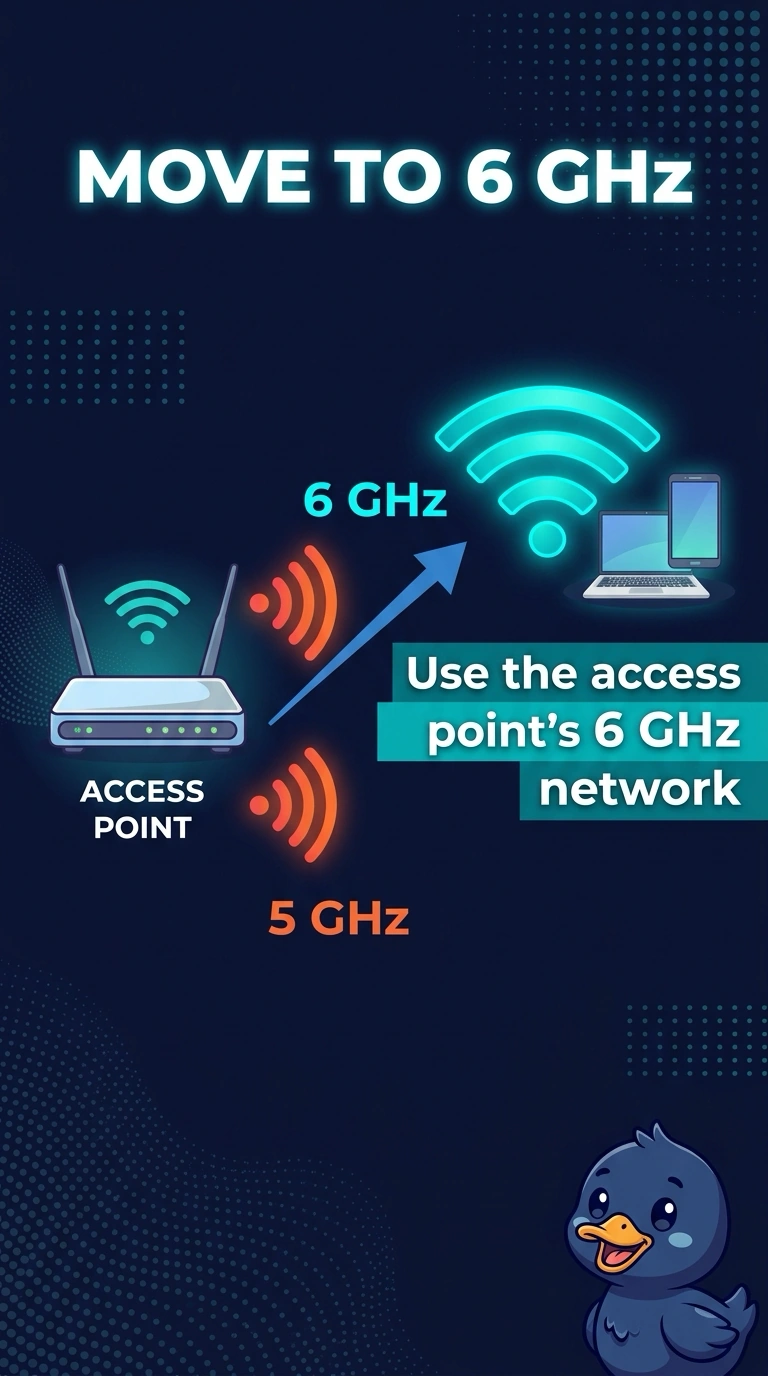
There is a quieter floor above the crowded 5 GHz band, and both the laptops and the access point can reach it. You move them to 6 GHz. Staying in the crowd, swapping in a phone cord, or changing an address timer does not retune the radio.
Full Explanation
The 6 GHz band is an additional Wi-Fi band on equipment that supports it. The clinic's 5 GHz band is crowded and both the laptops and the access point support 6 GHz, so using that network moves the laptops off the crowd. Staying on 5 GHz leaves them in the congestion the clinic wants to leave. A telephone cord is not a Wi-Fi radio. A DHCP lease controls how long an address is kept. It does not select a radio band. Exam caveat: 6 GHz has a shorter reach indoors than lower bands. Check the signal at the desks after the move. Operational check: join the 6 GHz network, confirm the laptop reports that band, and compare retries with the old 5 GHz connection. Confirm the laptop reports the 6 GHz band, then compare retries with the old connection. Record the result on the ticket before you close the call. Check the signal at a far desk. 6 GHz does not travel as far as lower bands.