
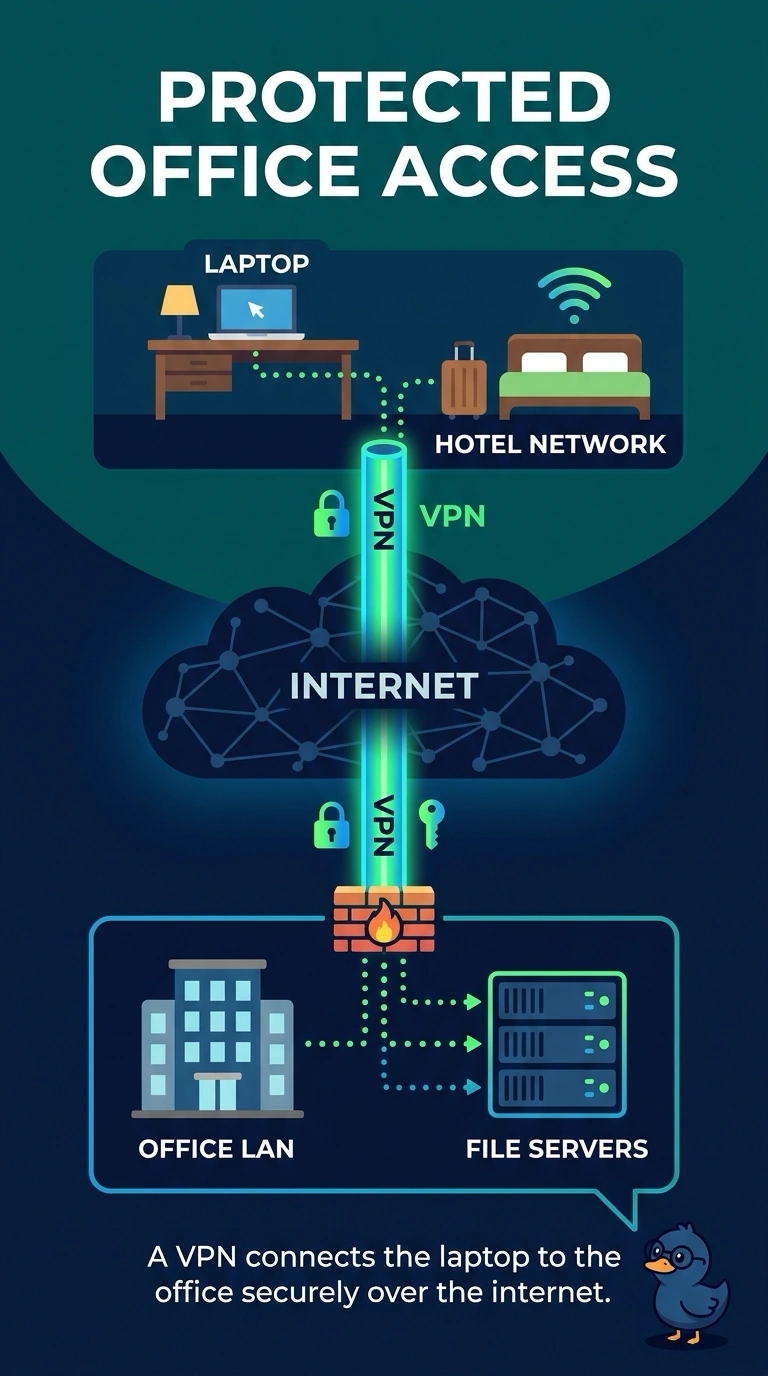
A traveler on a hotel network must reach file servers on the office LAN, and the traffic must be protected across the internet. Which technology does that?
Select an answer to reveal the explanation.
Short Explanation
The traveler needs a private tunnel from the hotel back to the office, not a seat on the hotel's local switch. You build a VPN. A local VLAN, a mail record, and a public website do not protect a path to the office file servers.
Full Explanation
A VPN encrypts traffic from the traveler's laptop across the internet to the office, so the laptop can reach the office LAN as if it had a protected path in. That is the technology the trip requires. A VLAN separates ports on a local switch. A VLAN on the hotel switch does not extend to the office file servers. An MX record names a mail host. It does not encrypt a path or open file shares. A public web server answers browser requests from the internet. It is not the secure path into the office file shares. Exam caveat: the office VPN concentrator has to be reachable, and the laptop needs the right account. The tunnel does not exist just because the hotel has internet. Operational check: connect the VPN from the hotel, open an office share, and confirm the session fails when the VPN is disconnected. Disconnect the VPN and confirm the office share is no longer reachable. Try an office file share by name only while the tunnel is up. Save the VPN profile so the next trip does not start from scratch.