
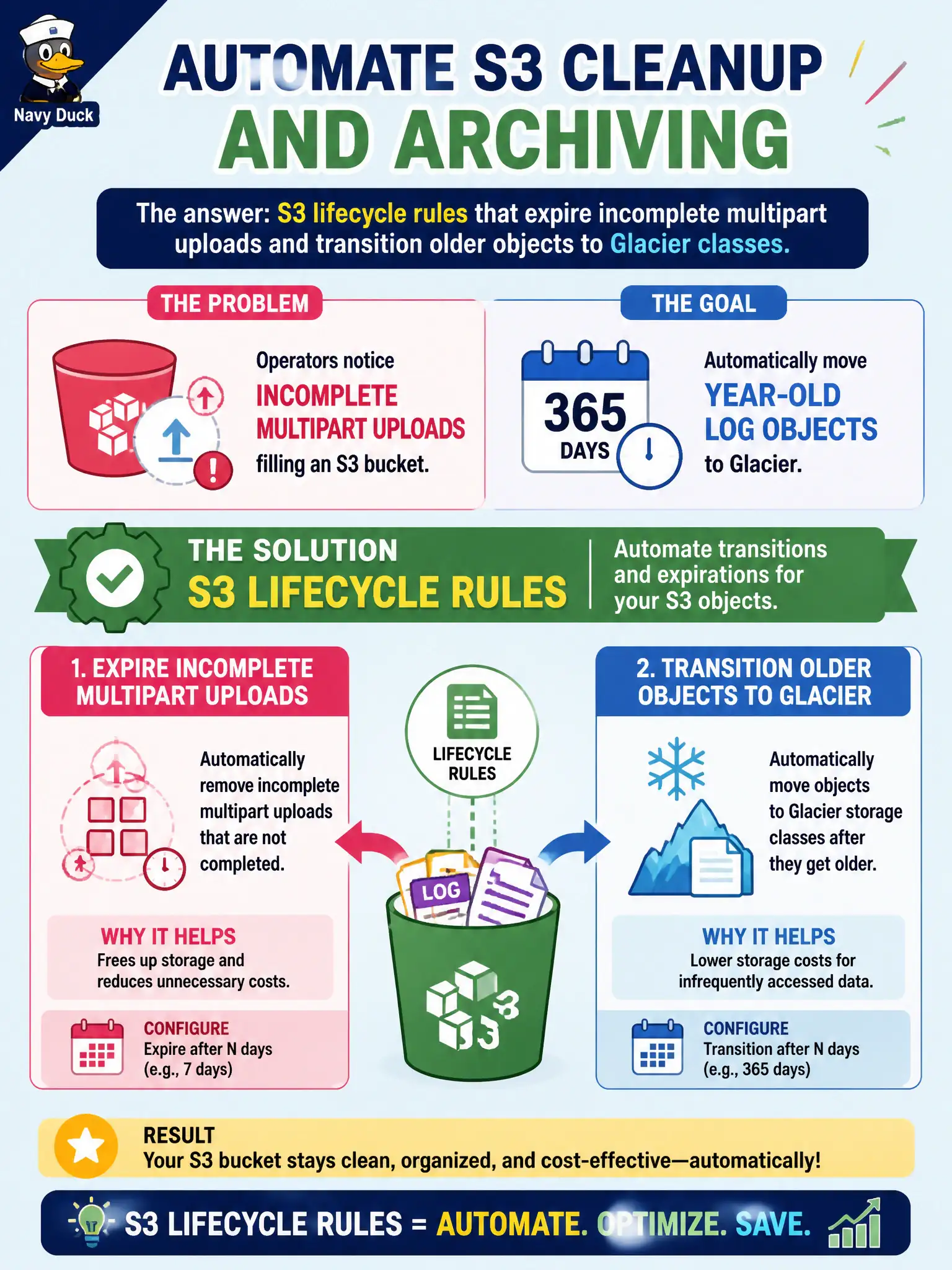
Operators notice incomplete multipart uploads filling an S3 bucket and also want year-old log objects moved to Glacier automatically. Which S3 feature automates those transitions and expirations?
Select an answer to reveal the explanation.
Short Explanation
Lifecycle rules are the janitor and the mover in one: expire abandoned multipart uploads, shift old logs to Glacier classes, tidy the bucket on a schedule. You write the policy; S3 enforces the transitions and expirations automatically.
Full Explanation
Operators who see incomplete multipart uploads consuming space and who also want year-old log objects moved to Glacier automatically need S3 lifecycle rules. Lifecycle configuration can expire incomplete multipart uploads after a number of days and can transition objects to colder classes such as Glacier family options based on age. That single feature set automates both janitorial cleanup and archival movement so municipal logging buckets do not silently accumulate orphaned multipart parts or keep hot storage pricing for ancient logs.
Security Hub findings aggregate security posture results; they do not rewrite object ACLs hourly as a lifecycle engine. Elastic Load Balancing sticky sessions keep clients on targets; they have nothing to do with object aging. AWS WAF rate rules protect web applications from abusive request rates; receiving HTTP 429s does not archive S3 objects. These distractors borrow popular service names without matching the storage automation function.
Exam caveat: Lifecycle rules cover transitions and expirations, including aborting incomplete multipart uploads—a favorite practical detail. Intelligent-Tiering is different (automatic access tiering). Versioned buckets need careful expiration rules for noncurrent versions.
Operational check for logging buckets: enable a lifecycle rule to abort incomplete multipart uploads (for example after seven days), add transitions for objects older than a year into an archival class aligned with retrieval needs, verify with inventory that old prefixes cool down, ensure SIEM or analytics jobs that read historical logs can tolerate restores, and alert on unexpected bucket size growth that would indicate a misconfigured rule.