
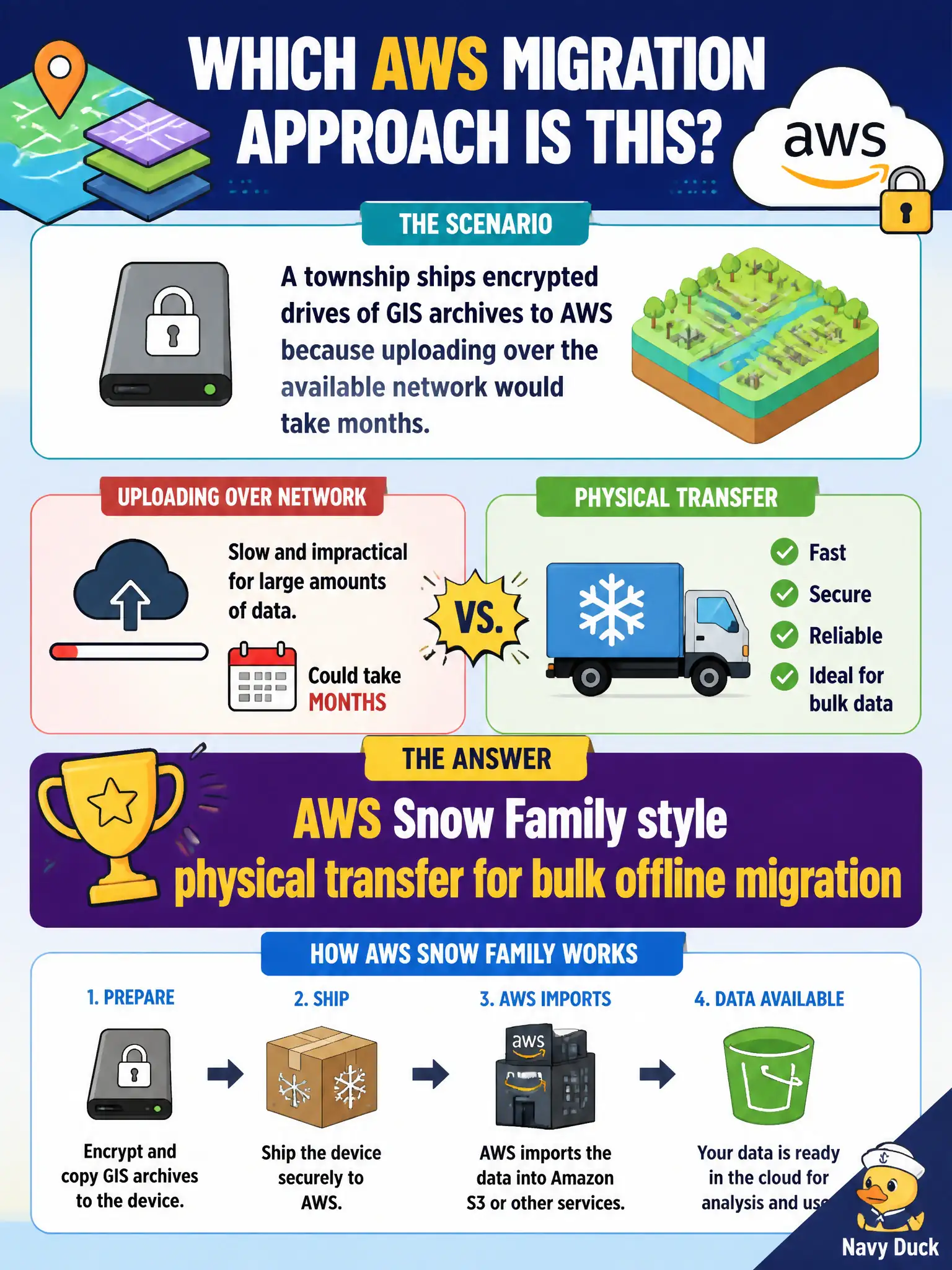
A township ships encrypted drives of GIS archives to AWS because uploading over the available network would take months. Which AWS migration approach does that describe?
Select an answer to reveal the explanation.
Short Explanation
When the upload clock says "months," you put the GIS pile on a truck — Snow Family style. Physical, secured devices move bulk data offline when the network cannot. VPC peering, password rotation, and CloudWatch alarms are useful tools, but they are not how you ship petabyte archives.
Full Explanation
Shipping encrypted drives of GIS archives to AWS because network upload would take months describes an AWS Snow Family style physical transfer for bulk offline migration. The township is using offline bulk movement when WAN capacity cannot meet the archive timeline.
VPC peering is a networking connectivity pattern, not a petabyte archive shipping method. IAM password rotation is an identity hygiene practice, not data transfer. CloudWatch alarms monitor; they do not move petabyte archives by themselves.
Exam caveat: Physical/offline bulk transfer → Snow Family concept. Operational check: encrypt media, document chain of custody, verify object inventory after import, and only then retire local GIS archive copies per records policy.
Municipal teams should keep a one-page decision record linking this Cloud Practitioner concept to resident outcomes, revisit it after major traffic or compliance changes, and ensure runbooks still match the chosen design.
Municipal teams should keep a one-page decision record linking this Cloud Practitioner concept to resident outcomes, revisit it after major traffic or compliance changes, and ensure runbooks still match the chosen design.
Municipal teams should keep a one-page decision record linking this Cloud Practitioner concept to resident outcomes, revisit it after major traffic or compliance changes, and ensure runbooks still match the chosen design.