
The facilities energy team asks how AWS architecture guidance addresses carbon impact of workloads. Which Well-Architected pillar should they review first?
Select an answer to reveal the explanation.
Short Explanation
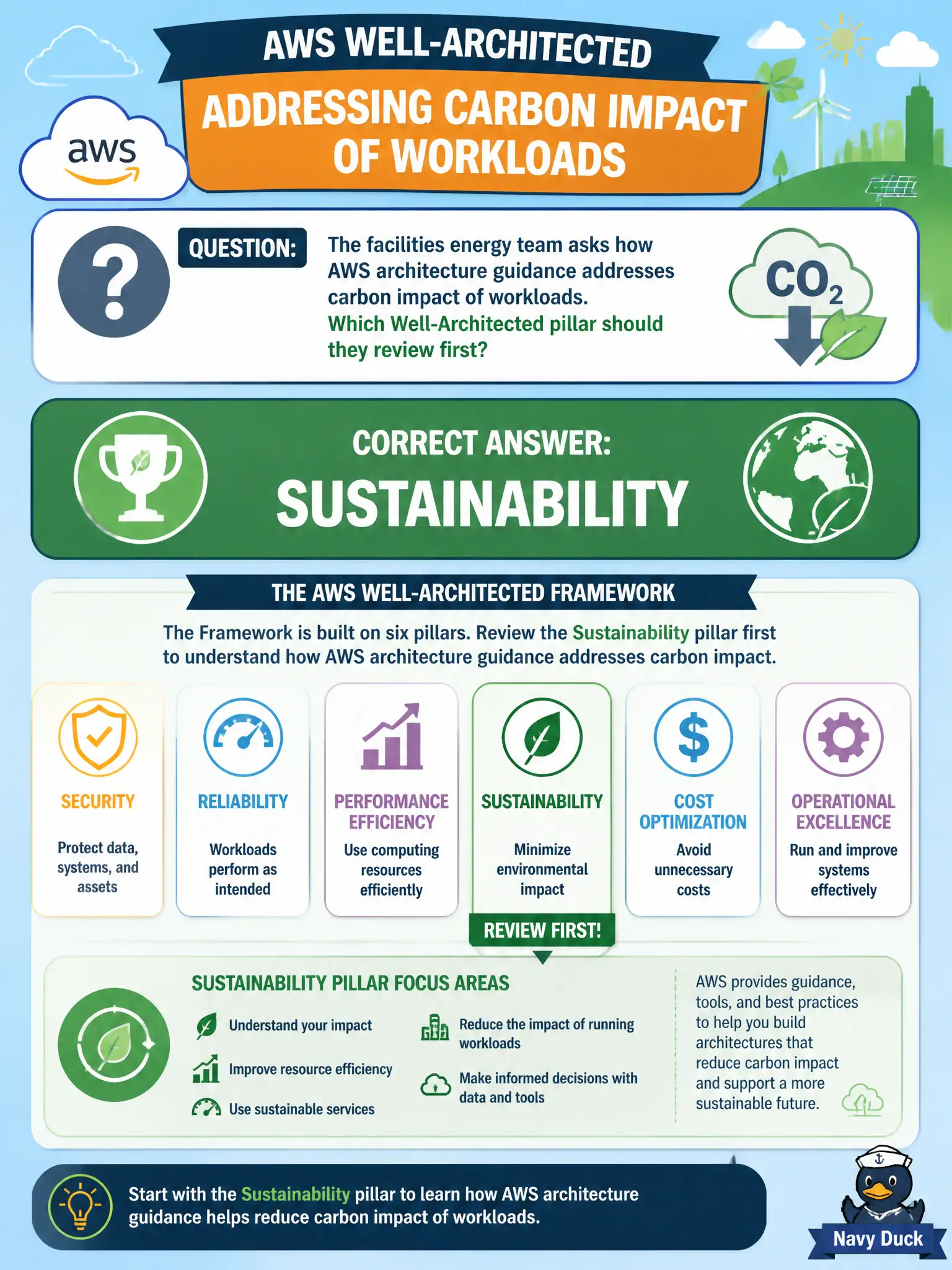
Carbon impact is the environmental scoreboard, and Sustainability is the pillar written for that scoreboard. It guides teams to design workloads that use less energy and fewer materials over time. Reliability, Security, and Operational Excellence matter hugely, but they are not the carbon-impact pillar.
Full Explanation
Sustainability is the Well-Architected pillar the facilities energy team should review first when asking how AWS architecture guidance addresses carbon impact of workloads. It frames shared responsibility for sustainability and practices that improve utilization and reduce environmental impact of cloud estates.
Reliability addresses failure recovery, not carbon as its primary lens. Security addresses protective controls. Operational Excellence addresses operational processes. Those reviews can continue in parallel, but carbon impact maps first to Sustainability.
Exam caveat: Carbon/environmental impact → Sustainability pillar (formal, not slogan). Operational check: inventory underutilized always-on municipal resources, schedule non-production downtime, prefer efficient managed services where suitable, and report estimated impact improvements to the energy team.
Municipal teams should keep a one-page decision record linking this Cloud Practitioner concept to resident outcomes, revisit it after major traffic or compliance changes, and ensure runbooks still match the chosen design.
Municipal teams should keep a one-page decision record linking this Cloud Practitioner concept to resident outcomes, revisit it after major traffic or compliance changes, and ensure runbooks still match the chosen design.