
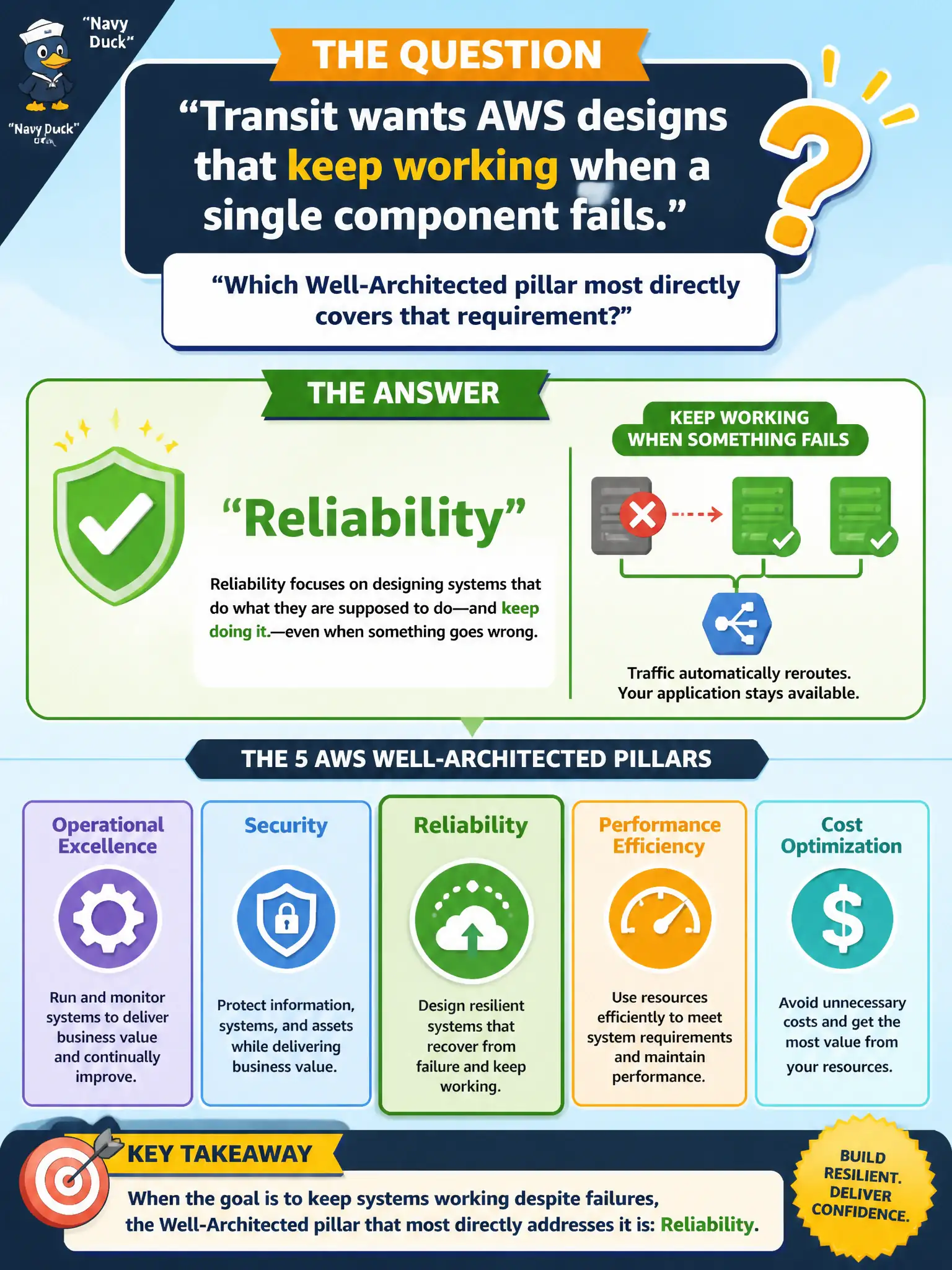
Transit wants AWS designs that keep working when a single component fails. Which Well-Architected pillar most directly covers that requirement?
Select an answer to reveal the explanation.
Short Explanation
Keeping the buses running when one engine stalls is reliability, not "go faster." Reliability is the pillar about withstanding and recovering from failures so the workload stays available. Performance Efficiency is about resource fit and scaling for efficiency; Cost and Sustainability chase spend and environmental impact.
Full Explanation
Reliability most directly covers transit designs that must keep working when a single component fails. The pillar emphasizes foundations, change management, and failure management so rider-facing systems meet availability targets despite component loss.
Performance Efficiency optimizes resource use to meet requirements, not primarily single-component failure continuity. Cost Optimization reduces unnecessary spend. Sustainability reduces environmental impact. None of those replace Reliability when the stem is component-failure continuity.
Exam caveat: “Keeps working when a component fails” → Reliability. Operational check: deploy critical transit paths across multiple AZs or redundant components, inject a single-component failure in staging, and verify the service remains within the published availability objective.
Municipal teams should keep a one-page decision record linking this Cloud Practitioner concept to resident outcomes, revisit it after major traffic or compliance changes, and ensure runbooks still match the chosen design.
Municipal teams should keep a one-page decision record linking this Cloud Practitioner concept to resident outcomes, revisit it after major traffic or compliance changes, and ensure runbooks still match the chosen design.