
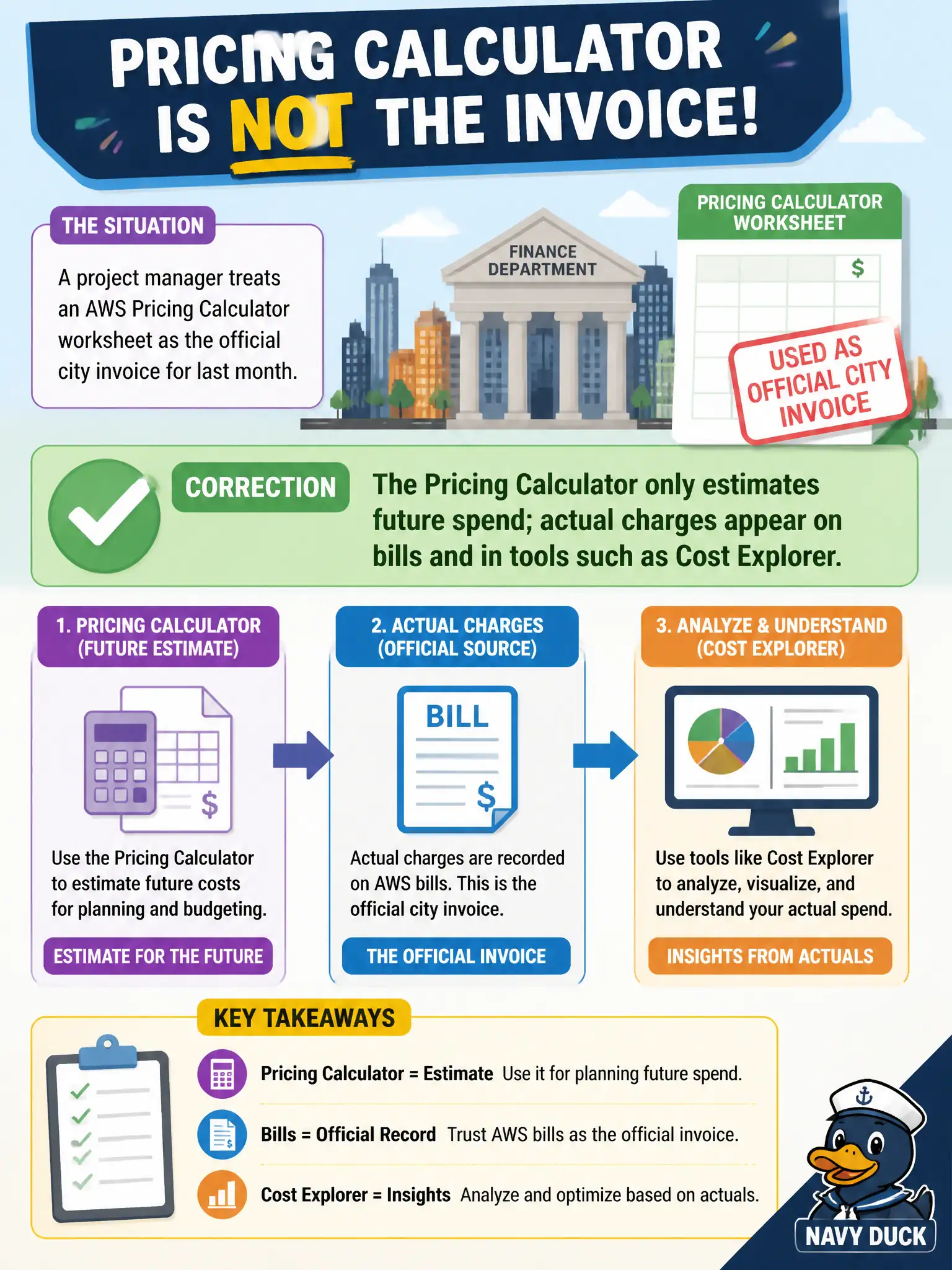
A project manager treats an AWS Pricing Calculator worksheet as the official city invoice for last month. What correction should finance give?
Select an answer to reveal the explanation.
Short Explanation
A calculator worksheet is a forecast, not last month’s invoice. Look at the bill or Cost Explorer for what you actually spent.
Full Explanation
A project manager who treats an AWS Pricing Calculator worksheet as the official city invoice for last month needs a finance correction: the Pricing Calculator only estimates future spend; actual charges appear on bills and in tools such as Cost Explorer (and CUR). Estimates are planning artifacts; invoices and historical cost tools are the system of record for what the city owes. Confusing the two leads to broken reconciliations and council misstatements.
The Pricing Calculator does not automatically become the legally binding invoice after an estimate is saved. Cost Explorer can show historical spend; it is not true that the Calculator is the only source of truth. Pricing Calculator estimates do not void the AWS bill or replace consolidated billing. Distractors inflate the Calculator into an invoice authority it does not have.
Exam caveat: Calculator = forward estimate; bill/Cost Explorer/CUR = actuals. Always label estimates clearly in municipal budget decks.
Operational check for finance: require Cost Explorer or invoice PDFs for prior-month actuals, keep Calculator links only in future-year budget appendices, reconcile migration estimates to actuals after go-live, and educate PMs during onboarding so "the Calculator said" never substitutes for accounts payable evidence.