
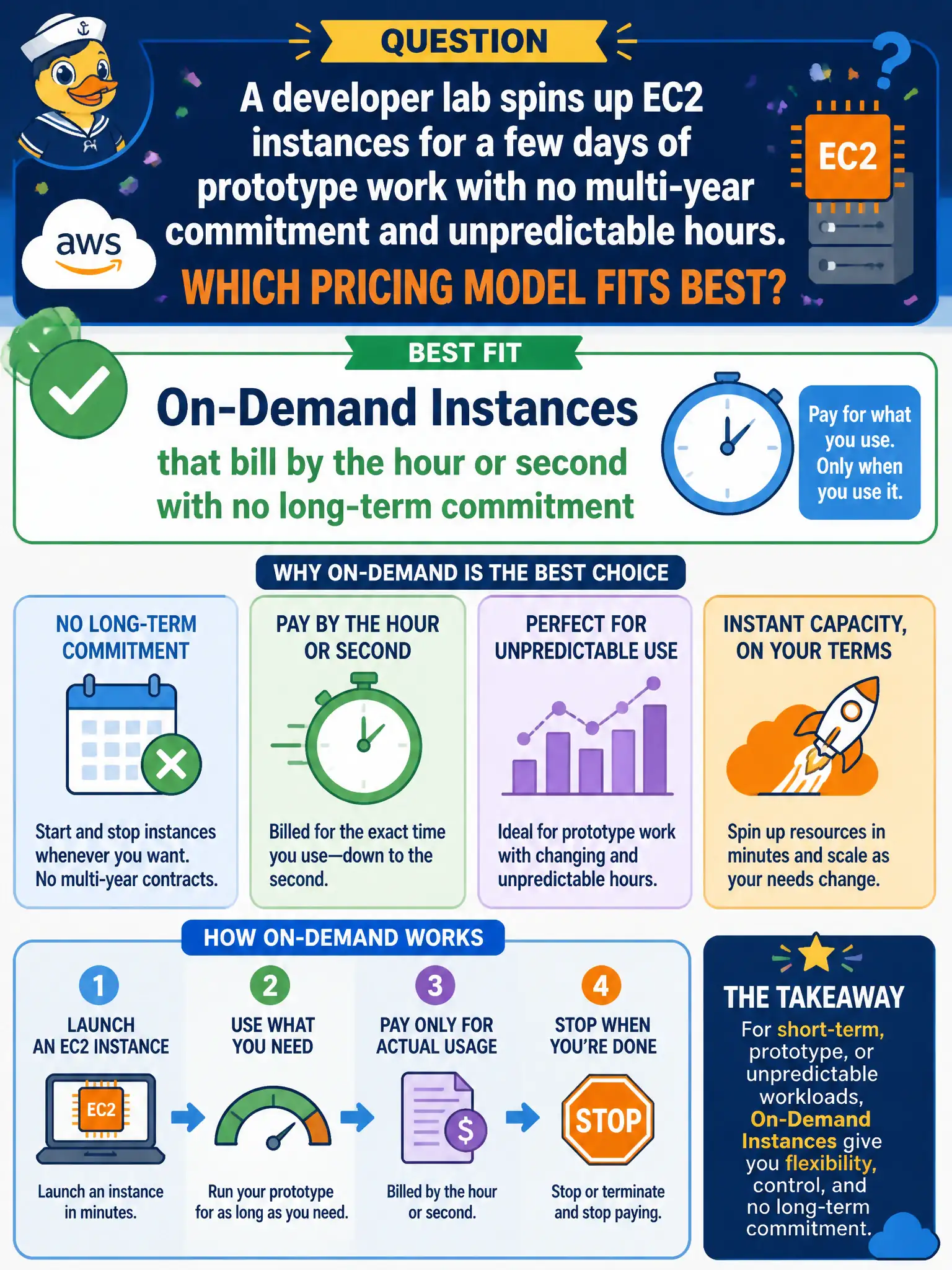
A developer lab spins up EC2 instances for a few days of prototype work with no multi-year commitment and unpredictable hours. Which pricing model fits best?
Select an answer to reveal the explanation.
Short Explanation
On-Demand is the pay-as-you-go hotel room — stay a few nights for a prototype, leave when done, no annual lease. Reserved and Savings-style commitments shine when usage is steady and long; Dedicated Hosts are a license/compliance play; Spot is cheaper but can yank the rug.
Full Explanation
A developer lab that spins up EC2 instances for a few days of prototype work—with no multi-year commitment and unpredictable hours—fits On-Demand Instances that bill by the hour or second with no long-term commitment. On-Demand is the flexible civic sandbox pricing model: pay for what you use while experimenting, then terminate resources when the prototype ends without leftover reservation waste.
All Upfront Reserved Instances require a long commitment to maximize discount; that is a poor match for a few days of unpredictable lab work. Dedicated Hosts are for server-bound software licensing and physical socket mapping needs—not a default for every short prototype. Spot Instances can be cheapest but may be interrupted; saying Spot is required for every workload even when interruption is unacceptable is false. Choose On-Demand when flexibility beats commitment discounting.
Exam caveat: On-Demand = flexible no-commitment; Reserved/Savings Plans = commit for discount; Spot = interruptible discount; Dedicated Hosts = physical server licensing/tenancy. Short unpredictable labs → On-Demand.
Operational check for the lab: tag sandbox instances, set AWS Budgets and auto-shutdown schedules, prefer Auto Scaling max sizes of zero after hours if appropriate, avoid purchasing RIs for speculative prototypes, and educate developers that forgotten On-Demand instances still accrue cost even without a reservation.