
kubectl describe Ingress shows ADDRESS empty after creating rules. The controller is still provisioning an external load balancer. How should the developer interpret that status?
Select an answer to reveal the explanation.
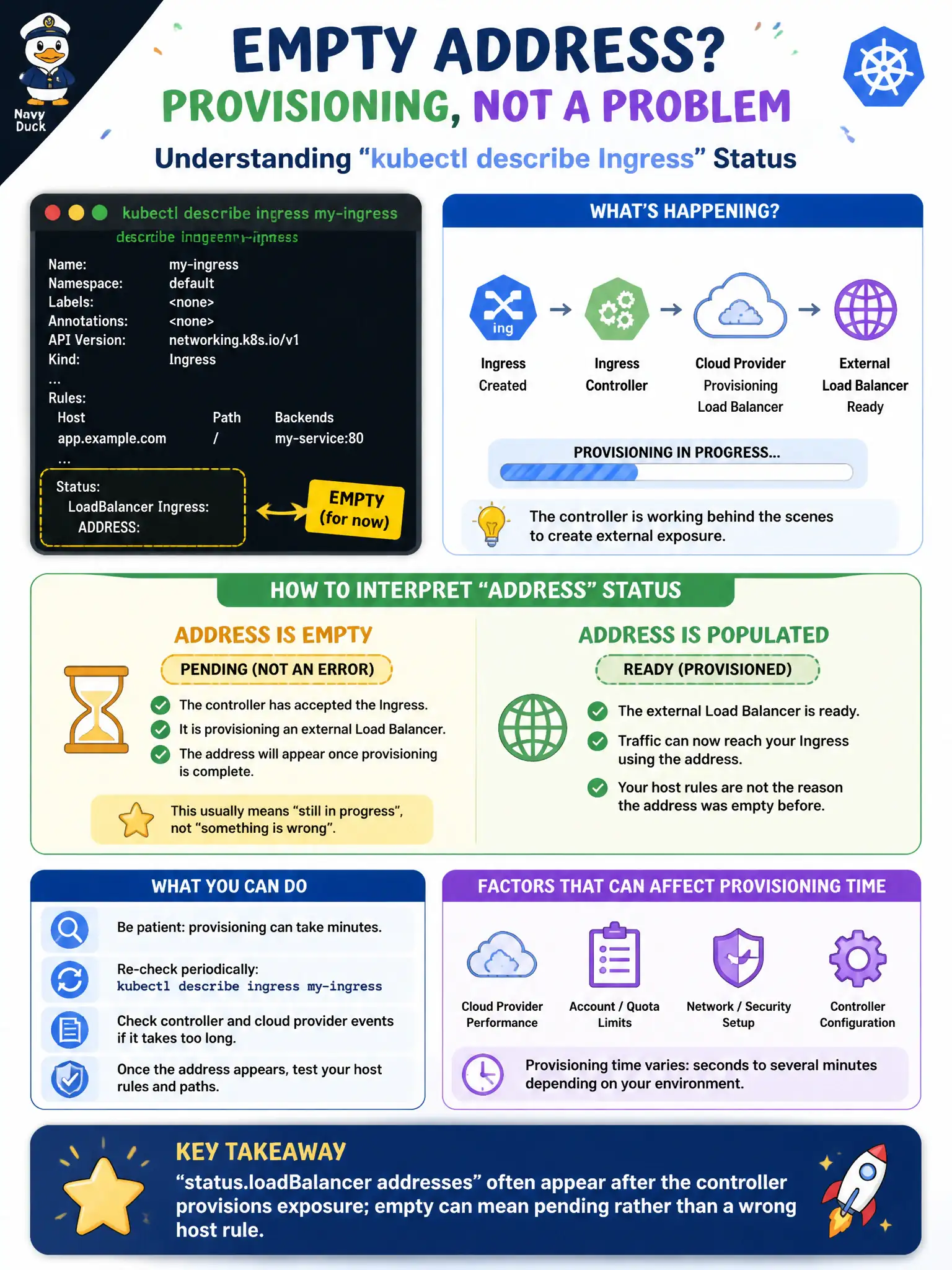
Short Explanation
Empty ADDRESS is often "still waiting on the cloud LB," not "your hosts are wrong." Give the controller time to fill status.loadBalancer—then troubleshoot if it stays blank.
Full Explanation
When kubectl describe Ingress shows ADDRESS empty after creating rules while the controller is still provisioning an external load balancer, interpret empty status as often pending rather than proof the host rules are permanently invalid. status.loadBalancer addresses frequently appear after the controller finishes provisioning exposure; empty can mean waiting on cloud load balancer allocation for municipal public sites, not an automatic YAML death sentence.
An empty address does not always mean the Ingress YAML is permanently invalid and must be deleted. It is false that ADDRESS is unused on all Ingresses and that only Services populate load balancer status. Empty ADDRESS also does not prove CoreDNS has crashed and that Ingress rules are ignored forever.
Exam caveat: distinguish “address still pending” from “no Ingress controller” (status may never fill). Check controller pods, IngressClass, and cloud permissions. Operational check: kubectl get ingress -w until ADDRESS populates; verify the LB in the cloud console; curl the address with the correct Host header. If ADDRESS stays empty indefinitely, escalate to the platform team for controller or cloud LB issues rather than rewriting valid host rules repeatedly.