
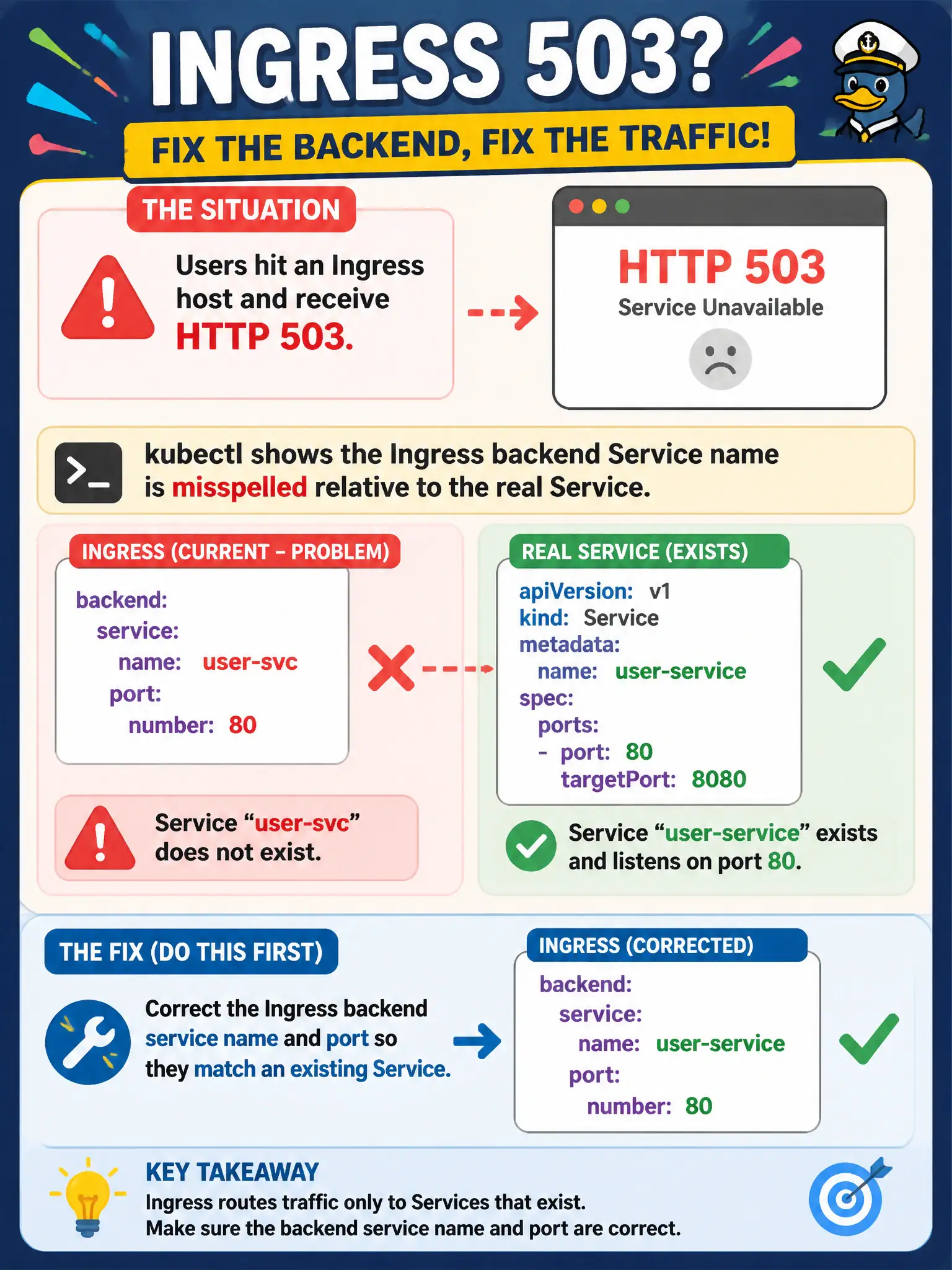
Users hit an Ingress host and receive HTTP 503. kubectl shows the Ingress backend Service name is misspelled relative to the real Service. What should the developer fix first?
Select an answer to reveal the explanation.
Short Explanation
503 from Ingress often means "I cannot find a healthy backend." A typo in the Service name is a classic culprit—fix the backend reference to the real Service and port before chasing replica counts or DNS theater.
Full Explanation
Users hitting an Ingress host and receiving HTTP 503 while kubectl shows the Ingress backend Service name is misspelled relative to the real Service should fix the Ingress backend service name and port first so they match an existing Service. Controllers cannot route to a Service that does not exist under the referenced name—503 is the common symptom for missing or misnamed backends on municipal portals, even when Deployments are healthy.
Increasing Deployment replicas does not resolve 503s caused by a bad Service name in the Ingress. Deleting CoreDNS Pods is unrelated scapegoating; DNS is not the first explanation when describe already shows a misspelled backend service. Switching every container to privileged mode does not bypass Service resolution for Ingress backends and is an inappropriate security change.
Exam caveat: always kubectl get svc and compare names and ports to Ingress backend references before deep application debugging. Operational check: correct serviceName/servicePort, kubectl describe ingress again, curl the host, and confirm successful app responses. Add a CI or policy check in city GitOps that rejects Ingress backends that do not match the Service inventory in the same namespace.