
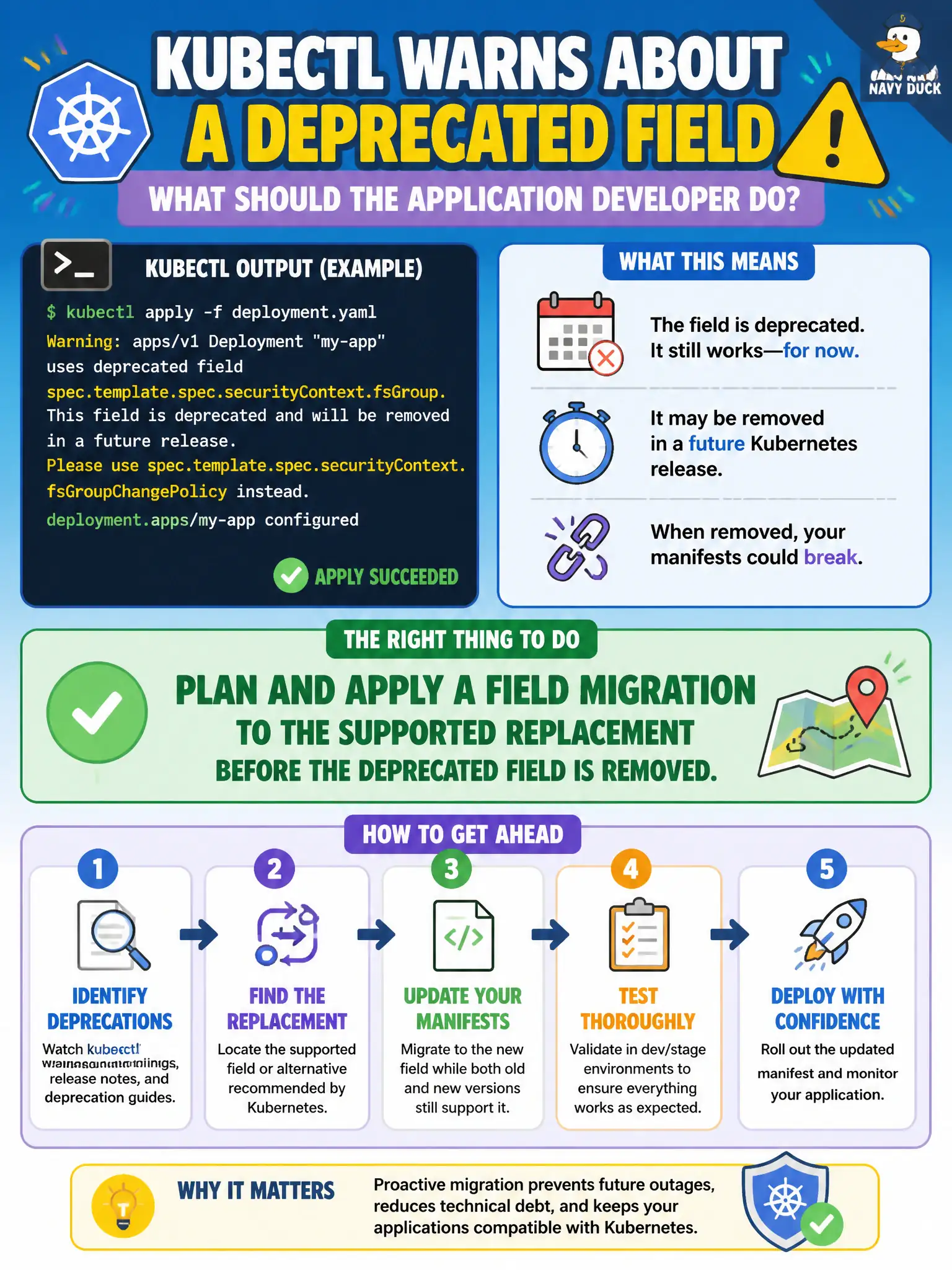
kubectl warns that a field in a Deployment manifest is deprecated, yet the apply still succeeds today. What should the application developer do?
Select an answer to reveal the explanation.
Short Explanation
A deprecated field is a porch light the city says it will unscrew next season. The house still works tonight, but you schedule the rewiring—migrate the field—before the light disappears mid-winter.
Full Explanation
When kubectl warns that a field in a Deployment manifest is deprecated yet apply still succeeds today, the application developer should plan and apply a field migration to the supported replacement before the deprecated field is removed. Soft warnings are the grace period municipal teams get to update templates without an outage later.
Why the other options fail by concept: Suppressing the warning and keeping the deprecated field indefinitely turns today’s soft fail into tomorrow’s hard fail. Deleting the Deployment’s selector is dangerous and unrelated to deprecating fields. Converting the Deployment into an unmanaged Pod abandons ReplicaSet/rolling benefits and does not solve API evolution.
Exam caveat: Deprecated fields may still be honored until a specific Kubernetes version—track release notes for the city’s target version. Helm charts and Kustomize bases can reintroduce deprecated fields after you fix one manifest—search the whole pipeline. Server-side dry-run on a newer staging cluster catches removals early.
Operational check: Identify the replacement field via kubectl explain deploy --api-version=apps/v1 and release notes, patch the manifest, apply to staging matching next prod version, run regression tests, then promote. Remove the deprecated field entirely rather than setting both old and new long-term.