
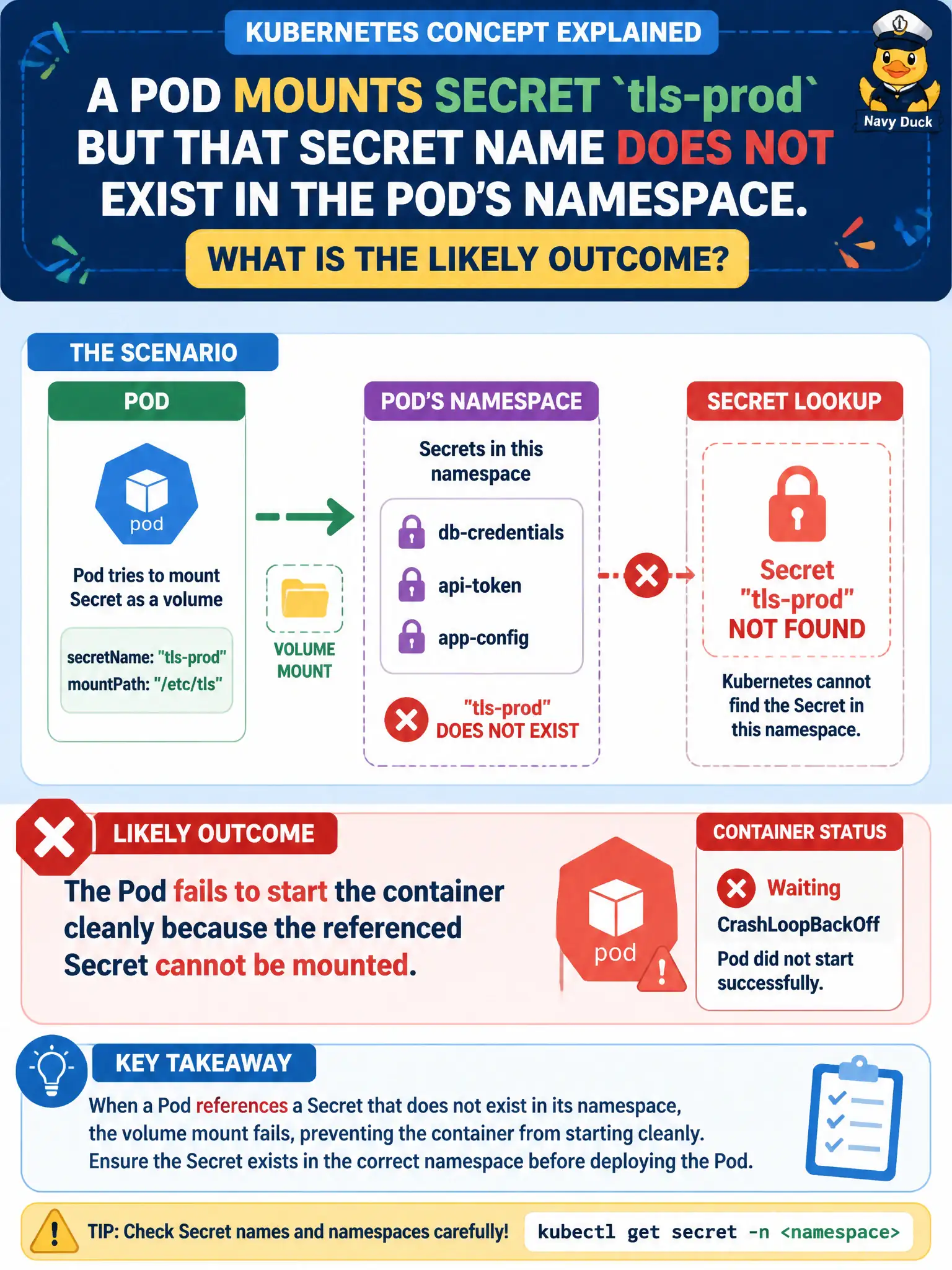
A Pod mounts Secret tls-prod as a volume, but that Secret name does not exist in the Pod's namespace. What is the likely outcome?
Select an answer to reveal the explanation.
Short Explanation
Pointing at a Secret that isn't there is like a missing key for the door—the container doesn't get in. Expect start failures around the volume mount, not a happy Ready Pod with empty files. Create the Secret in the same namespace with the right name.
Full Explanation
A Pod that mounts Secret tls-prod as a volume when that Secret name does not exist in the Pod's namespace typically fails to start the container cleanly because the referenced Secret cannot be mounted. Namespaced Secret resolution is strict for required mounts—municipal TLS sidecars will not become Ready on a missing Secret name.
Claiming the container starts and reads zeros from the mount path until the Secret is created understates the usual failure for required Secret volumes. Claiming the Pod is scheduled and marked Ready while events only warn about the missing Secret fails Ready expectations for required mounts. Claiming the API server creates an empty placeholder Secret automatically and marks it immutable invents auto-provisioning that does not occur for ordinary mounts.
Exam caveat: optional Secret volumes can allow start without the object; required is the default posture for TLS material. Operational check: kubectl get secret tls-prod -n <ns>, create it if missing, restart the Pod, and confirm the mount populates and the container becomes Ready. In CKAD scenarios involving q218, prefer verifying the live object with kubectl get and describe before changing cluster-wide settings.