
A library updates keys in a ConfigMap used as environment variables by catalog Pods. What should ops expect about those running Pods?
Select an answer to reveal the explanation.
Short Explanation
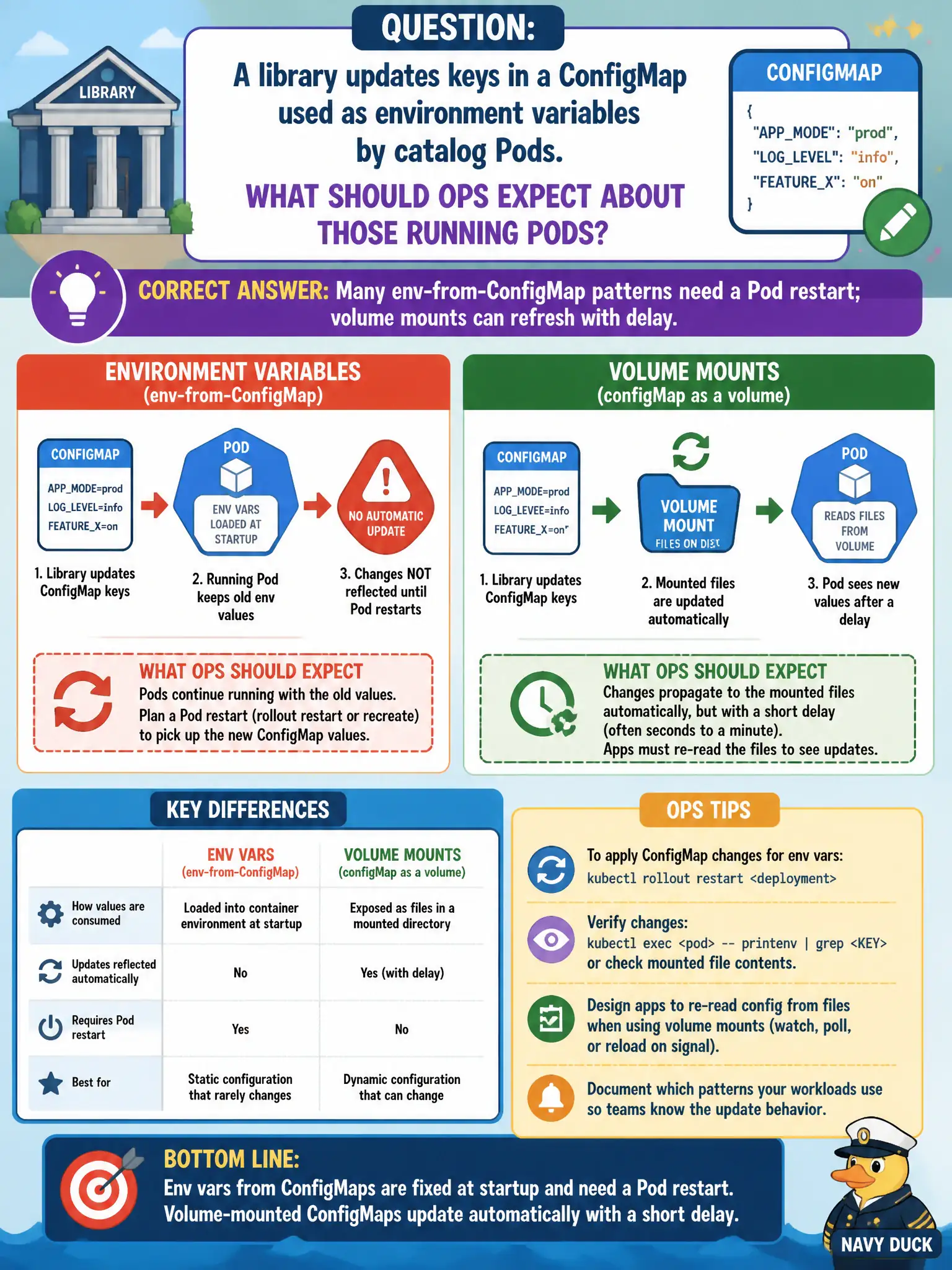
Env vars are stamped when the container starts—like writing settings on a whiteboard at boot. Change the ConfigMap later and those env consumers usually need a fresh Pod; file mounts can catch up after a bit.
Full Explanation
When a library updates keys in a ConfigMap used as environment variables by catalog Pods, operators should expect that many env-from-ConfigMap patterns need a Pod restart, while volume mounts can refresh with delay depending on kubelet sync behavior and how the application reads files. Environment variables are generally fixed for the life of a process at container start, so changing the ConfigMap alone does not magically rewrite the running process environment. For catalog Pods consuming flags via env/envFrom, plan a rollout restart after ConfigMap updates so citizens see the intended configuration.
Claiming every env-from-ConfigMap Pod rewrites its process environment instantly with no restart ever required is incorrect for typical env injection. Kubernetes does not always rebuild container images automatically when any ConfigMap key changes—images and ConfigMaps are separate concerns. Services do not automatically remap ClusterIP addresses whenever ConfigMaps change; Service networking is independent of ConfigMap key updates.
Exam caveat: distinguish env consumption (usually needs restart) from mounted ConfigMap volumes (may update on disk after a sync period, but apps may still cache). Operational check: update the ConfigMap, restart/roll the Deployment if env-based, then exec or describe to confirm new values inside catalog containers before announcing the library change.