
A municipal Gateway API HTTPRoute is not taking effect. What should administrators check first in status troubleshooting?
Select an answer to reveal the explanation.
Short Explanation
Gateway routes leave a status report card—Accepted or not, and why. Read those conditions before rebuilding the whole mesh.
Full Explanation
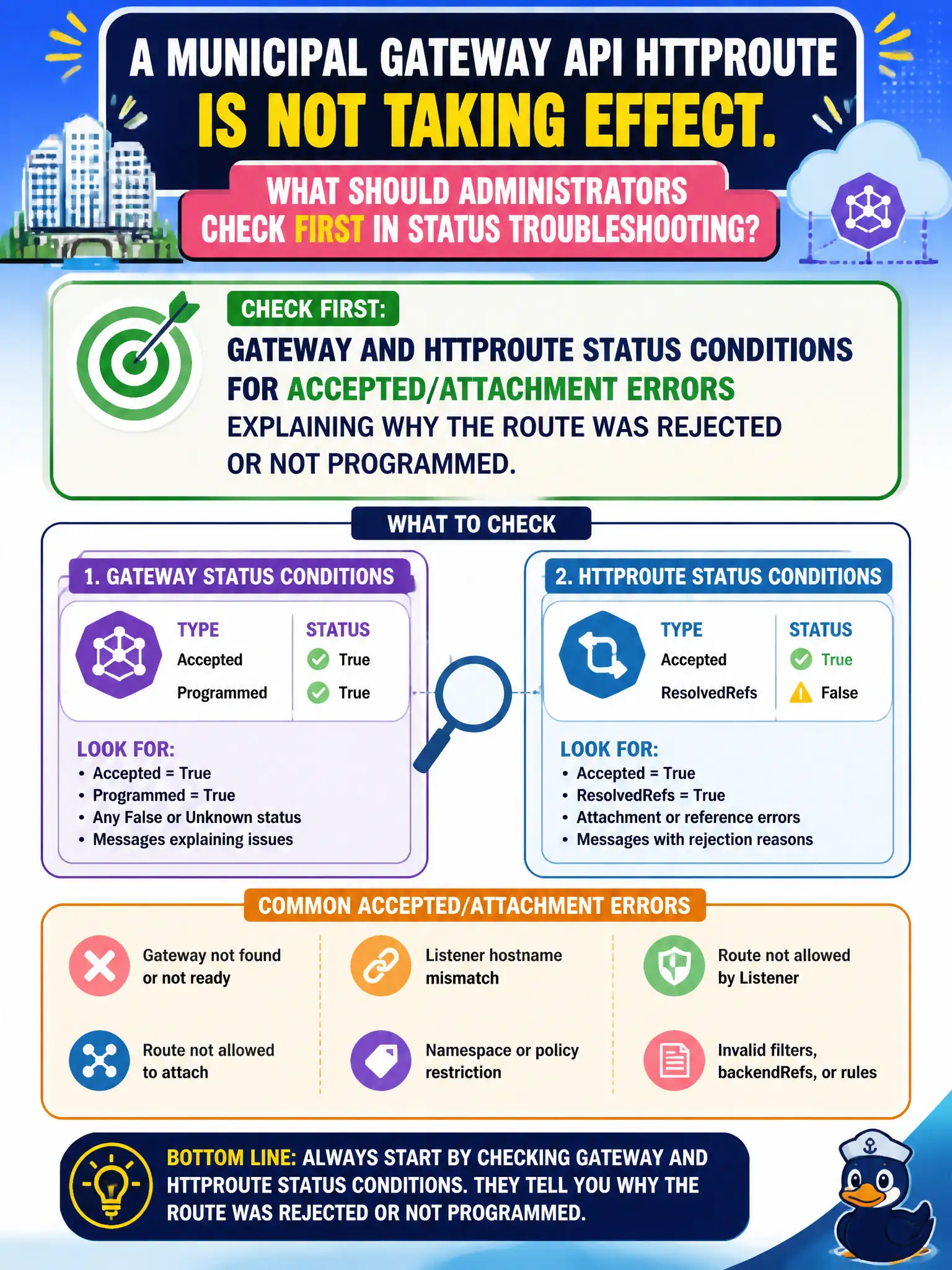
When a municipal Gateway API HTTPRoute is not taking effect, administrators should check Gateway and HTTPRoute status conditions first for Accepted/attachment errors explaining why the route was rejected or not programmed. Routes leave a status report card—read it before rebuilding the mesh. Whether kubectl logs --previous was run on kube-scheduler in the last hour is unrelated to Gateway route attachment. Whether the node's hostname equals the HTTPRoute name is not the first status troubleshooting check for Gateway API. Whether swap is disabled on every etcd learner is a node hygiene topic, not the first HTTPRoute status signal. Exam caveat: Controllers differ (Istio, Envoy Gateway, nginx gateway fabric). Still, status conditions are the portable first stop on CKA-adjacent Gateway questions. Operational check: kubectl describe the Gateway and HTTPRoute, fix ParentRef/GatewayClass/listener mismatches shown in conditions, and retest the municipal route. In municipal production practice, record the finding in the incident ticket with command output snippets, confirm the fix under change control, and re-validate the user-facing civic service before closing the change window. In municipal production practice, record the finding in the incident ticket with command output snippets, confirm the fix under change control, and re-validate the user-facing civic service before closing the change window.