
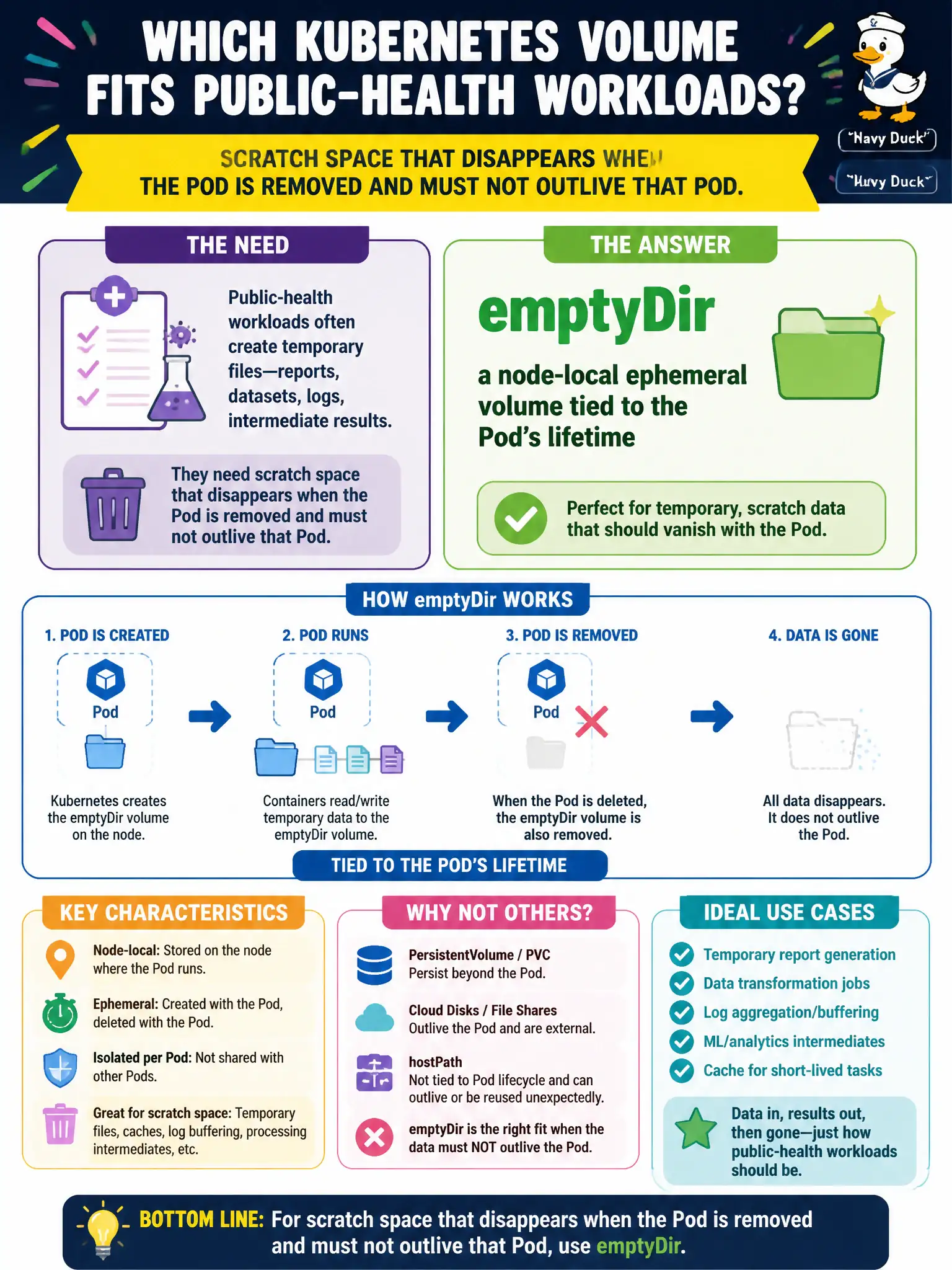
Public-health workloads need scratch space that disappears when the Pod is removed and must not outlive that Pod. Which volume type fits?
Select an answer to reveal the explanation.
Short Explanation
emptyDir is the whiteboard in the meeting room—useful while the meeting (Pod) is going, wiped when everyone leaves. Perfect for scratch and caches you don’t need tomorrow. It’s not a durable PV or an NFS share for forever data.
Full Explanation
Public-health workloads needing scratch space that disappears when the Pod is removed should use emptyDir, a node-local ephemeral volume tied to the Pod’s lifetime. emptyDir is the whiteboard in the meeting room—useful while the meeting (Pod) runs, wiped when everyone leaves. Perfect for caches and temp files that must not outlive the Pod.
A persistently retained PV with reclaimPolicy Retain is durable storage, not Pod-tied scratch. An NFS ReadWriteMany volume is not required for any container scratch directory. A StorageClass with WaitForFirstConsumer but no PVC cannot be mounted by name alone as ephemeral scratch.
Exam caveat: emptyDir can use disk or tmpfs (medium: Memory); memory-backed scratch counts against container memory limits. Node failure loses emptyDir data—never store sole copies of critical health data there.
Operational check: add an emptyDir volume to a test Pod, write files, delete the Pod, reschedule a replacement, and confirm the scratch contents are gone as expected. Keep civic change tickets precise: record object names, namespaces, and before/after observations so the next on-call engineer can replay the fix without guesswork. Keep civic change tickets precise: record object names, namespaces, and before/after observations so the next on-call engineer can replay the fix without guesswork.