
A 911-related portal’s Ingress objects look correct, yet every external route fails. Controllers and app Pods were not checked yet. What should operators verify early?
Select an answer to reveal the explanation.
Short Explanation
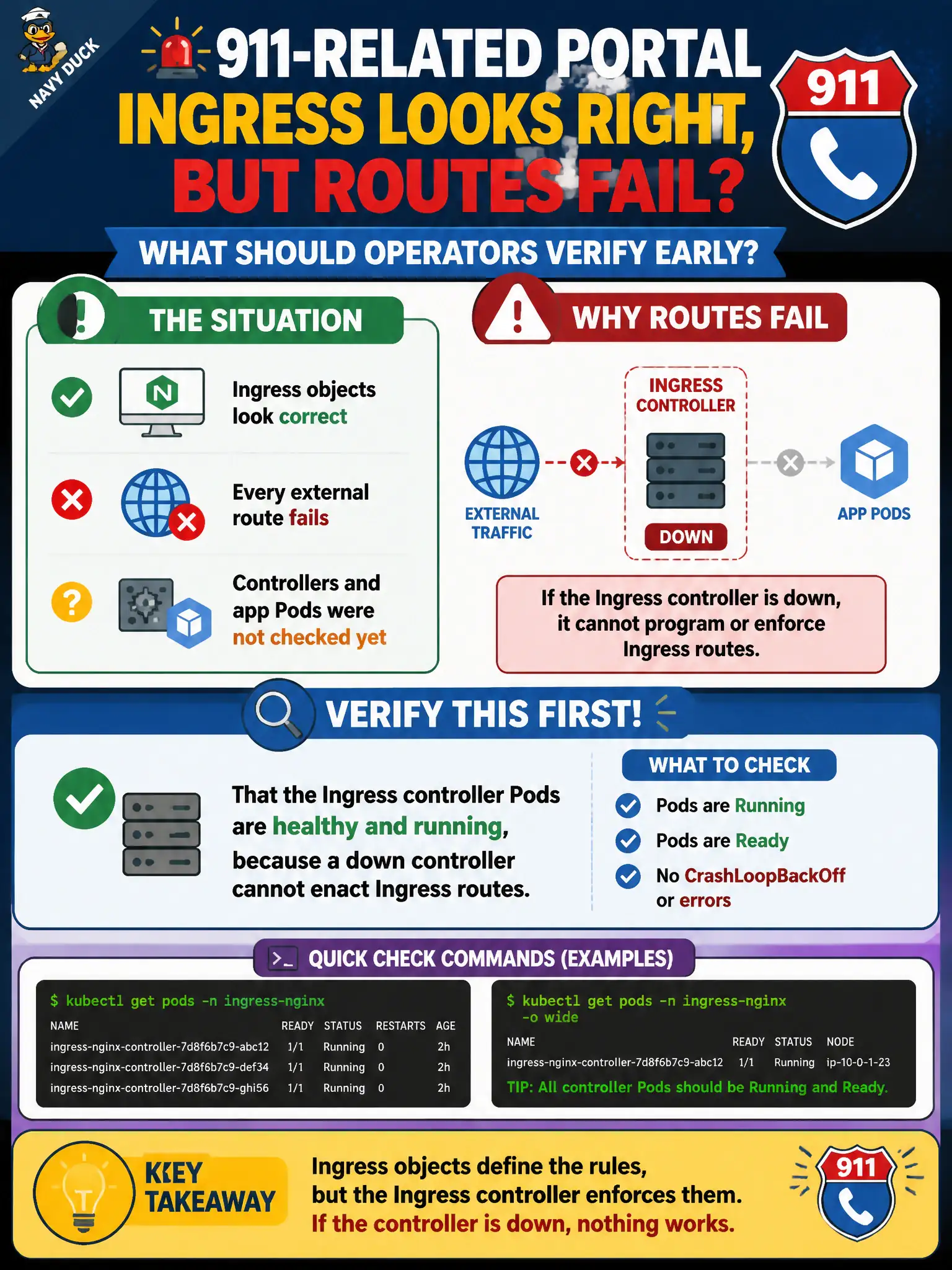
If the edge brain is down, perfect Ingress YAML will not save you. Check that the Ingress controller Pods are actually healthy before chasing app bugs for a total route blackout.
Full Explanation
When every external route for a 911-related portal fails even though Ingress objects look correct, operators should verify early that the Ingress controller Pods are healthy and running. Ingress resources are declarative; they take effect only while a controller is alive to program the data plane. A CrashLooping, pending, or deleted controller means a total edge blackout—perfect YAML cannot save a dead front-desk brain. Checking controller health before deep application forensics is the right triage order for simultaneous failure of all routes.
Confirming every worker Node is schedulingDisabled does not restore Ingress and reduces capacity. Requiring PersistentVolumeClaims Bound for each hostname is unrelated to HTTP routing. Deleting all application Services so the controller can use hostNetwork Pods destroys backends and is not a recovery step.
Exam caveat: also validate the controller’s Service or LoadBalancer and public DNS, but process health of the controller Deployment or DaemonSet is the first edge control-plane check. Application Pods can be fully Ready while citizens see failures if the controller is down.
Operational check: kubectl get pods -n <ingress-namespace>, describe unhealthy controller Pods, restore the controller workload, confirm Ingress status or address returns, then retest portal URLs before chasing application container logs.