
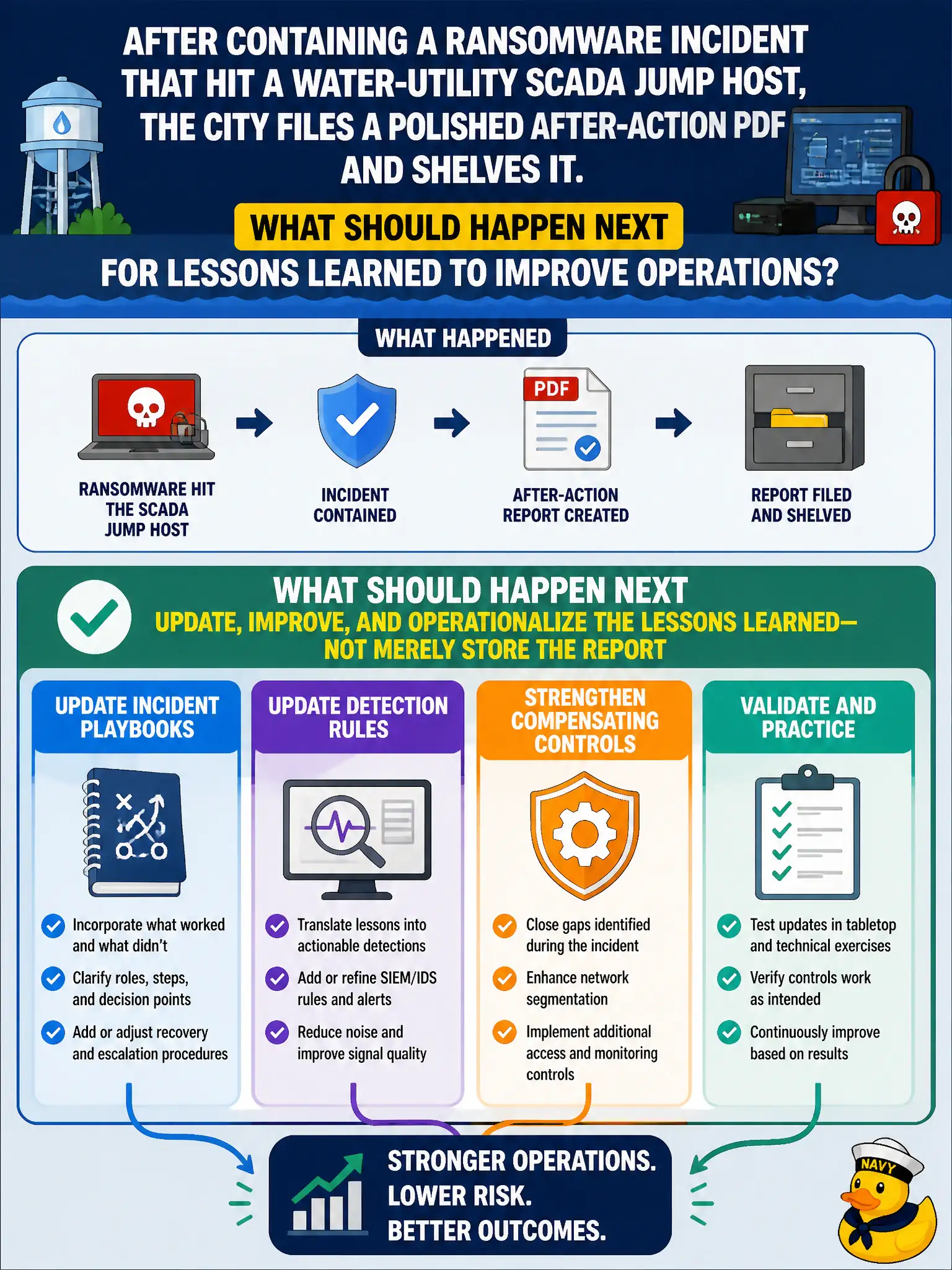
After containing a ransomware incident that hit a water-utility SCADA jump host, the city files a polished after-action PDF and shelves it. What should happen next for lessons learned to improve operations?
Select an answer to reveal the explanation.
Short Explanation
A lessons-learned binder that never changes the playbook is a trophy, not a fix. Use the review to tighten detections, steps, and controls so the next jump-host scare ends faster.
Full Explanation
Lessons learned close the incident-management lifecycle only when findings change how the organization detects and responds next time. After ransomware hits a water-utility SCADA jump host, a polished after-action PDF is useful documentation—but the operational value comes from updating incident playbooks, detection rules, network or host compensating controls, access paths to industrial jump hosts, and training based on what actually failed. Municipal utilities face real public-safety consequences; filing a report without hardening the jump-host pathway leaves the same attack surface for the next campaign.
Archiving the PDF while prohibiting playbook edits for twelve months freezes known weaknesses in place. Sharing the PDF externally with no internal control changes may create disclosure risk without improving resilience. Deleting the after-action package to reduce discovery exposure destroys institutional memory and can conflict with retention, regulatory, or insurance expectations; legal hold and counsel guidance manage discovery—erasing lessons does not improve security.
Exam caveat: incident response phases typically end with lessons learned / post-incident activity that feeds continuous improvement. The exam favors actionable remediation over documentation theater. Industrial and SCADA-adjacent jump hosts are high-value targets; compensating controls and monitoring updates are classic correct follow-ups when patches or redesigns take time.
Operational check: after every major incident or significant near miss, track a remediation backlog with owners and due dates tied to the after-action items—new SIEM use cases, jump-host MFA and network isolation, playbook step changes—and verify closure in the next tabletop or purple-team drill.