
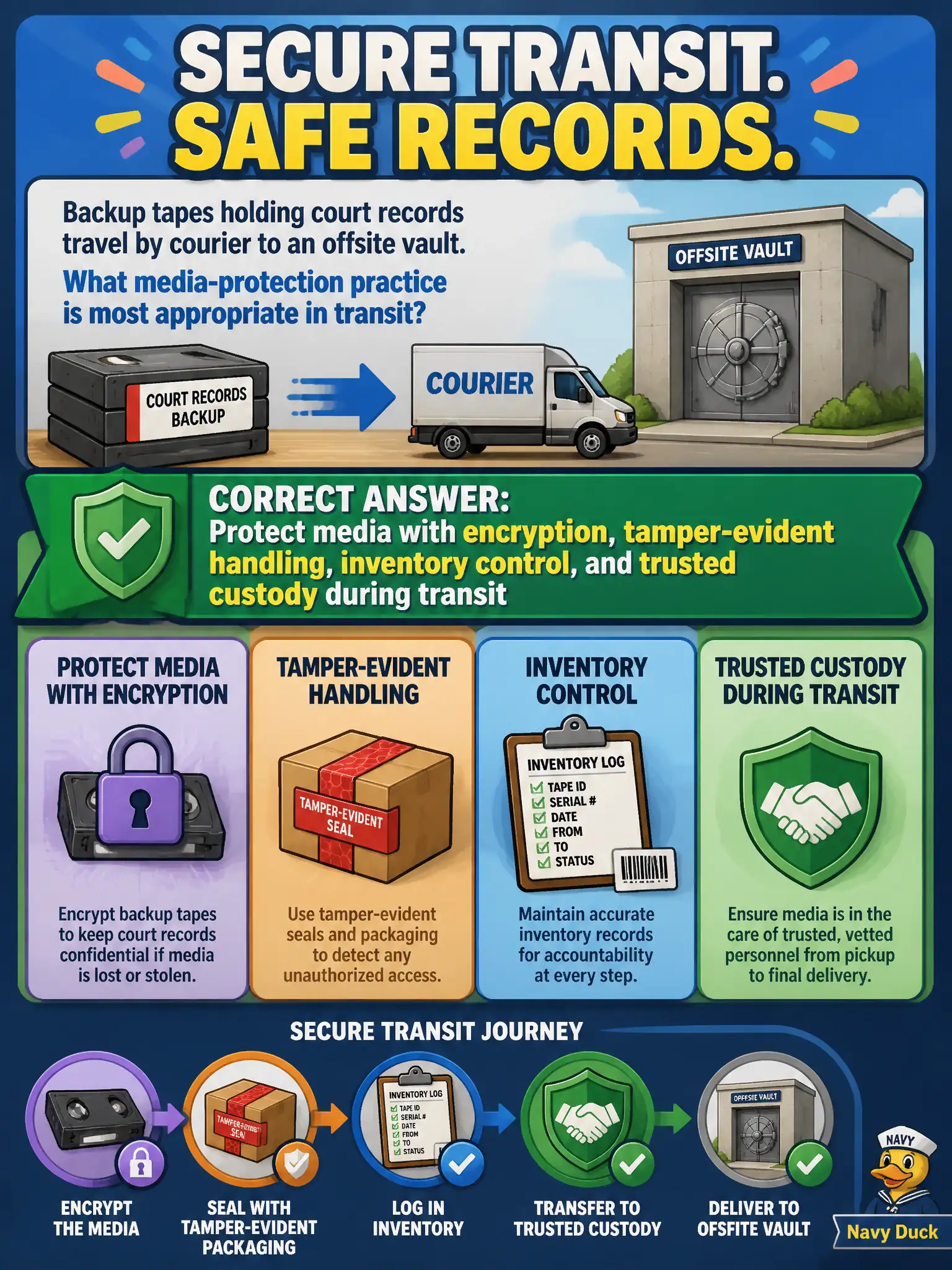
Backup tapes holding court records travel by courier to an offsite vault. What media-protection practice is most appropriate in transit?
Select an answer to reveal the explanation.
Short Explanation
Tapes on a truck are still your court records — lock the bits, track the boxes, and keep custody tight. Encryption plus tamper-aware handling beats open bins on the dock. Curious warehouse browsing is not a backup feature.
Full Explanation
Backup and archive media leaving a courthouse or city facility remain sensitive assets in transit and at rest. Protection combines encryption of contents so theft of a tape does not yield readable court records, tamper-evident packaging and handling so unauthorized opening is visible, inventory control so every media identifier is tracked from vault to vehicle to destination, and trusted custody with logged transfers between authorized handlers. Those measures together address confidentiality, integrity, and accountability for records that may include sealed or personally sensitive information. Contracts with couriers and offsite facilities should mirror the same expectations.
Shipping unlabeled tapes in open bins with no inventory tracking invites loss, mix-ups, and inability to prove what left the building. Disabling encryption so warehouse staff can browse contents if curious is an intentional confidentiality failure. Leaving tapes on the loading dock overnight for convenience abandons custody at the most exposed physical point. Exam caveat: encryption does not replace custody—lost encrypted media still triggers inventory, possible breach analysis, and key-compromise review depending on policy. Operationally, use media manifests with dual verification at handoff, encrypt before transport, and reconcile vault inventories on a fixed schedule with exception escalation.