
Night-shift NOC operators for a transit network need console access to keep services running. How should their access be set?
Select an answer to reveal the explanation.
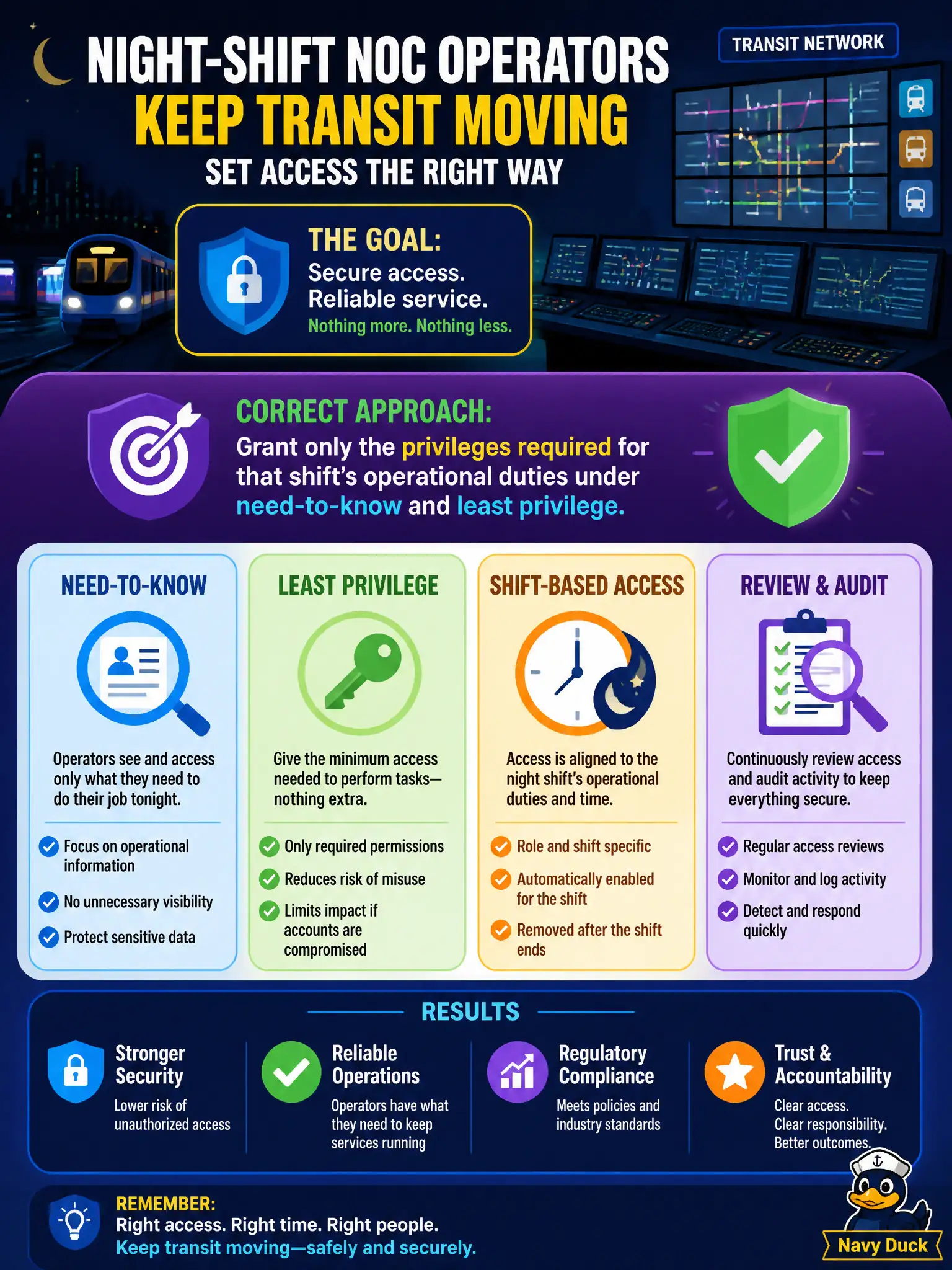
Short Explanation
The night crew needs the keys for their doors, not the master ring for city hall. Least privilege and need-to-know keep shift access tight. Shared root sticky notes and always-on domain admin are how quiet nights become loud incidents.
Full Explanation
Shift-based operations for municipal SOCs, network operations, or critical infrastructure support must follow need-to-know and least privilege: operators receive only the rights required for that shift’s duties, ideally time-bound and reviewed. Tight privileges limit blast radius if credentials are phished or an insider acts maliciously, and they create clearer accountability for who performed sensitive actions overnight. Just-in-time elevation, privileged access workspaces, and session logging reinforce the model without blocking legitimate emergency response when playbooks define escalation paths.
Giving every operator domain-admin rights to save time during incidents maximizes lateral movement potential and turns every compromised account into an enterprise-wide event. Sharing a single root password posted on the wall monitor destroys individual accountability and makes credential rotation and forensics nearly impossible. Disabling authentication overnight so scripts never fail removes a fundamental control when staffing is thinnest and attackers often prefer to operate. Exam caveat: least privilege is not hostility to operations—emergency break-glass accounts can exist with heavy monitoring and post-use review. Operationally, map shift roles to entitlement sets, expire standing admin where possible, and audit overnight privileged sessions the next business day.