
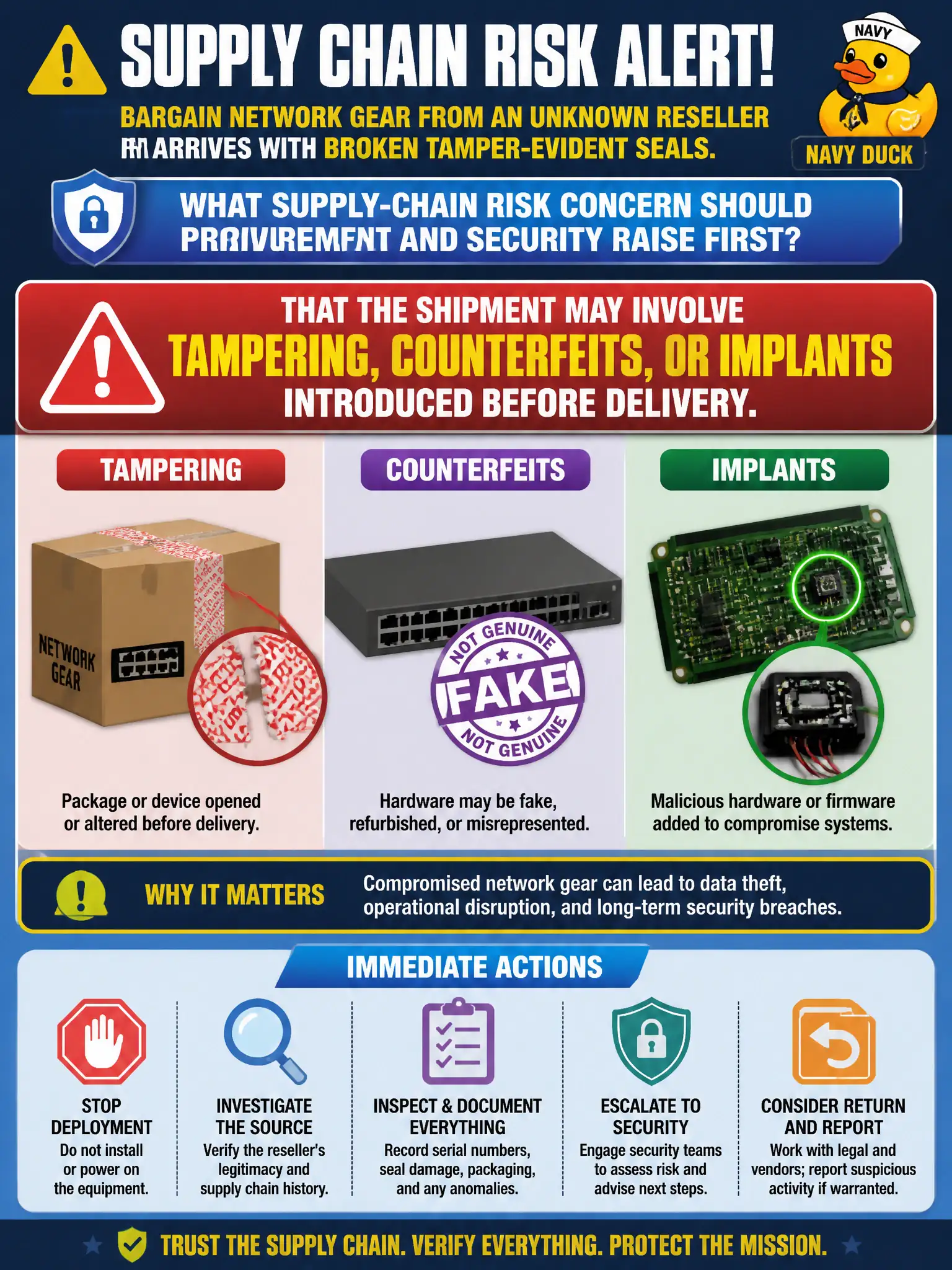
Bargain network gear from an unknown reseller arrives with broken tamper-evident seals. What supply-chain risk concern should procurement and security raise first?
Select an answer to reveal the explanation.
Short Explanation
Broken seals on mystery-reseller gear is a supply-chain red flag, not a clearance sale feature. Think tampering, counterfeits, or nasty implants—not just a scratched box. SCRM starts at the loading dock.
Full Explanation
Broken tamper-evident seals on bargain network gear from an unknown reseller raise immediate supply-chain concern that the shipment may have been tampered with, counterfeited, or implanted before delivery. Municipal switches and routers sit in privileged network positions; compromised hardware can undermine segmentation, monitoring, and confidentiality across civic systems. Interpreting broken seals as proof the equipment is newer, assuming unknown resellers guarantee better latency, or dismissing tamper evidence as irrelevant for municipal gear all miss the integrity risk. Procurement and security should pause acceptance, escalate to SCRM process, and prefer authorized channels with chain-of-custody controls. Exam caveat: CISSP supply-chain risk management highlights hardware integrity, counterfeit risk, and tampering in transit or at intermediaries. Operational check: reject or quarantine sealed-broken shipments, verify serials against authorized distributors, require tamper-evident packaging and receiving inspection procedures, and document exceptions only with compensating verification. Update purchasing policy to restrict critical network gear to approved vendors and to mandate inspection criteria at receiving docks. Investigate how the unknown reseller entered the buying path so the process failure is fixed, not only the single pallet.