
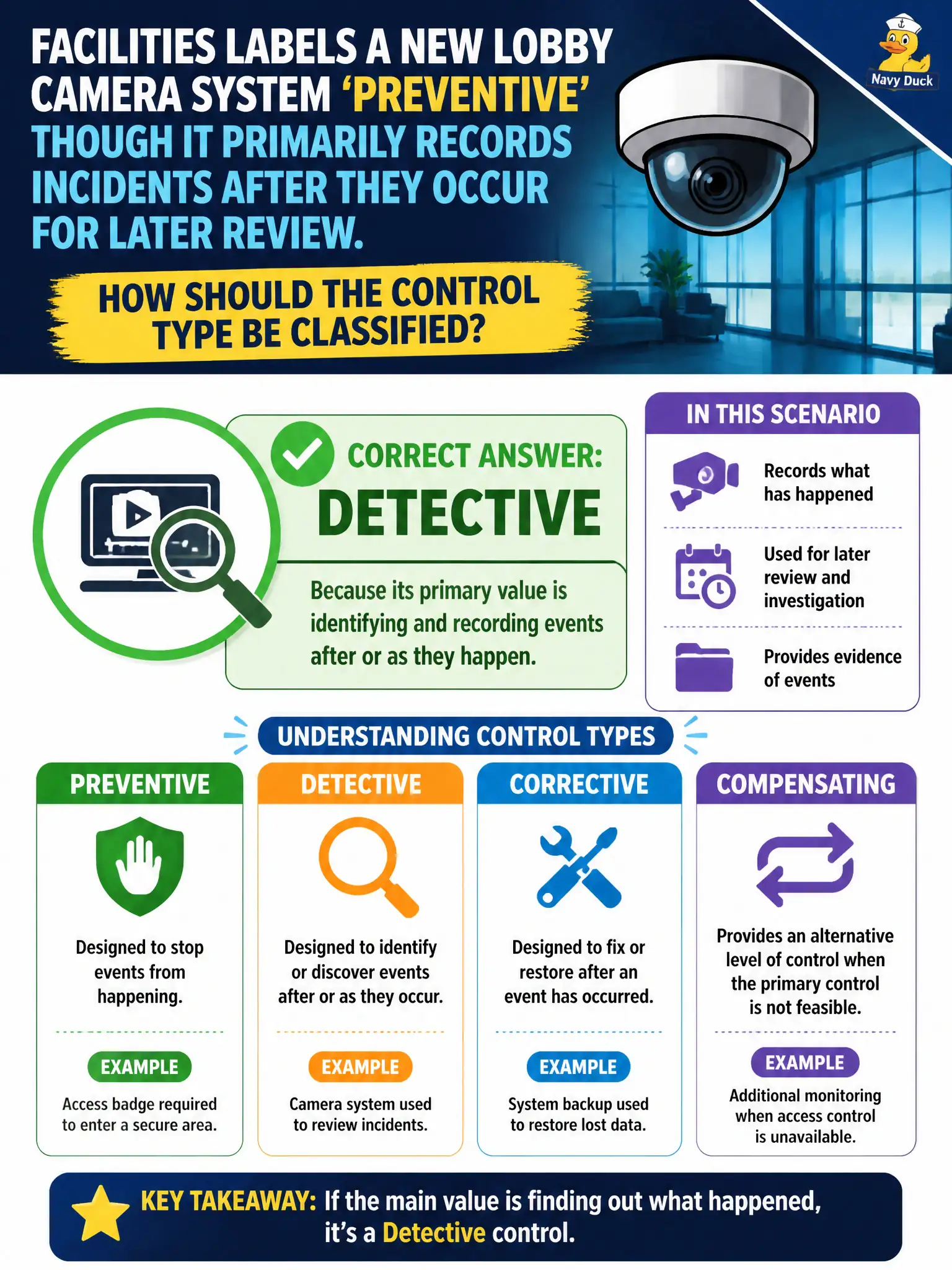
Facilities labels a new lobby camera system 'preventive' though it primarily records incidents after they occur for later review. How should the control type be classified?
Select an answer to reveal the explanation.
Short Explanation
A camera that mostly watches the movie after the fact is detective gear, not a force field. Preventive stops the bad thing; detective spots it; corrective cleans up. Mislabeling muddies which gap you still have to fill.
Full Explanation
Control types are classified by primary function: preventive stops or reduces likelihood before an event, detective identifies or records events as or after they occur, and corrective restores after damage. A lobby camera system whose main value is recording incidents for later review is detective, even if facilities marketing labels it preventive. Cameras can deter some behavior, but when the designed purpose is evidence capture and after-the-fact identification, detective is the correct primary classification. Calling the system corrective because it 'repairs' badge readers misstates both camera capability and corrective controls. Asserting that any camera inherently prevents all crime overclaims preventive effect. Treating video as compensating encryption or as a replacement for access policy conflates unrelated control categories. Exam caveat: CISSP expects accurate control-type classification by function; labels used in procurement or facilities branding do not override how the control actually operates. Operational check: map physical and technical controls to preventive, detective, deterrent, corrective, compensating, or recovery categories based on primary purpose; use cameras within a layered design that still includes access control and monitoring response. Document retention, access to footage, and incident-response playbooks so detective value is realized when events occur.