
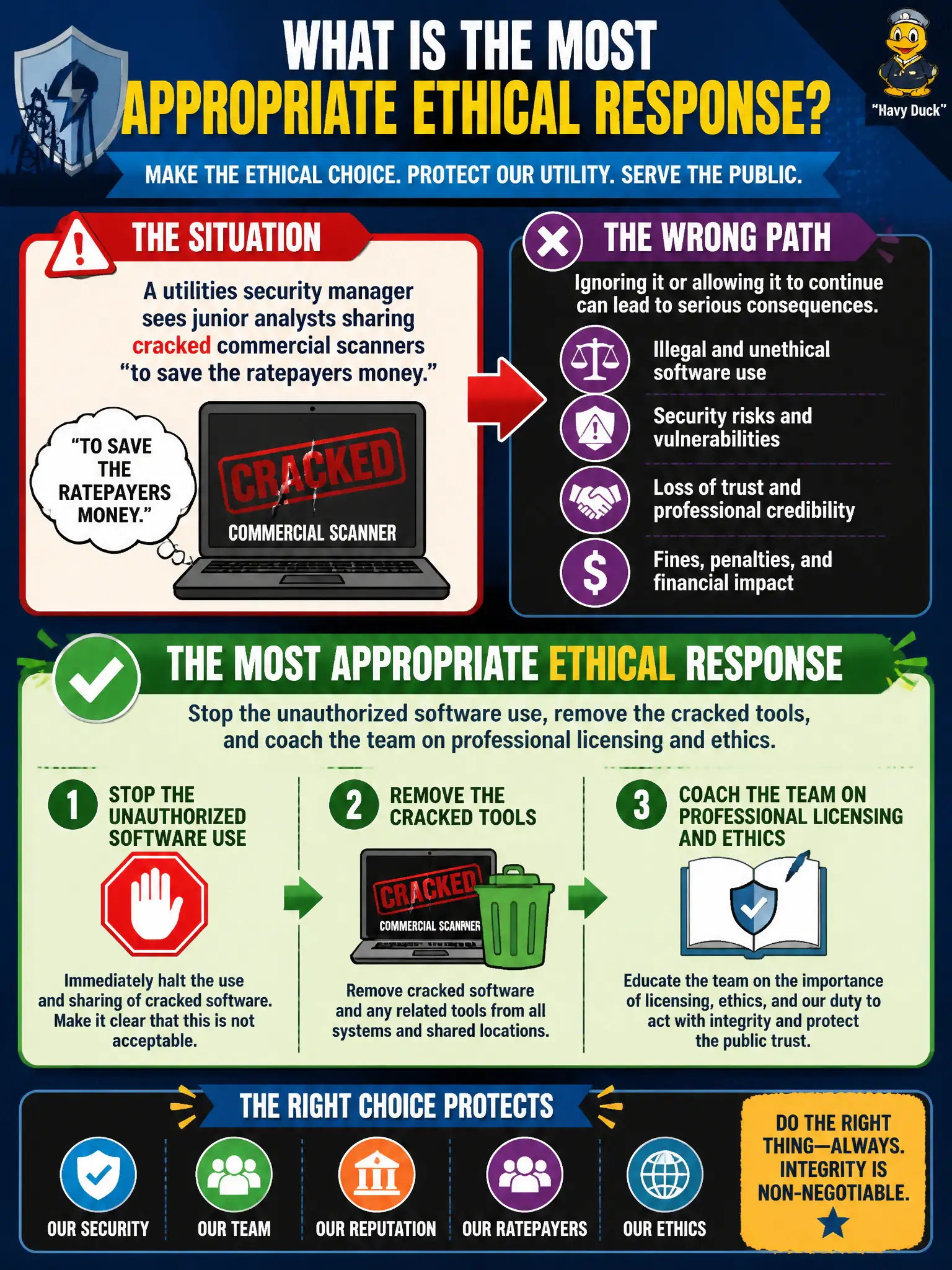
A utilities security manager sees junior analysts sharing cracked commercial scanners 'to save the ratepayers money.' What is the most appropriate ethical response?
Select an answer to reveal the explanation.
Short Explanation
Saving money with pirated scanners is like fixing a water main with stolen parts — the short-term win creates a bigger integrity leak. The manager's job is to shut it down, clean it up, and teach why licensed tools matter. That models the ethics you want the juniors to copy.
Full Explanation
Professional ethics and intellectual-property compliance require that security work be performed with authorized tools. When junior utilities analysts share cracked commercial scanners to 'save ratepayers money,' the manager's most appropriate response is to stop the unauthorized use, remove the cracked software, and coach the team on licensing and ethics. That action protects the organization from legal exposure, models the conduct expected of practitioners, and prevents a culture where ends justify unlicensed means—especially dangerous in a regulated utility environment where integrity of practice is scrutinized.
Allowing pirated tools merely because scans stay internal and results are unpublished still violates licensing and professional canons; secrecy of output does not legalize stolen input. Ignoring the practice until next year's procurement budget treats ethics as contingent on funding and signals that violations are tolerable until convenient. Reassigning analysts to a less technical team without documenting the issue avoids confrontation while leaving the cracked tools and cultural problem unaddressed, and it fails to create the corrective record leadership and auditors later need.
Exam caveat: Watch for distractors that frame piracy as a budget innovation or as harmless if 'no one sees the reports.' CISSP ethics prefer immediate cessation, remediation, and education over delayed procurement excuses.
Operational check: Inventory endpoints for unauthorized security tools, revoke and replace with licensed alternatives or open-source options approved by procurement, document the coaching and policy citation, and add license compliance to onboarding and periodic access reviews.