
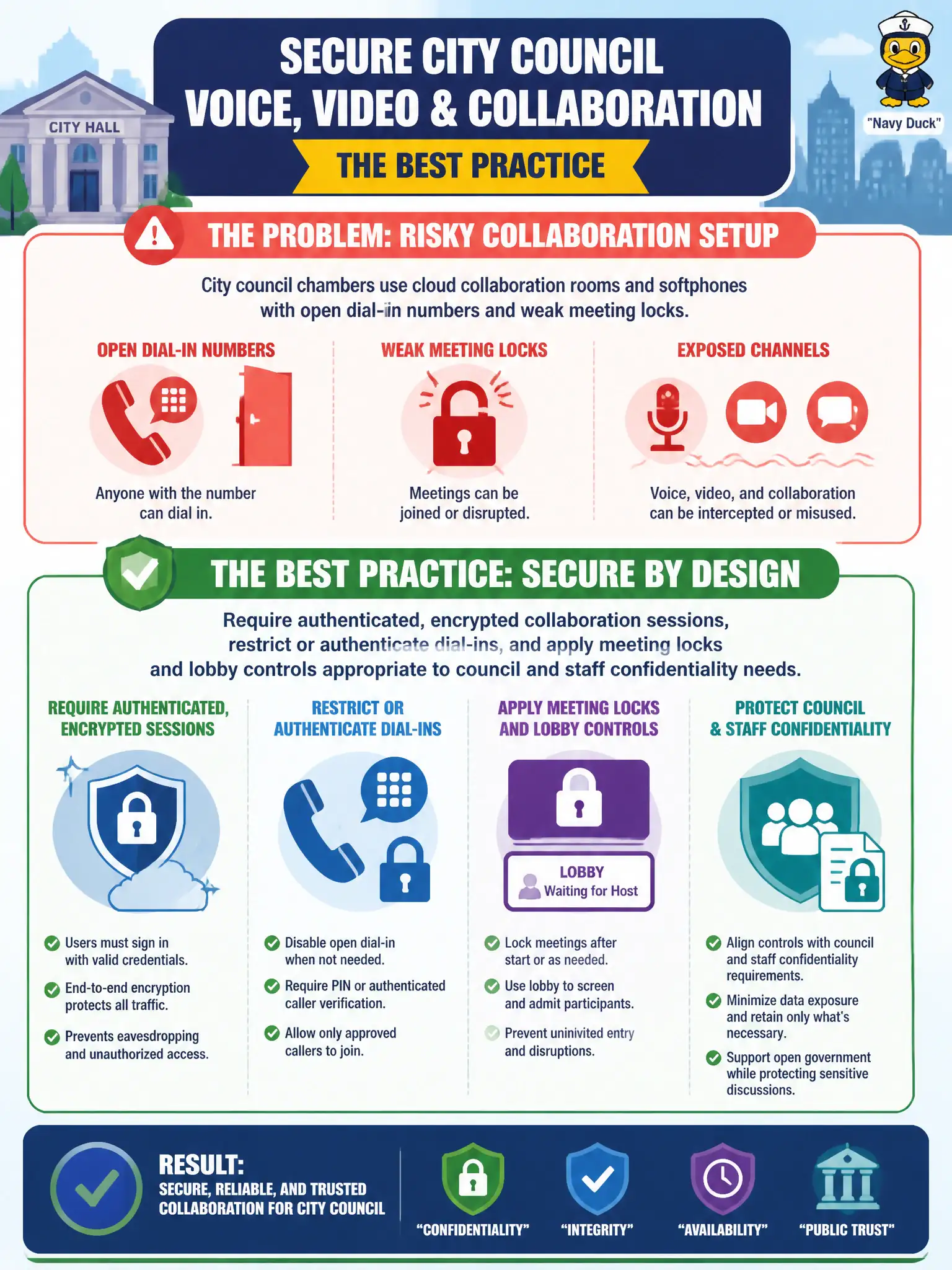
City council chambers use cloud collaboration rooms and softphones with open dial-in numbers and weak meeting locks. Which practice best secures voice, video, and collaboration channels?
Select an answer to reveal the explanation.
Short Explanation
Open dial-ins are like leaving the council chamber door propped with a brick—anyone can wander in and listen or heckle. Lock the meeting, authenticate who joins, and keep the session encrypted.
Full Explanation
City council chambers using cloud collaboration rooms and softphones with open dial-in numbers and weak meeting locks expose confidential deliberations to eavesdropping, disruption, and social-engineering entry. Requiring authenticated, encrypted sessions, restricting or authenticating dial-ins, and applying meeting locks and lobby controls matched to confidentiality needs restores the same basic access discipline expected for a physical chamber door. Encryption protects media in transit; authentication and lobby controls decide who may join staff and council conversations in the first place.
Posting standing dial-in numbers on social media so constituents never miss a session advertises persistent unprotected entry points into meetings that may include closed-session content. Disabling encryption so older softphones avoid certificate prompts sacrifices confidentiality of voice and video for convenience. Bridging softphones directly into the OT water SCADA VLAN for unified communications mixes collaboration endpoints with process-control networks and creates a dangerous trust bridge unrelated to council secrecy needs.
Exam caveat: CISSP communications security for voice/video expects encryption plus access control for sensitive meetings. Open dial-ins and OT adjacency are common distractors against proper session hygiene.
Operational check: disable permanent public dial-ins for closed sessions; enforce meeting passwords or authenticated identity providers; enable waiting lobbies and lock after start for council/staff meetings; require SRTP/TLS or platform equivalents; and ensure collaboration networks remain segmented from OT.