
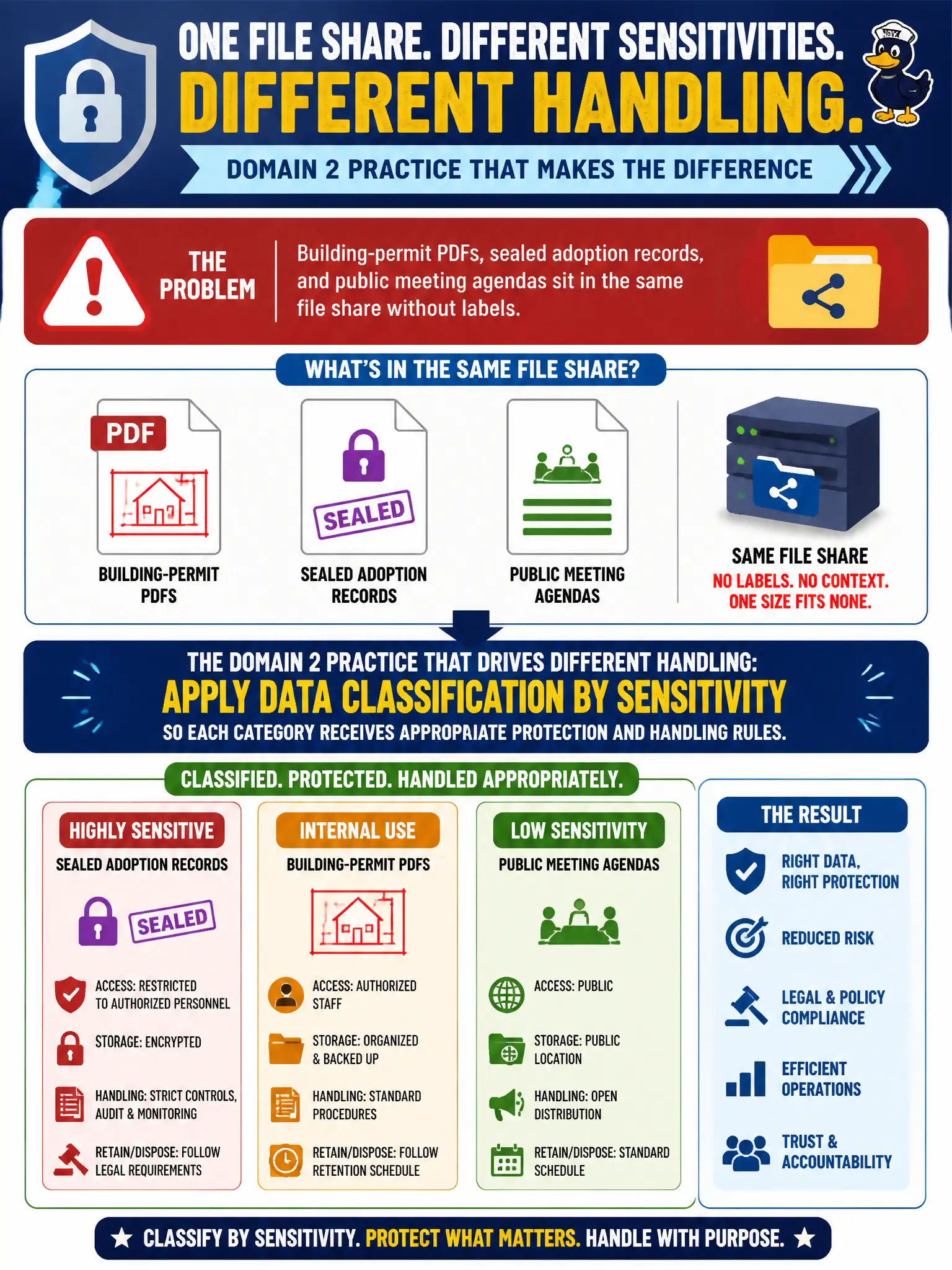
Building-permit PDFs, sealed adoption records, and public meeting agendas sit in the same file share without labels. What Domain 2 practice should drive their different handling?
Select an answer to reveal the explanation.
Short Explanation
Permits, sealed adoptions, and open agendas are not the same flavor of data. Classification is the label that tells you who can see it and how hard to lock it down. One share, zero labels, is how secrets sit next to press releases.
Full Explanation
Data classification by sensitivity drives different handling rules for building-permit PDFs, sealed adoption records, and public meeting agendas that currently share one unlabeled file share. Sealed adoption records typically require stringent confidentiality and access control; public agendas are often intended for open disclosure; permit documents may sit between depending on personal data content. Identical 'public' labels, encrypting only the frequently downloaded agendas, or deleting sealed records monthly to reduce workload all violate classification-driven protection and retention duties. Without labels and handling standards, permissions, DLP, encryption, and retention cannot be applied consistently across municipal content. Exam caveat: CISSP Domain 2 emphasizes classifying information assets by sensitivity and applying proportionate controls. Operational check: define classification tiers and handling standards, label existing shares starting with highest-sensitivity repositories, separate sealed records into restricted stores with audited access, and publish guidance so staff know how to mark new documents. Audit the shared drive for unlabeled sensitive content and remediate misplacements before expanding self-service collaboration tools.