
A network change would place PLC traffic at a grain elevator into a queue the office file transfers are allowed to starve whenever the WAN is busy. Which judgment fits OT constraints?
Select an answer to reveal the explanation.
Short Explanation
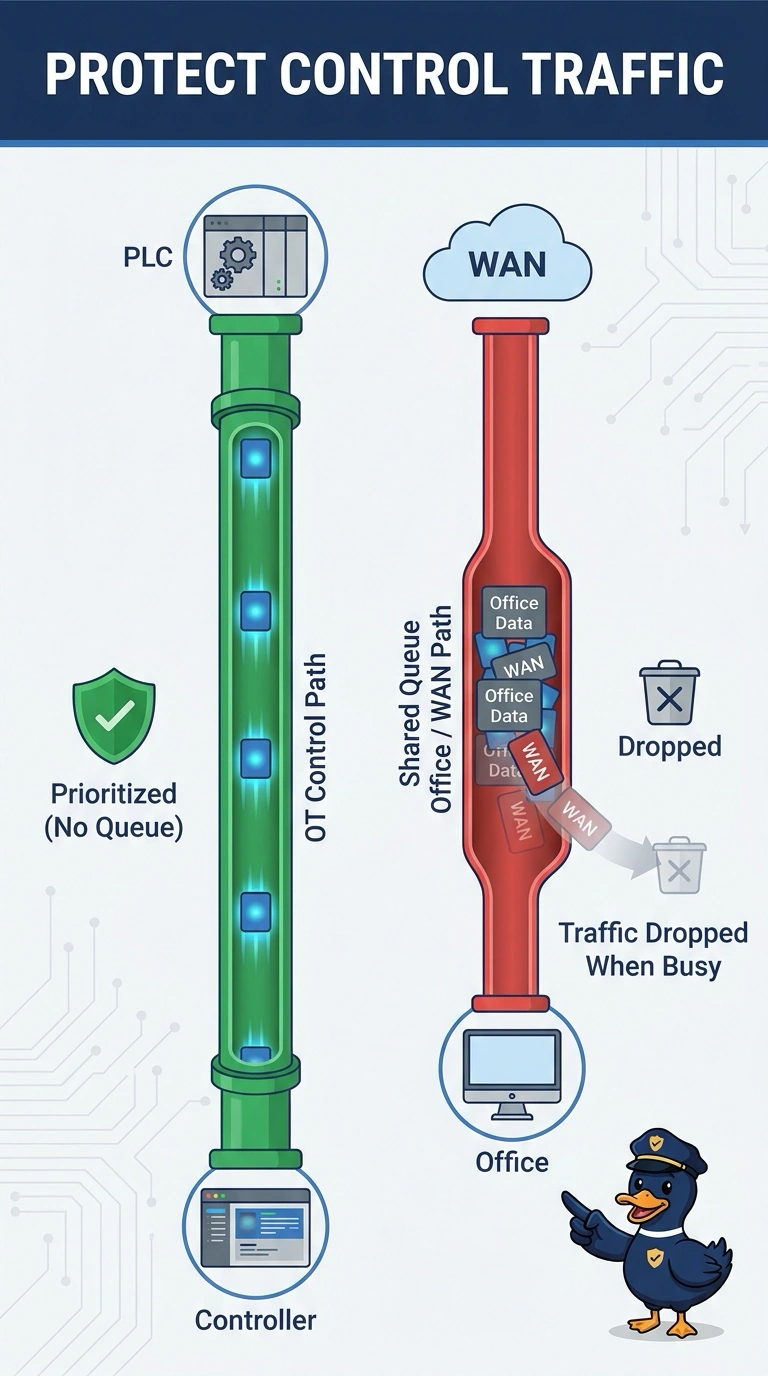
You need predictable delivery for the elevator controllers, not a queue that office copies can starve. Keep PLC traffic out of that queue so a busy WAN does not delay or drop it. Large file copies and office video must not take priority over controller traffic, and retransmission does not guarantee an on-time cycle.
Full Explanation
OT networks depend on predictable delivery. A queue that office file transfers are allowed to starve can delay or drop PLC traffic whenever the WAN is busy, disrupting a control conversation designed for a quiet, local path. Keep controller traffic out of that queue. Using it so large office copies are never delayed reverses the priority: elevator control traffic is time-sensitive, while a file copy can wait. The claim that a PLC retransmits forever and never misses a cycle is not valid for every controller; even a successful retransmission may arrive too late for control. Making controller traffic wait behind office video makes the same mistake by favoring business-user comfort over timely control. Exam caveat: the key is not a particular queue name, but avoiding a class that office traffic is allowed to starve or drop. Do not infer that retransmission makes a queue safe. Practical check: inspect the policy map or WAN shaper to confirm controller traffic is not in the class office copies can fill, then verify that a busy file transfer does not add loss to the PLC path.