
A city CIO office wants denser RFP language rewritten in plain language for small vendors. How should AI support that content drafting goal?
Select an answer to reveal the explanation.
Short Explanation
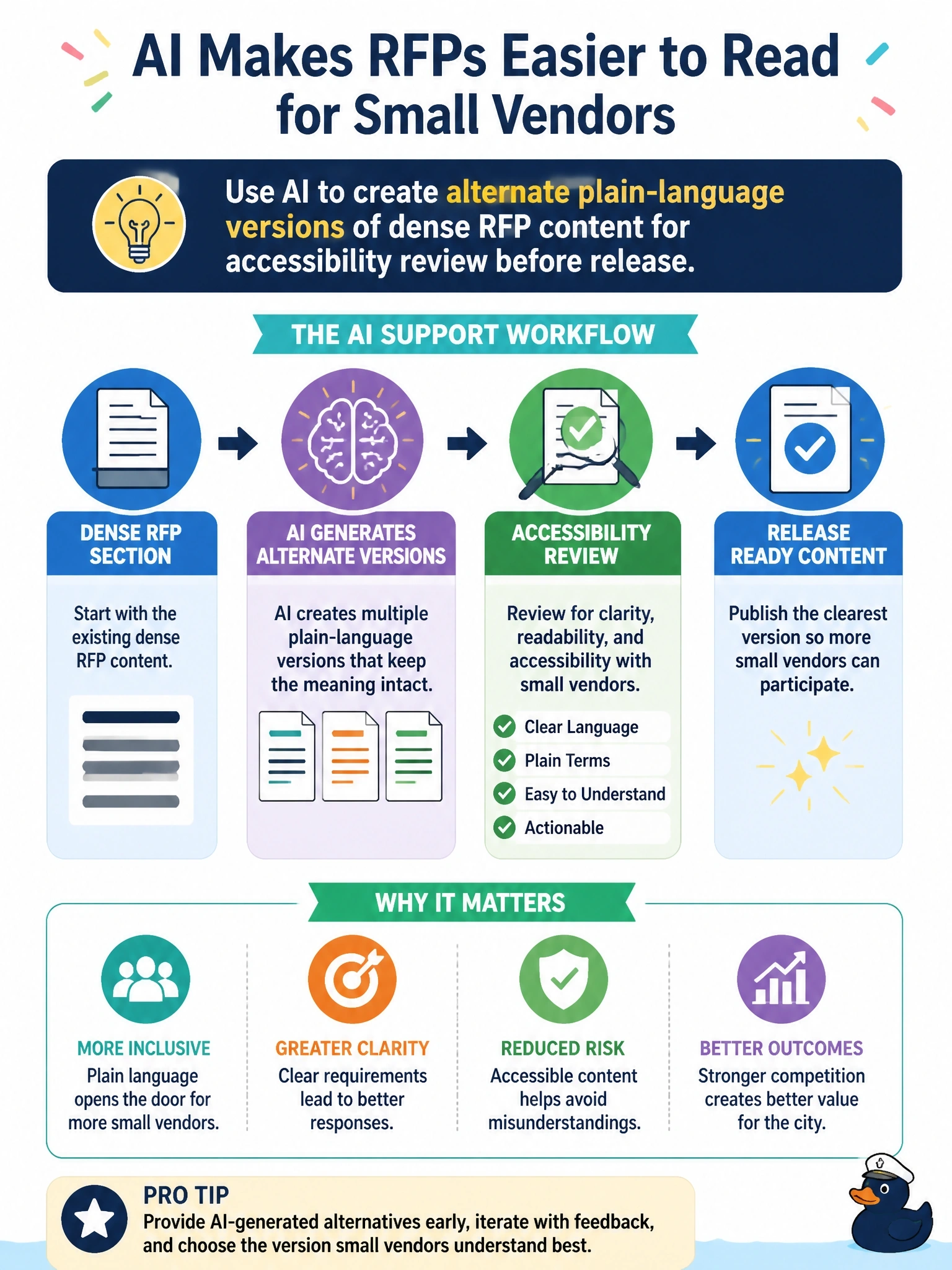
Dense RFP sections lose small vendors. Ask AI for plain-language alternatives, then have procurement review them so accessibility improves without quietly rewriting the rules of the game.
Full Explanation
AI content drafting supports a city CIO office that needs dense RFP language rewritten for small vendors when the model produces alternate plain-language versions of the dense section and procurement staff review those variants for accessibility before release. The correct goal is comprehension: small proposers should understand mandatory requirements without the city silently changing evaluation rules, deleting compliance obligations, or replacing the official solicitation with an unverified rewrite. Plain-language assist improves equity of access while humans retain control of the official RFP text and mandatory clauses.
Removing all mandatory compliance clauses because plain language supposedly means fewer rules fails by concept—accessibility of wording is not deregulation; insurance, cybersecurity, and reporting requirements remain binding even when restated more clearly. Publishing only the model’s rewrite and deleting the official RFP text fails because the solicitation of record must remain authoritative and reviewed; an unsupervised rewrite can introduce ambiguity or conflict with procurement code. Asking AI to add secret evaluation criteria not disclosed to proposers fails on fairness and procurement integrity—hidden criteria undermine competition and can violate open-procurement principles that municipal buying processes are built to protect.
Exam caveat: plain-language rewrites can accidentally soften shall/must language or omit cross-references that carry legal weight, so reviewers must compare clause-by-clause against the official text. Also distinguish explanatory vendor guides from the binding RFP sections.
Operational check: generate plain-language alternatives for the dense section, have procurement mark each restatement as equivalent or corrected, preserve all mandatory clauses, and release accessibility-improved language only after confirming no undisclosed evaluation factors were introduced.