
A building inspection division asks an LLM to brainstorm workshop agenda ideas for community budget nights. What is the most appropriate use of AI here?
Select an answer to reveal the explanation.
Short Explanation
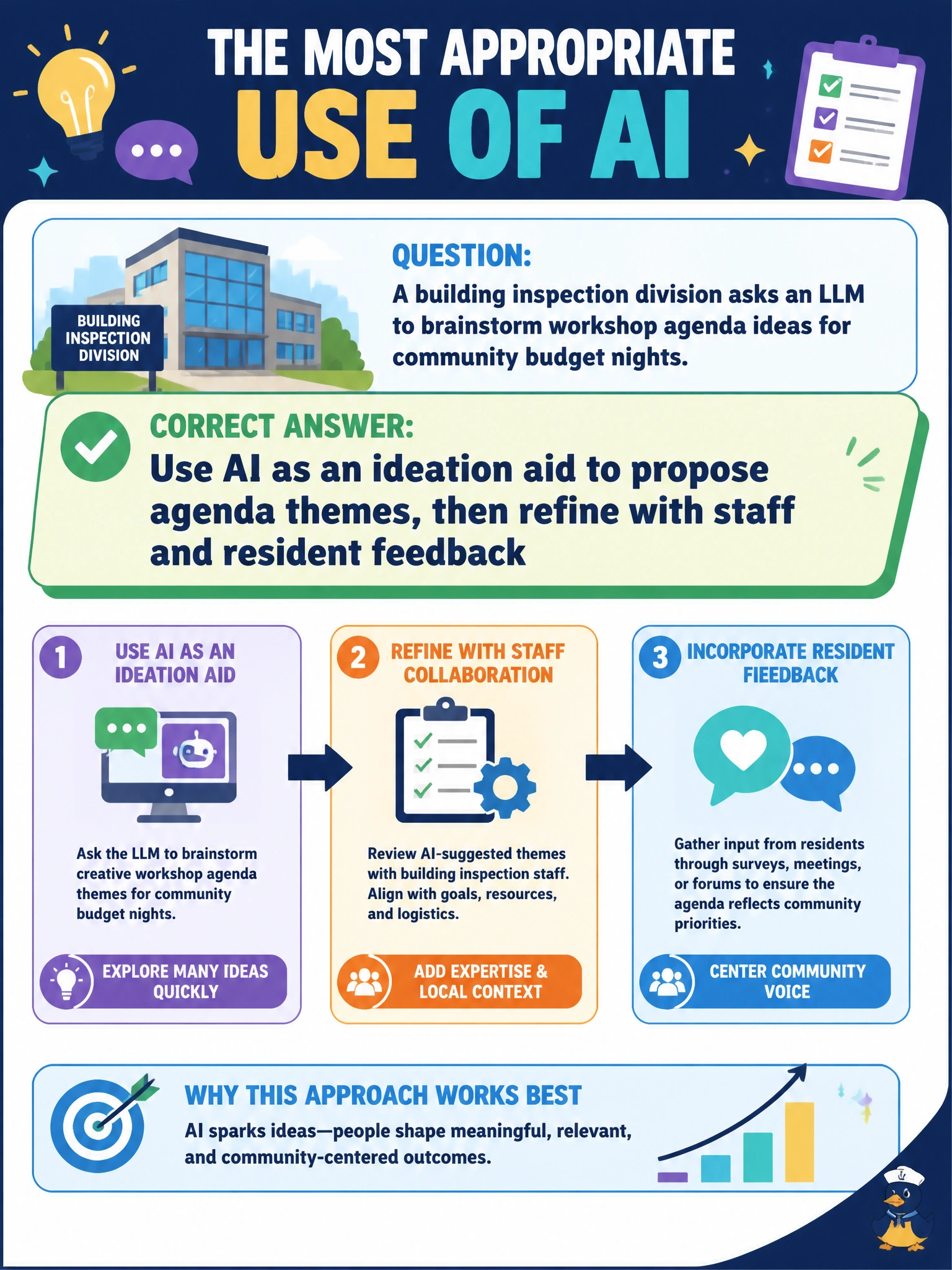
Need a jump-start on workshop themes? Let the model toss out agenda ideas—then staff and residents shape what actually happens. Ideation is the assist; the community still owns the night.
Full Explanation
AI ideation is a legitimate assist for a building inspection division planning community budget-night workshops when the model proposes agenda themes and humans refine them with staff judgment and resident feedback. The correct use treats the LLM as a brainstorming partner that surfaces candidate topics, sequencing ideas, and discussion formats—not as the owner of civic engagement outcomes. Community budget nights exist to surface public priorities; AI can speed preparation of options for facilitators, but the agenda that runs must still reflect local context and deliberate stakeholder input.
Treating the model’s agenda as final and canceling community input fails because ideation is not decision authority—closing the public process after an AI draft defeats the purpose of a budget night. Having the model decide the city’s final budget allocations fails by concept: generative assistants do not hold fiscal authority, council appropriation power, or democratic accountability for spending. Hiding AI-generated ideas from facilitators so residents never see alternatives fails because the value of ideation is transparent option generation; concealing alternatives turns a planning aid into opaque gatekeeping and wastes potentially useful themes.
Exam caveat: AI-suggested agendas can skew toward generic national talking points and miss neighborhood-specific fiscal pressures, so staff must inject local data and community history. Ideation quality also depends on the prompt including constraints such as time boxes, interpreter needs, and accessible venues.
Operational check: after generating theme lists, facilitate a short staff pass to drop out-of-scope items, add locally critical topics, and mark which ideas will be offered for resident refinement. Document that final agenda ownership remains with engagement staff—not the model—before the workshop runs.