
An election office rejects local model hosting because overnight patching staff are thin. Which trade-off is the office prioritizing?
Select an answer to reveal the explanation.
Short Explanation
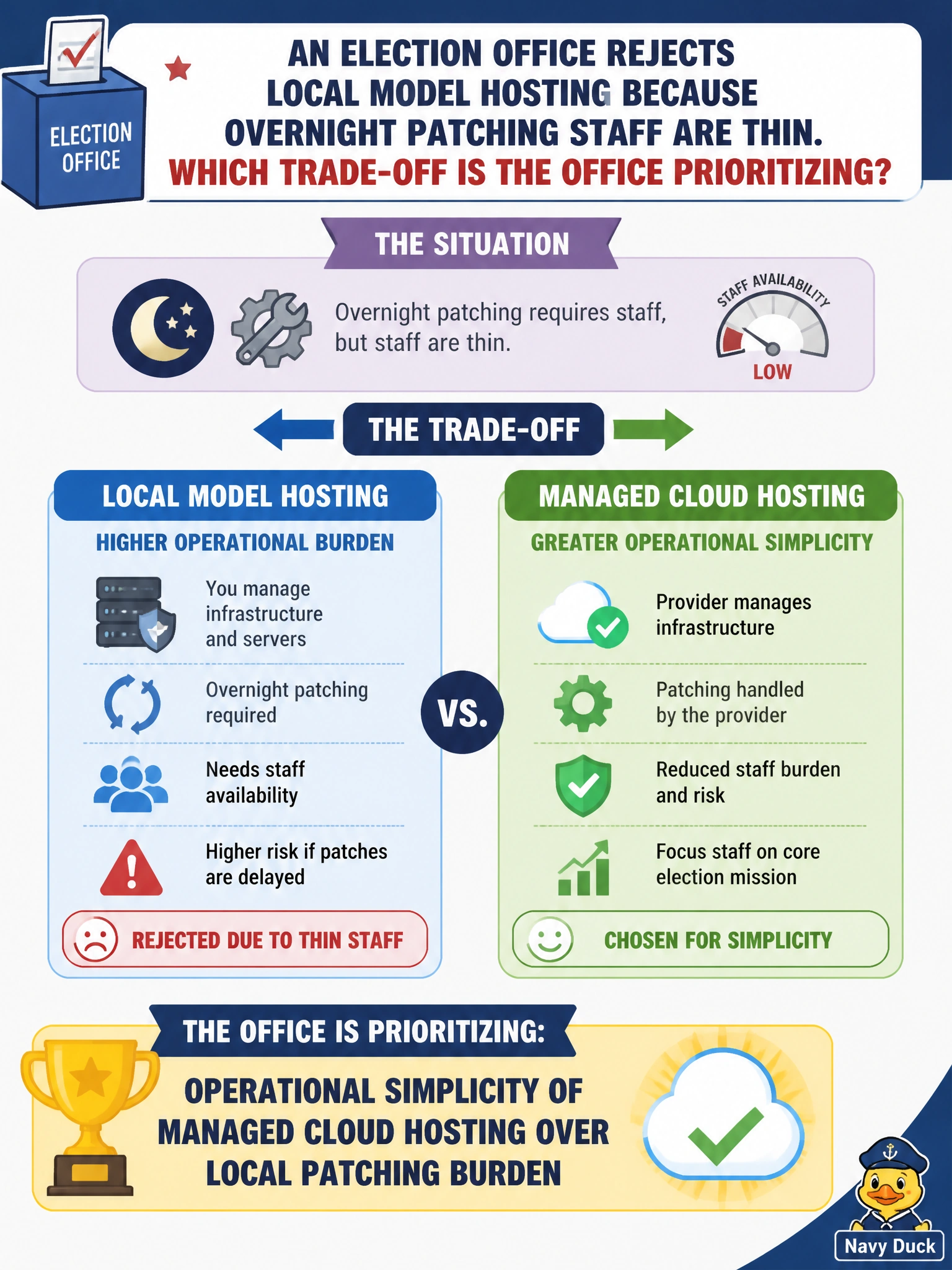
If nobody’s around at 2 a.m. to patch boxes, local hosting becomes a liability. Managed cloud shifts that operational load—trading some control for staffing reality.
Full Explanation
Rejecting local model hosting because overnight patching staff are thin prioritizes operational simplicity of managed cloud hosting over local patching burden. Election offices must keep services patched and monitored; if overnight staff cannot sustain on-premises model upkeep, managed cloud shifts that operational load to the provider under an SLA—trading some direct control for staffing reality. Insisting on maximum on-prem control regardless of staffing reality is aspirational governance that fails when nobody can apply security updates or respond to incidents at 2 a.m. Mandatory self-managed GPU clusters for every FAQ bot multiply operations burden without necessity when a managed service meets the workload. Eliminating vendor SLAs in favor of unpaid volunteer maintenance is not a sustainable public-sector operations model for election-adjacent systems. Exam caveat: staffing capacity and operational simplicity are legitimate hosting criteria alongside privacy and latency—exams expect that trade-off recognition. Operational check: inventory who patches what and when, compare managed-cloud shared-responsibility models to local runbooks, require clear SLAs and support windows before go-live, document the control trade-offs accepted by election leadership, and schedule periodic access reviews so cloud admin rights do not sprawl.