
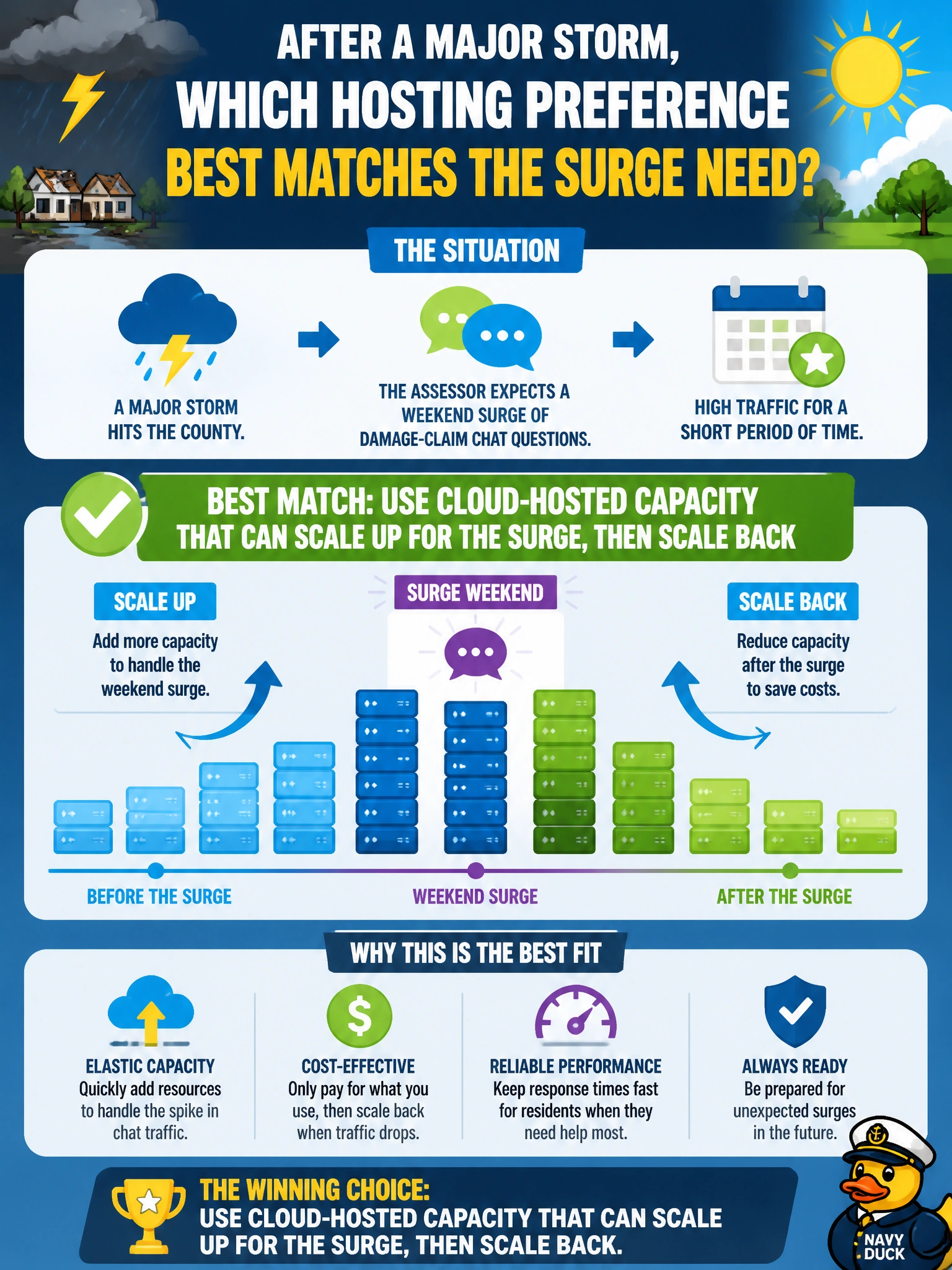
After a major storm, a county assessor expects a weekend surge of damage-claim chat questions. Which hosting preference best matches that surge need?
Select an answer to reveal the explanation.
Short Explanation
Storm weekends are flash crowds. Cloud capacity can swell for the rush and shrink afterward—fixed local boxes that are already maxed can’t suddenly grow a second floor overnight.
Full Explanation
Surge claim volume after a storm favors cloud-hosted capacity that can scale up for the event and scale back afterward: elasticity absorbs flash demand without waiting for hardware procurement cycles. Emergency-management chatbots see weekend spikes; managed cloud capacity can expand for the surge and shrink when calm returns, matching the temporary shape of resident claim and guidance traffic. Relying solely on a fixed local GPU that already runs at capacity on quiet days leaves no headroom when residents flood digital channels after damage assessments begin. Disabling the chatbot until new servers arrive in three months abandons assisted service precisely when the public needs timely guidance most. Hand-writing every reply with no AI assist regardless of volume ignores triage benefits when policy allows assisted drafting under human review. Exam caveat: surge-to-cloud still requires data-handling rules—do not send regulated personal claim details to unapproved endpoints merely because burst capacity is available. Operational check: pre-negotiate burst quotas and rate limits with the provider, prepare redaction or minimization for claim chats, load-test with storm-surge scenarios, define human escalation paths for complex cases, and schedule deliberate scale-down so costs do not remain elevated after the emergency window closes.