
A new policy requires every corporate phone to have a passcode of minimum complexity and device storage encryption enabled. The organization wants these settings enforced automatically and noncompliant devices reported. What should it use?
Select an answer to reveal the explanation.
Short Explanation
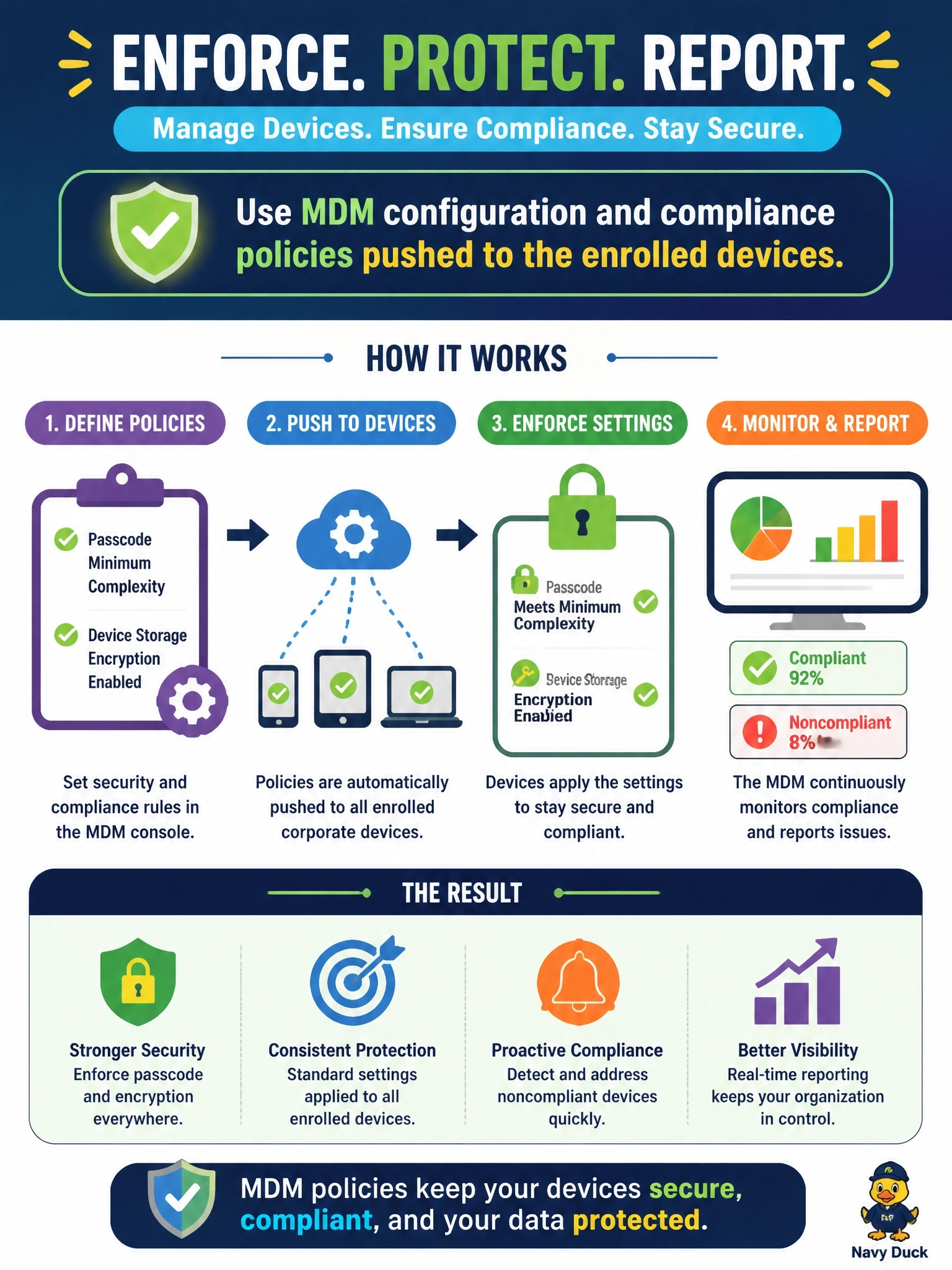
Passcodes and encryption are settings on the phone itself, so you need the tool that actually manages phone settings. That's MDM: push the configuration, check compliance, report who's out of line. Posture checks can ask whether a phone is compliant, but they're not the ones turning the knobs.
Full Explanation
Mobile device management enrolls devices and pushes configuration profiles and compliance policies to them. A passcode policy can require a minimum length and complexity, and storage encryption can be required or verified, depending on the platform. The MDM evaluates each enrolled device against the compliance rules, reports noncompliant devices and can take actions such as notifying the user, restricting corporate apps or marking the device noncompliant for other systems to use. That provides both enforcement and reporting. Network posture checks determine whether a device meets requirements when it requests access; they can restrict access based on the answer, but they do not configure a passcode on a phone. EDR focuses on detecting and responding to malicious behavior, not on managing device configuration, and it does not encrypt storage in response to events. A DLP rule inspects content in web traffic; it does not evaluate device passcodes and would leave noncompliant devices unreported. Exam caveat: MDM compliance status is often consumed by a NAC system such as Cisco ISE, which is how configuration compliance can influence network access. Operational check: enroll a test phone without a passcode, confirm that the MDM prompts for one and reports the device as noncompliant until the setting is applied.