
A script uses the Cisco Secure Firewall Management Center REST API only to read device health and export inventory. Today it authenticates with the shared admin account. Which change best applies least privilege to this automation?
Select an answer to reveal the explanation.
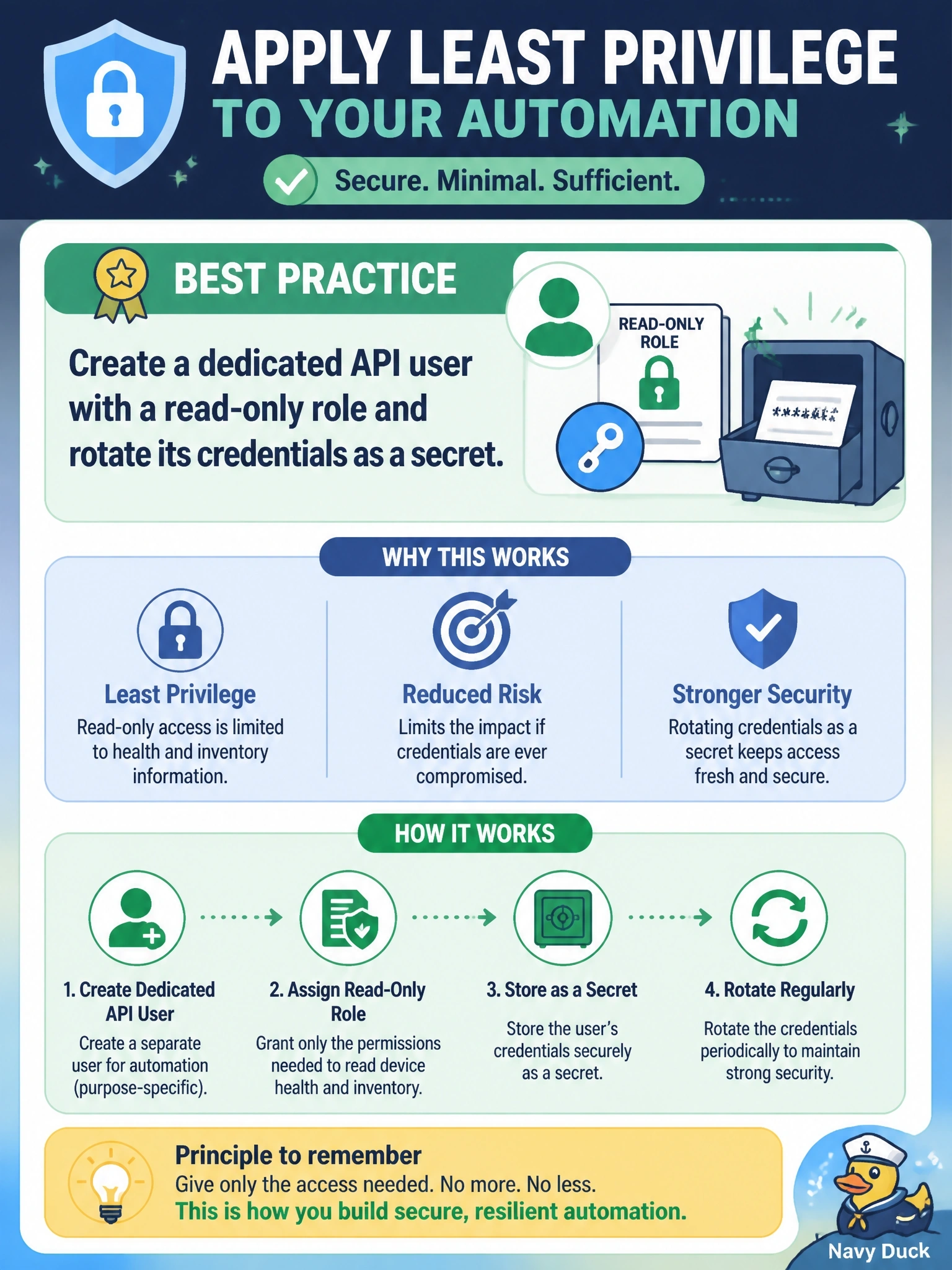
Short Explanation
Giving a read-only script the admin account is like handing a delivery driver the master key to the whole building. A dedicated, read-only API user lets the script do its job and nothing else. The trap is thinking a locked-down host or an encrypted file makes an all-powerful credential safe for you.
Full Explanation
Least privilege means an identity receives only the rights its task requires. A script that reads health and inventory needs no ability to change policy or deploy configuration, so it should use its own account, created for automation, holding a read-only role, with its credentials stored in a secret manager and rotated. A dedicated identity also makes API activity attributable in audit logs and lets the account be disabled without affecting human administrators. Restricting the script to a single jump host reduces where the credential can be used, but the credential itself still carries full administrative power, and anyone who compromises that host inherits it. Granting the administrator role to a new API user removes the shared-account problem but recreates the excessive privilege it was meant to fix; permission errors should be resolved by adding specific rights, not everything. Encrypting the script at rest protects the file on disk, yet the decrypted admin password is still used at runtime and still grants full control if leaked. Exam caveat: least privilege applies to tokens, keys and service accounts as much as to people, and shared accounts defeat accountability. Operational check: create the user with a read-only role, run the script, confirm reads succeed and a test write is refused, and verify audit logs attribute calls to the new account.