
A factory IoT network merged two MDS switches, and Fibre Channel domain IDs are being assigned by the switch the team did not want in charge. Which switch is allowed to assign those domain IDs?
Select an answer to reveal the explanation.
Short Explanation
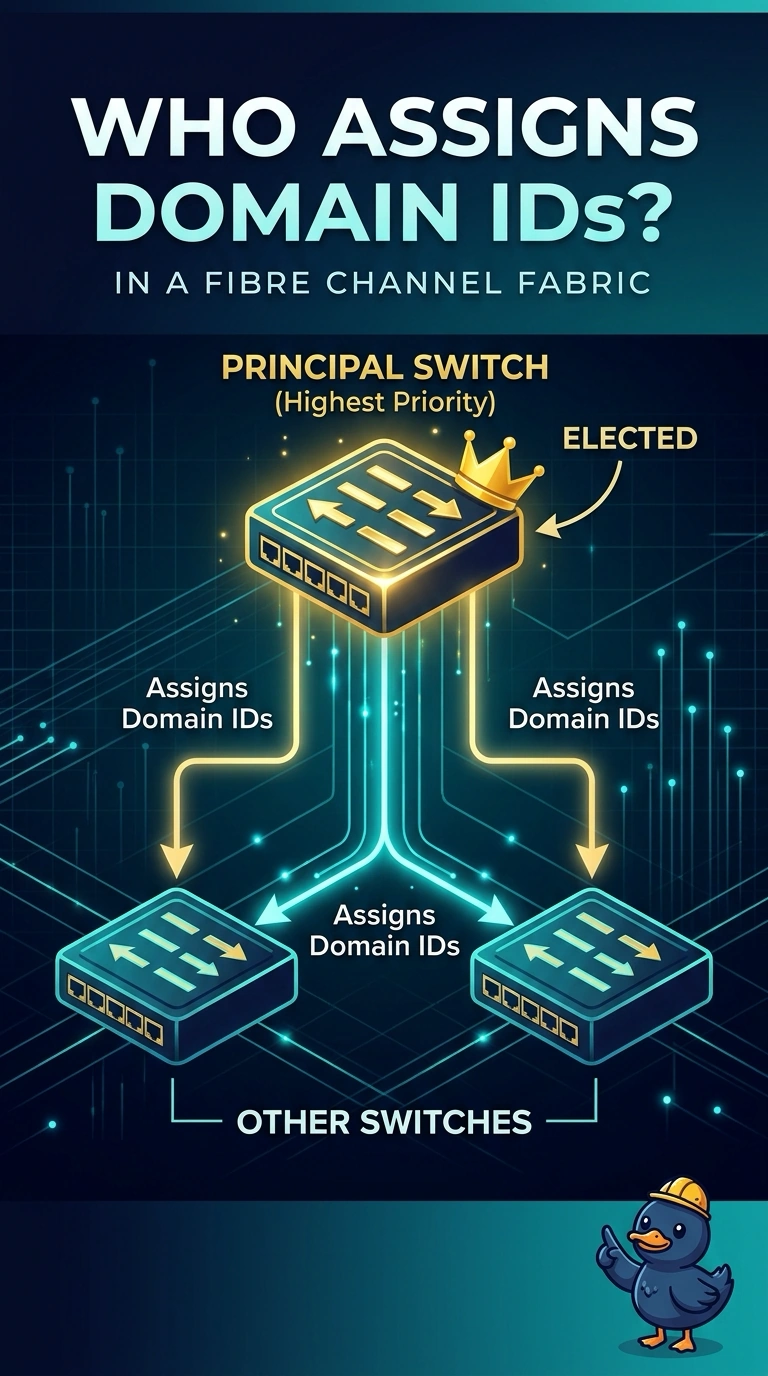
One clerk in the office hands out the badge numbers, and it is the clerk the office elected, not the person at the busiest window. You look for the principal switch, the one with the highest priority, because that switch assigns Fibre Channel domain IDs. A busy F port does not win that job.
Full Explanation
In a Fibre Channel fabric the principal switch coordinates domain IDs. The election prefers the switch with the highest configured priority, so if domain IDs in this factory fabric are coming from the unexpected switch, that switch is the principal. Changing which switch assigns IDs means making the intended switch win the priority election, not moving cables to the busiest edge. The number of logged-in hosts does not elect the principal and does not grant domain assignment. An NPV edge is the opposite case: it does not take a domain ID and does not hand them out. Zoneset activation programs which members may communicate inside a VSAN. It does not assign domain IDs, and the switch that last activated a zoneset has no special claim on the principal role. Caveat: if two switches share the same priority, the election continues on a tie-break, so raising priority is the deliberate way to choose the principal rather than hoping the tie falls your way. Operational check: display the domain status, confirm which switch is principal, raise the intended switch above the others, and verify new domain assignments come from that switch.