
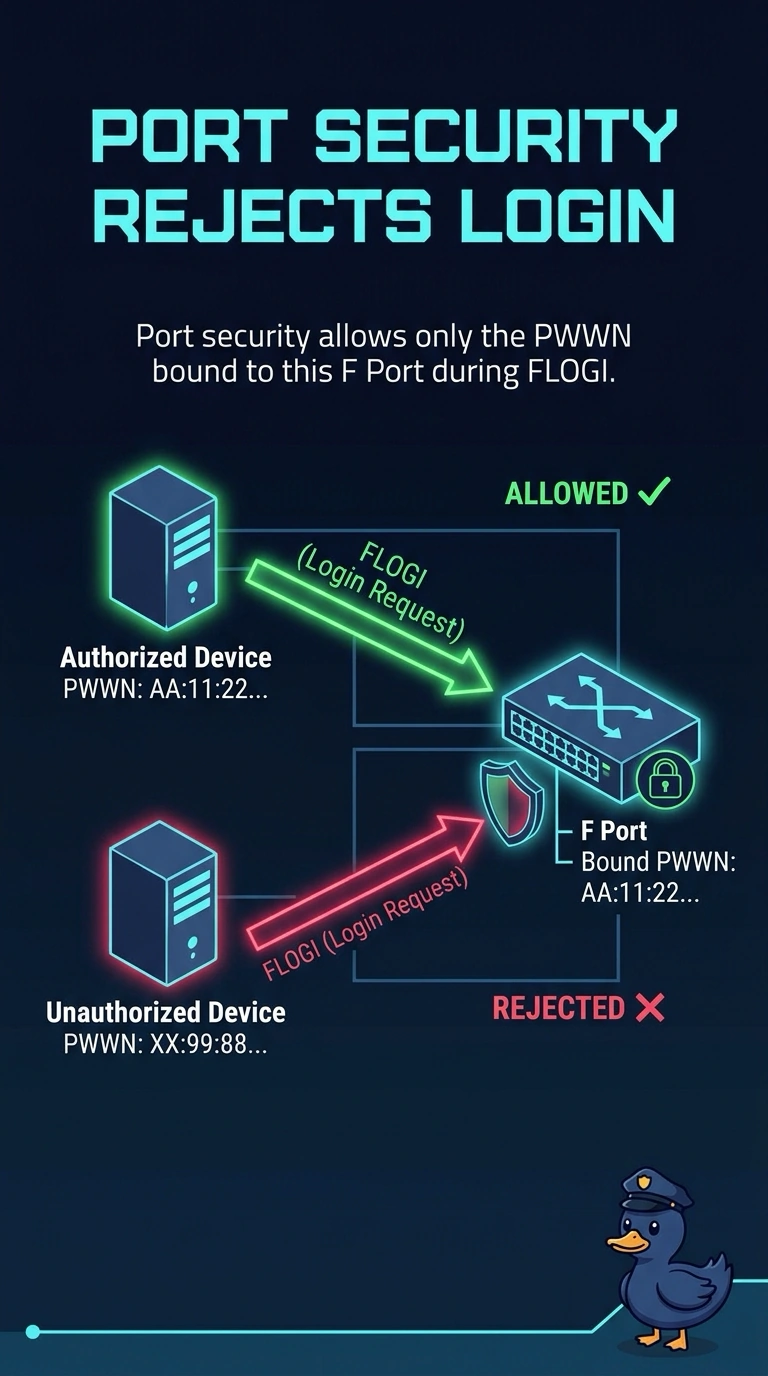
A hospital host PWWN is a member of the active zoneset, but FLOGI fails on the MDS F port where the cable is plugged. Port security on that port allows a different PWWN. What is rejecting the login?
Select an answer to reveal the explanation.
Short Explanation
Your name is on the party list, and the door is keyed for someone else. Zoning decides who may talk after they log in. Port security decides which PWWN may FLOGI on this F port, and this port is bound to a different one.
Full Explanation
Port security pins a host PWWN to an F port. A host that presents any other PWWN is refused at FLOGI, even when that PWWN is in the active zoneset. The hospital has to plug the host into the port bound to its PWWN, or change the binding to the PWWN that is actually on this port. A VSAN has one active zoneset. Activating another replaces it. It does not sit beside the first and cancel a single member. Fabric binding checks switch WWNs and domain IDs when a switch joins. It does not compare a host PWWN with a switch WWN. The default-zone policy applies to devices that are not in any active zone. This host is zoned, and default-zone deny does not reject FLOGI for a zoned member. Caveat: after you fix the binding, zoning still has to include this PWWN and the target or the host will log in and then fail to reach the LUN. Operational check: compare the PWWN in the FLOGI reject with the port-security binding on that interface, then test FLOGI again. Zoning stays necessary after the binding is fixed. A host that FLOGIs and shares no active zone with the array still cannot reach the LUN.