
A regional hospital replaced a host bus adapter, and the new port WWN is rejected when it tries to log in on the same F port. Fibre Channel port security is enabled on that port. What change lets the new adapter log in?
Select an answer to reveal the explanation.
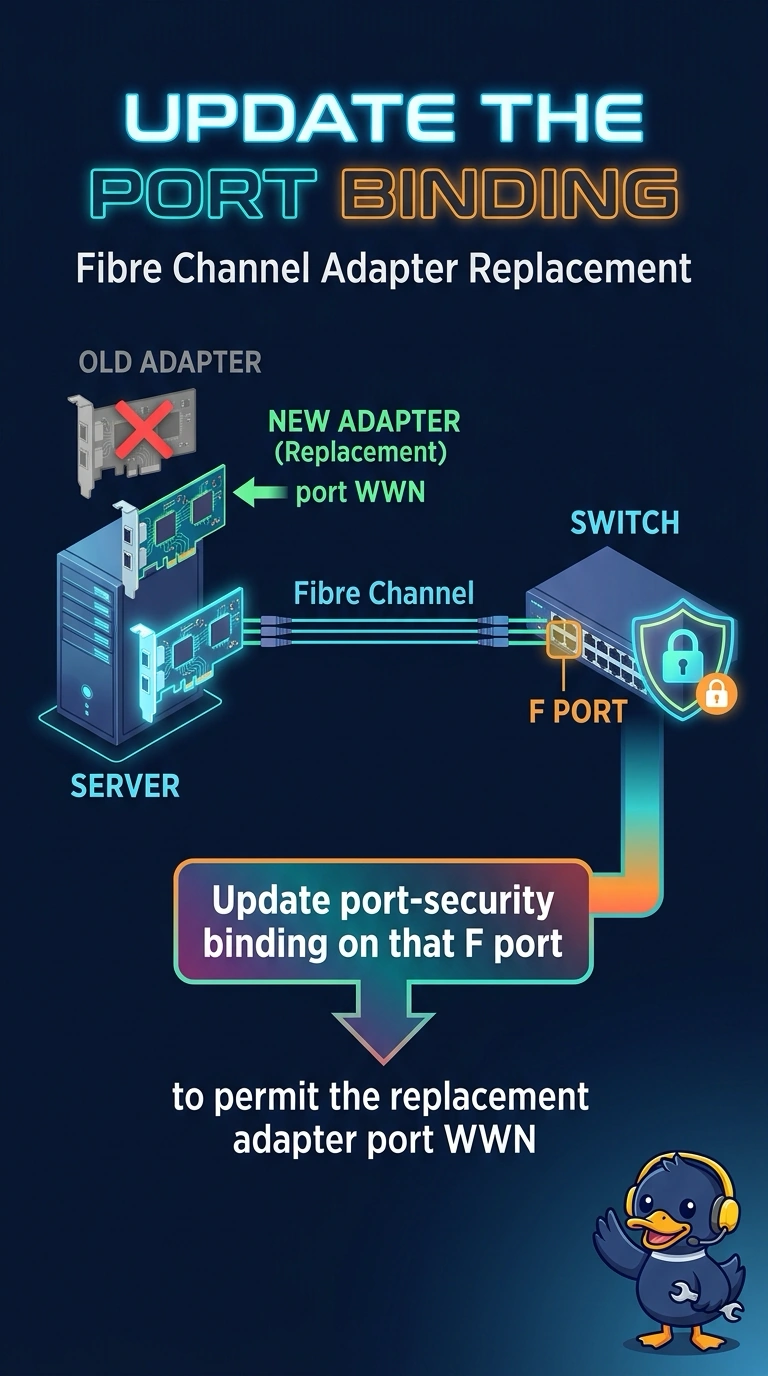
Short Explanation
The door was told the name of the old badge, so the new badge stops in the lobby. You update the port-security binding to the new port WWN and the F port can accept that adapter's login. Activating the zoneset again does not loosen that door list, because zoning is a later conversation than the login this port is refusing.
Full Explanation
Fibre Channel port security pins which port WWNs are allowed to perform fabric login on an F port. The hospital replaced the adapter, so the new port WWN is a stranger to that binding and the F port rejects the login before the host ever gets far enough to use a zone. Updating the binding to the new port WWN is the change that lets the adapter log in. Zoneset activation programs which logged-in members may talk. It does not rewrite port security, and it does not mean any WWN may use the port. NPV changes an edge switch so it does not take a domain ID. It does not copy the old adapter's port WWN onto the new card, and the new hardware still presents its own WWN. The name server lists devices that have logged in. Clearing it drops directory entries until devices return, and it does not delete a port-security binding or authorize a new WWN. Caveat: the zone and the array mask still need the new port WWN as well, or a successful login will show a host that cannot see its LUNs. Operational check: replace the bound WWN, confirm the F port accepts the new login, and confirm the name server shows the new port WWN on that interface.