
A government agency uses UCS Manager. An operator should manage service profiles in one organization and have no rights in the other organizations. Which controls create that limit?
Select an answer to reveal the explanation.
Short Explanation
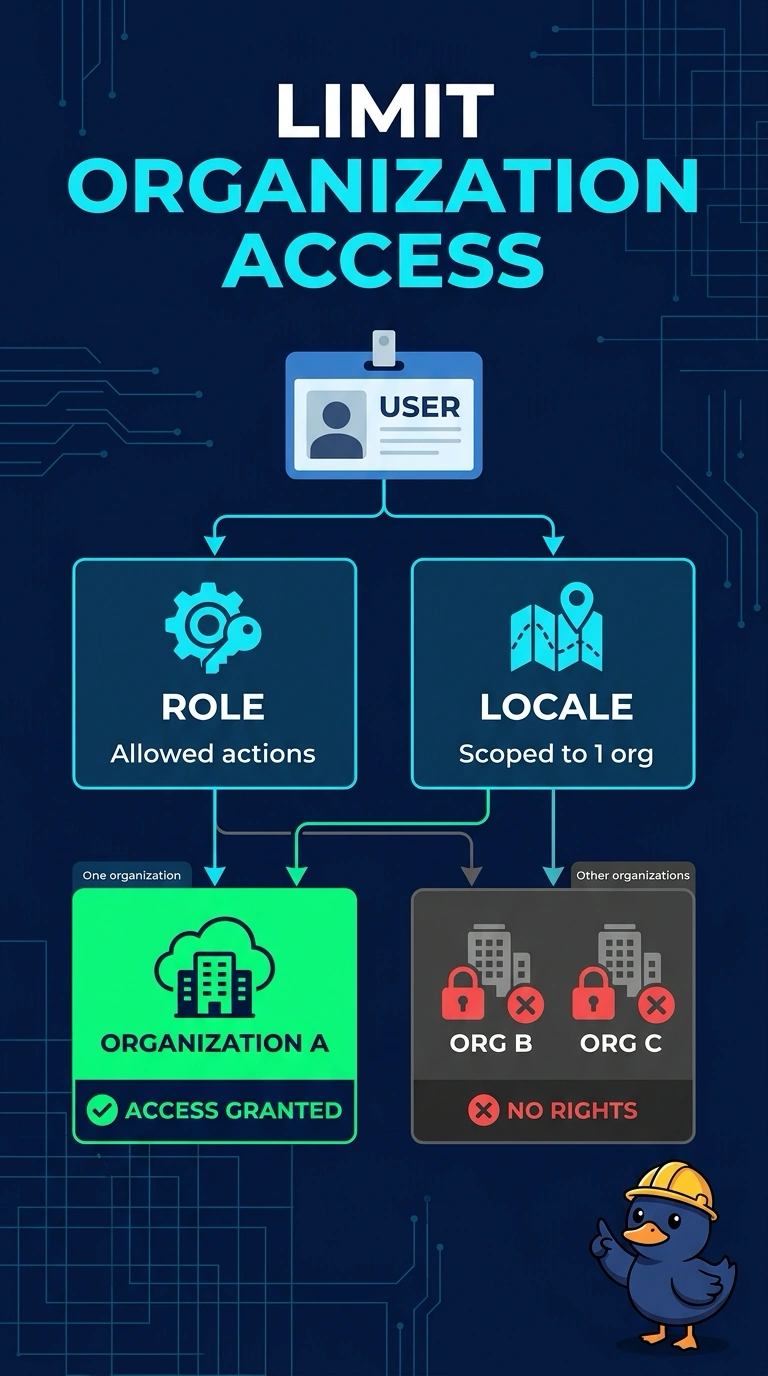
A role is what someone may do, and a locale is which rooms they may enter. You assign both, with the locale limited to the one organization, so the operator cannot manage the other organizations. An upstream NX-OS role does not become a UCS locale.
Full Explanation
UCS Manager authorization combines a role and a locale. The role holds the privileges, such as the ability to manage service profiles. The locale lists the organizations where those privileges apply. Assigning a service-profile role together with a locale that contains only the one organization lets the agency operator work there and nowhere else. A chassis power policy sets redundancy for power supplies. It does not filter UCS logins or organizations. An NX-OS role on an upstream switch applies to that switch CLI. UCS does not inherit it when a UCS user logs in. MACsec encrypts an Ethernet link. It does not choose a UCS organization or grant service-profile rights. Caveat: Intersight has its own privileges and organization model. A UCS locale does not automatically limit a separate Intersight user who can see the same hardware. Operational check: sign in as the operator, edit a test profile in the allowed organization, and confirm the same account is denied in a second organization. Also confirm the locale is not the root organization, because that scope includes every organization under it.