
A retail bank saved a configuration checkpoint before an access-list change. The change is harmful, and the running configuration should return to that checkpoint without a reboot. Which action does that?
Select an answer to reveal the explanation.
Short Explanation
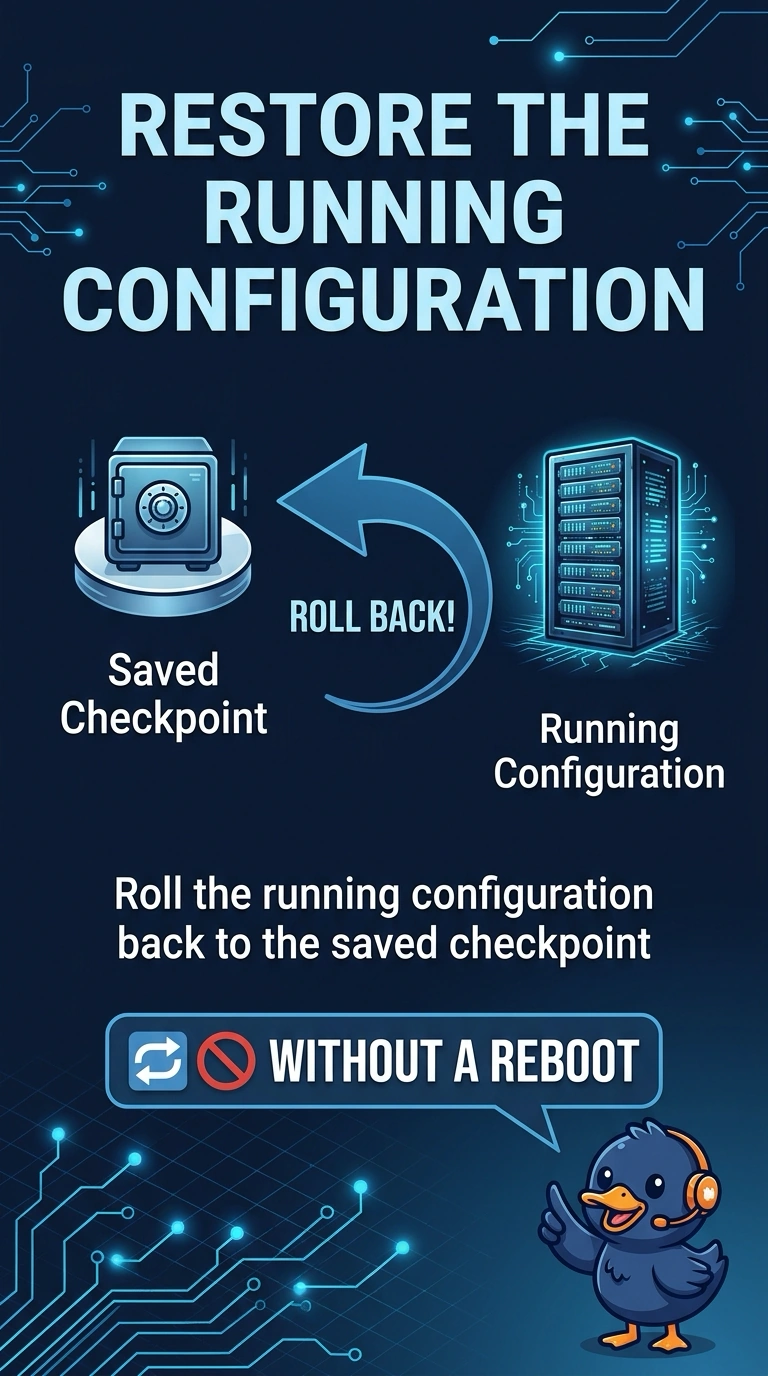
You kept a photograph of the room from this morning, and the furniture is now in the wrong place. You roll the running configuration back to that checkpoint and the access list returns without a reboot. Erasing the startup file and reloading does not open the photograph, and it is a much bigger outage.
Full Explanation
An NX-OS checkpoint is a saved copy of the configuration. Rolling the running configuration back to that checkpoint reapplies the saved commands and removes the harmful access-list change without reloading the switch, which is the least disruptive fix for this bank. Erasing the startup configuration and reloading does not read a checkpoint. The switch would boot with an empty startup file or whatever remains, and the reboot is the disruption the team is trying to avoid. SPAN copies frames. It does not store an access list and it does not write configuration back onto the management plane. The install impact check previews a software upgrade. It does not treat a checkpoint as a system image, and it does not restore an access list. Caveat: rollback changes the running configuration, so the result lasts across a reboot only after it is saved to startup, and a large rollback can still reset sessions that depended on the removed lines. Operational check: compare the running configuration with the checkpoint, roll back, and confirm the previous access list is in the running configuration while the switch stays up.