
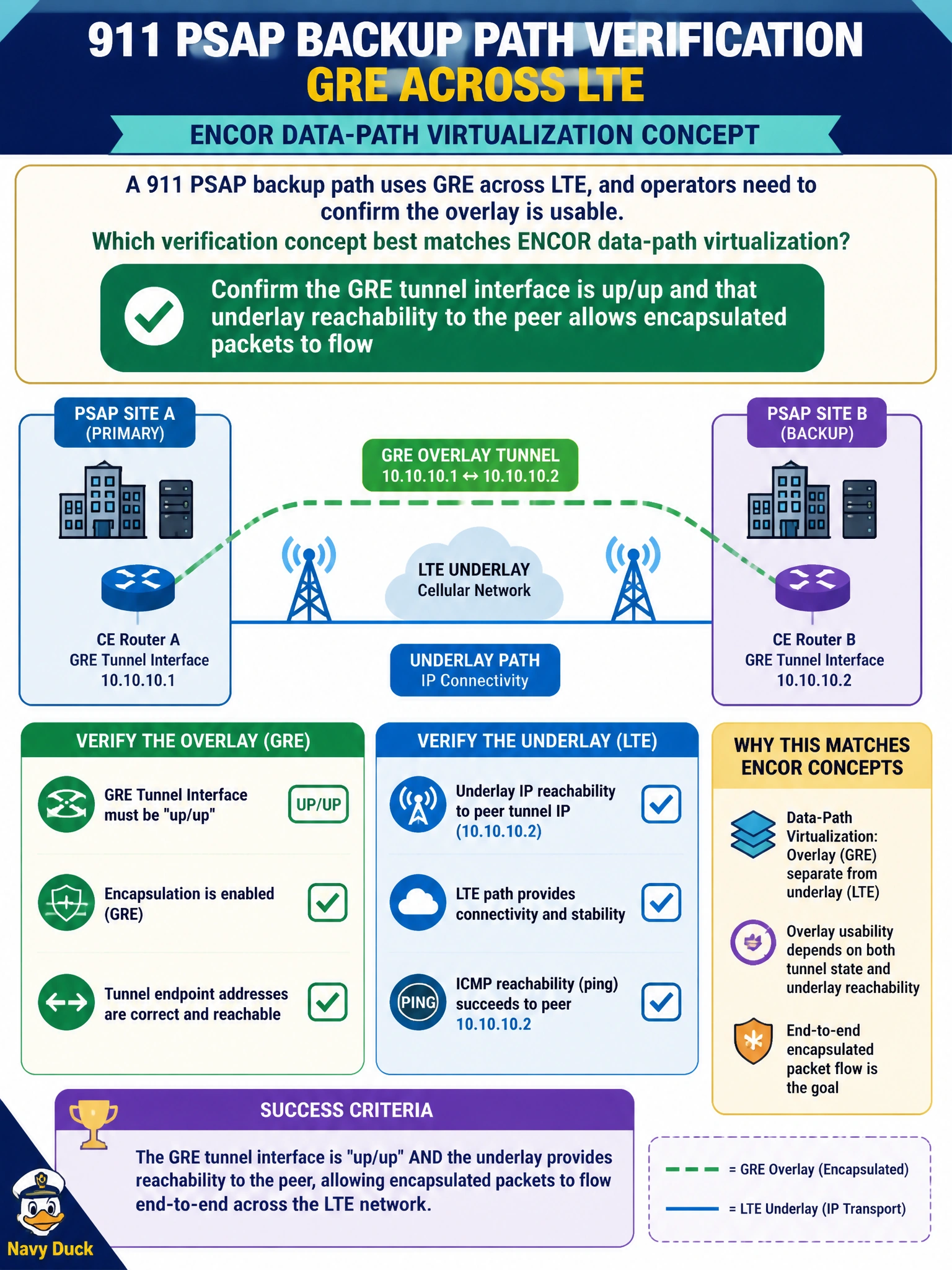
A 911 PSAP backup path uses GRE across LTE, and operators need to confirm the overlay is usable. Which verification concept best matches ENCOR data-path virtualization?
Select an answer to reveal the explanation.
Short Explanation
Before you trust the backup GRE path for 911, check that the tunnel interface looks healthy and that the underlay can actually reach the far end—like making sure the tow truck's highway route is open before you load the ambulance gear on it.
Full Explanation
A 911 PSAP backup path that uses GRE across LTE must be verified with data-path virtualization concepts that match how GRE actually works. Operators should confirm the GRE tunnel interface is up/up and that underlay reachability to the peer allows encapsulated packets to flow. Without underlay reachability to the tunnel destination across LTE, the overlay cannot carry PSAP backup traffic even if configuration snippets look complete. Verifying only spanning-tree root priority on the LTE modem fails by concept because GRE depends on IP underlay reachability and tunnel state, not STP root elections on the modem. Ignoring underlay reachability and only pinging the VNI number as an IPv4 host confuses overlay segment IDs with host addresses and skips the underlay proof GRE needs. Treating GRE as always up if any BGP session exists anywhere on the router equates unrelated control-plane sessions with GRE data-path readiness. Exam caveat: up/up and underlay ping are necessary checks but not always sufficient—keepalives, MTU/fragmentation across LTE, and crypto if IPsec is layered can still break the PSAP path. Operational check: verify tunnel line protocol, ping the peer underlay address across LTE, test overlay reachability to the backup PSAP subnet, and fail primary path in a controlled drill to confirm GRE backup actually forwards emergency traffic.