
A radio is set to 14 dBm conducted, the antenna is 6 dBi, and the cable loss is 2 dB. What is the EIRP in the main lobe?
Select an answer to reveal the explanation.
Short Explanation
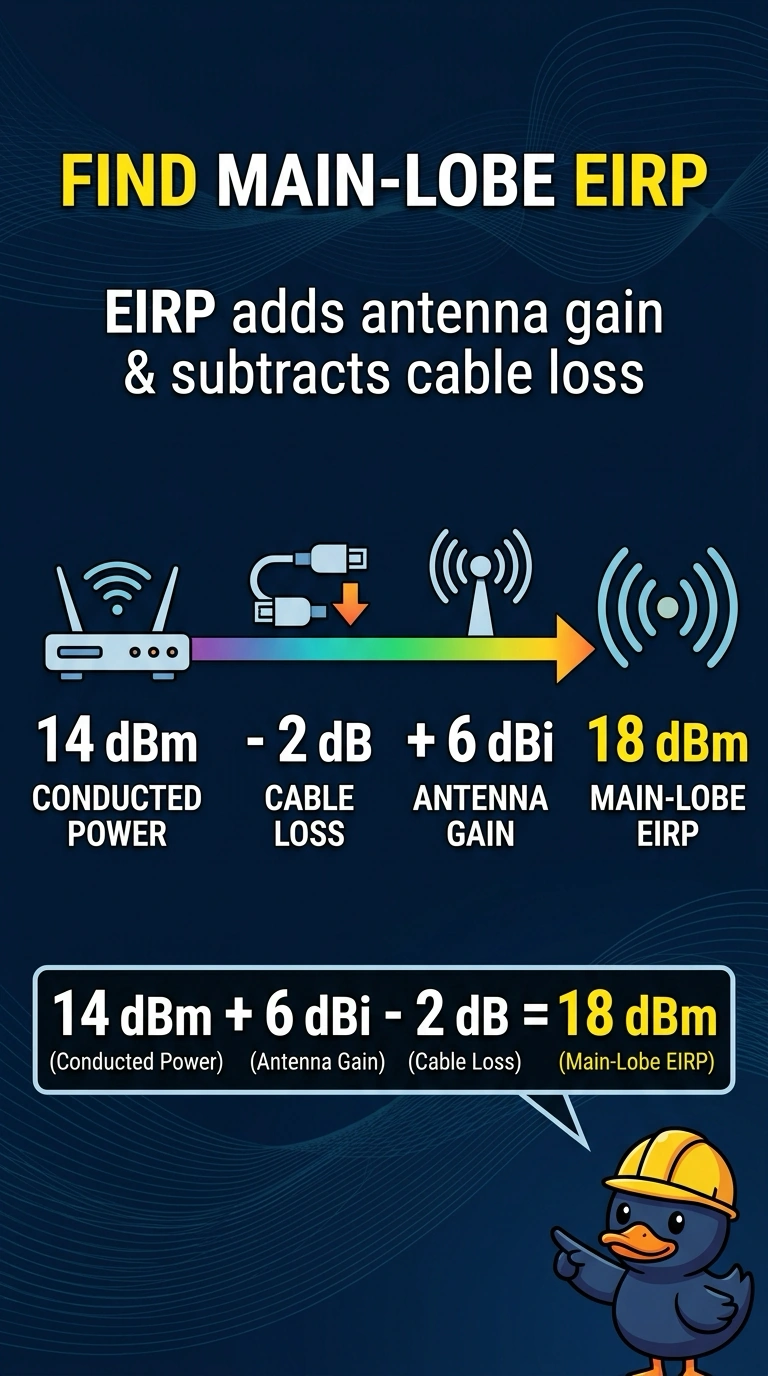
Start at the radio, add what the antenna concentrates, and take away what the cable spends. Your 14 plus 6 minus 2 is 18 dBm in the main lobe. Adding the loss as if it were gain goes the wrong direction.
Full Explanation
EIRP in the main lobe is conducted power plus antenna gain minus cable loss. 14 dBm plus 6 dBi minus 2 dB is 18 dBm. Adding the loss as well as the gain produces 22 and treats the cable as if it helped. Leaving the result at 14 pretends the antenna and the cable are not in the path. Subtracting the gain and adding the loss produces 8 and reverses both signs. Conducted power 14 dBm, antenna gain 6 dBi, cable loss 2 dB. EIRP is 14+6-2 = 18 dBm. Check one live client after the change and leave the rest of the floor alone until that client matches the result you expected. Confirm the symptom on the next attempt before changing anything else. Confirm the symptom on the next attempt before changing anything else. Exam caveat: the 18 dBm figure is the main lobe. Off the side of the antenna the gain is lower, so the radiated power is lower. Do not quote 18 dBm as the power in every direction. Operational check: write the three inputs next to the radio and confirm any later power change is run back through the same sum.