
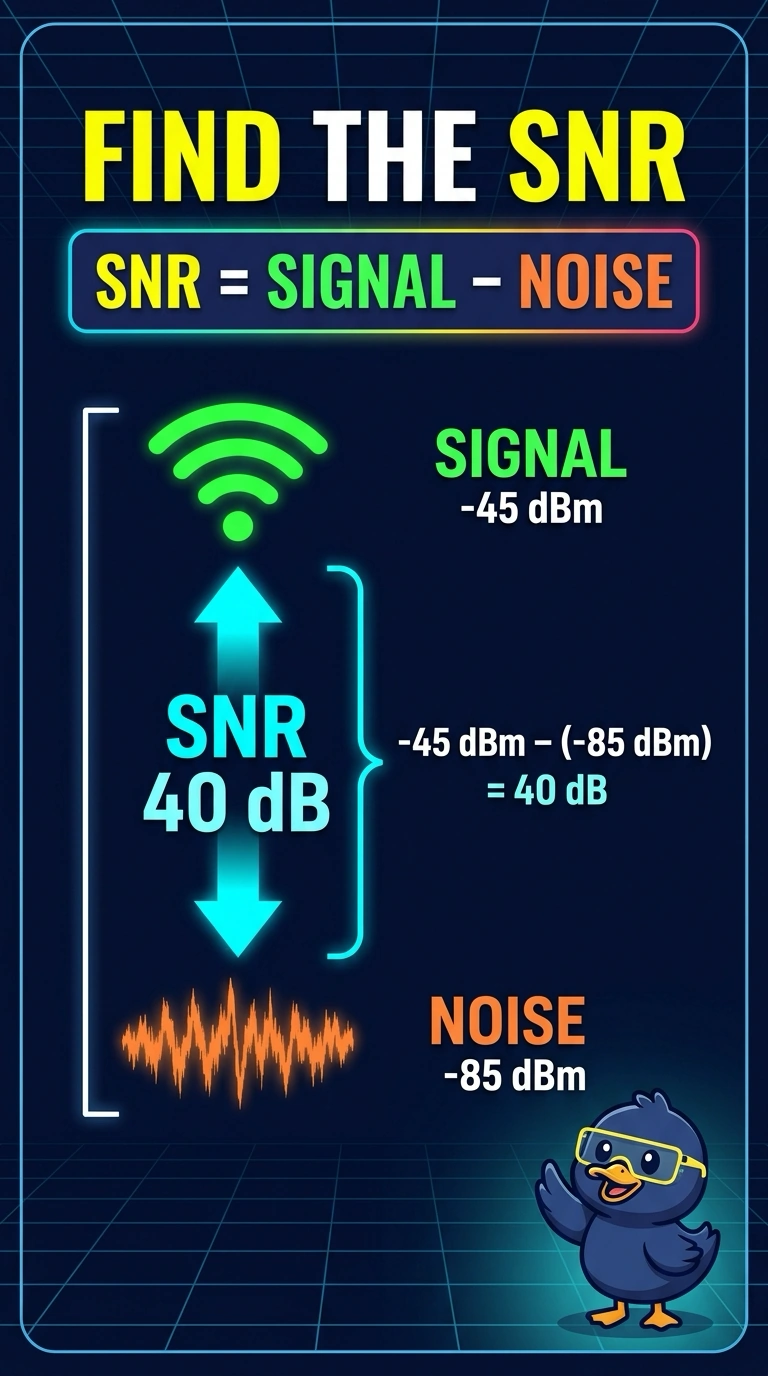
A survey shows a received signal of -45 dBm and a noise floor of -85 dBm. Which signal-to-noise ratio matches those two readings?
Select an answer to reveal the explanation.
Short Explanation
Subtract the noise from the signal, and remember both numbers are negative. Your gap is 40 dB, not 130, and it is not a power in dBm. Adding the two readings stacks them instead of comparing them.
Full Explanation
SNR is signal minus noise, in dB. -45 dBm minus -85 dBm is 40 dB. The minus of a minus is why the gap is 40 and not a small number. Adding -45 and -85 to get 130 treats two levels as if they stack, and it also keeps a sign the ratio does not have. SNR is a ratio in dB, not a power in dBm. -40 dB would be what you get by reversing the subtraction, noise minus signal, which describes a signal buried under the noise. These readings are the other way around. RSSI is -45 dBm and the noise floor is -85 dBm. SNR is 40 dB. Adding the absolute values or subtracting in the wrong direction is the trap. Check one live client after the change and leave the rest of the floor alone until that client matches the result you expected. Confirm the symptom on the next attempt before changing anything else. Exam caveat: the two readings have to be from the same spot and the same moment. A signal from the chair and a noise floor from the hallway is not this ratio. Operational check: read signal and noise together on the survey tool and confirm it reports about 40 dB.