
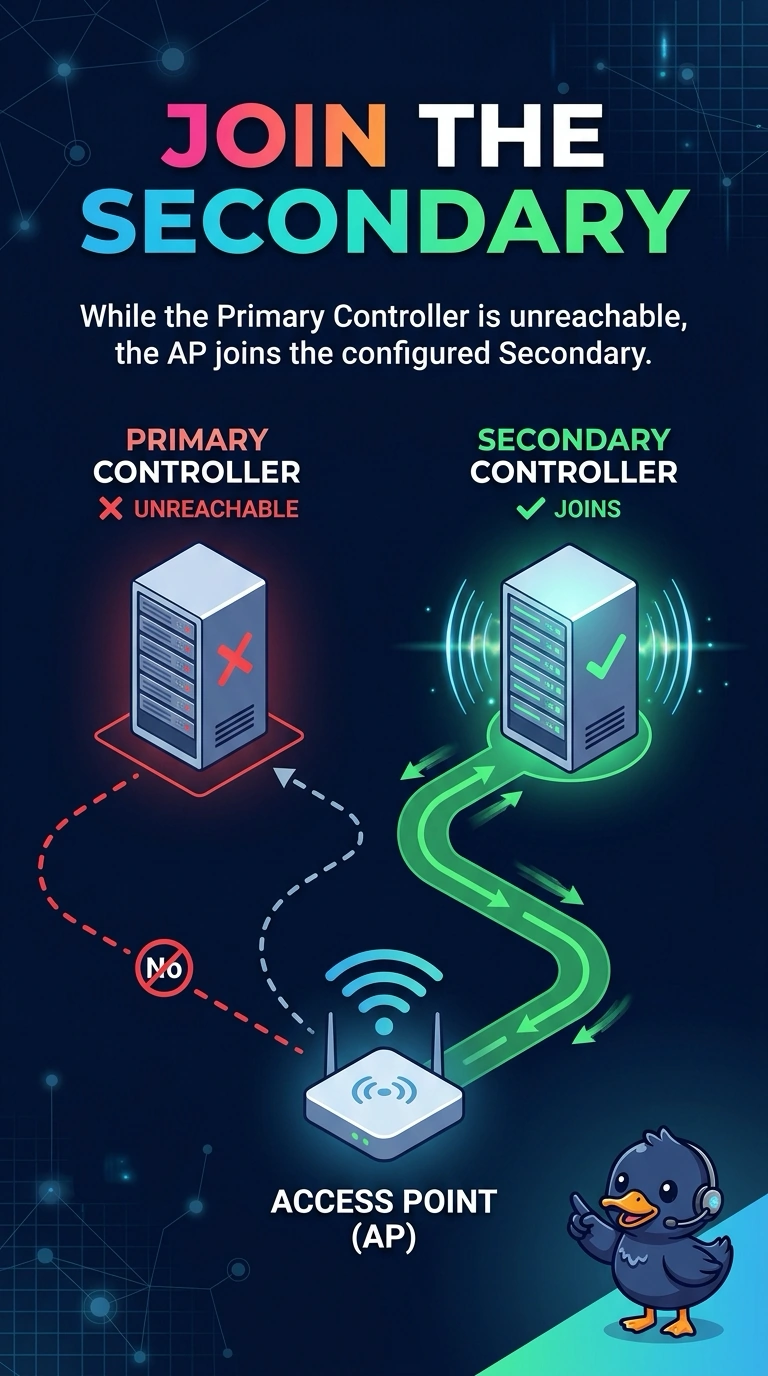
A retail access point is configured with a primary and a secondary controller. The primary is down, and the secondary is reachable. The access point does not join anything. What should it do?
Select an answer to reveal the explanation.
Short Explanation
You already told that access point who to call if the first controller does not answer. It should join the secondary. Waiting for someone to rewrite DHCP is ignoring the backup you configured.
Full Explanation
A Cisco access point with a configured primary and secondary controller uses the secondary when the primary is unreachable. The retail unit should join the secondary and serve the store from that controller's configuration, assuming it is allowed to join there. Staying down until DHCP option 43 changes ignores the high-availability configuration. Option 43 is a discovery method for access points that do not already have a controller list, not a prerequisite once primary and secondary are set. Sniffer mode is an operator-selected capture mode. A primary outage does not put the access point into sniffer mode, and the secondary is a controller, not a capture destination for an automatic mode change. A guest anchor receives guest traffic from a foreign controller. It does not become the access point's primary join target just because the primary failed, unless it was actually configured as the secondary. Exam caveat: the secondary must have a matching software and regulatory setup the access point can join, and the access point has to be authorized there. A reachable address with the wrong code still fails the join. Operational check: with the primary shut down, confirm the access point joins the secondary and that clients at that store can associate.