
During a maintenance window both chassis of a Catalyst 9800 SSO pair were reloaded together. Access points dropped until a chassis finished booting. How should the next upgrade avoid that?
Select an answer to reveal the explanation.
Short Explanation
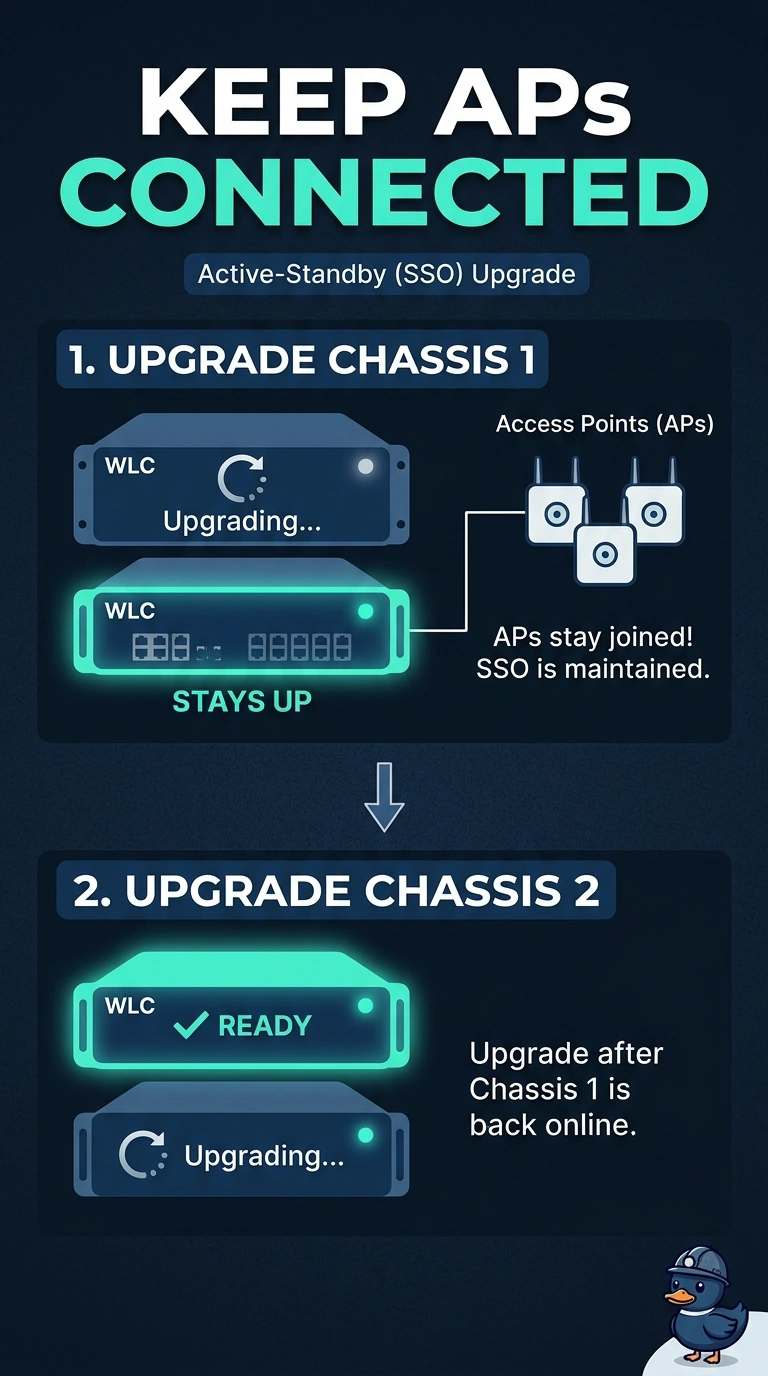
You took both controllers away at once, and the access points had nobody left to join. Keep one chassis up through the upgrade. Clearing the country code does not build a standby, and hiding the names does not keep a controller online.
Full Explanation
An SSO pair can keep access points joined only while at least one chassis is up to terminate them. Reloading both chassis together leaves a window with no controller, which is why the access points dropped until boot finished. The next upgrade should keep one chassis up. Reloading both on purpose does not make radio upgrades faster. It repeats the outage. Clearing the country code disables transmission. It does not let a pair reboot without dropping access points, and it removes the regulatory basis the radios need when they return. Hiding SSIDs does not make clients bridge locally, and it does not keep a controller online while both chassis reload. Local-mode clients need a controller whether the name is visible or not. Exam caveat: the standby has to be ready before the active is reloaded. A standby that is already down means you do not have a chassis that can stay up. Operational check: in a lab or the next window, confirm access points stay joined to the remaining chassis while the other one reloads.