
Hotel guests on the guest WLAN can reach other guests' devices directly. The hotel wants that client-to-client traffic stopped and the SSID left in place. Which configuration does that?
Select an answer to reveal the explanation.
Short Explanation
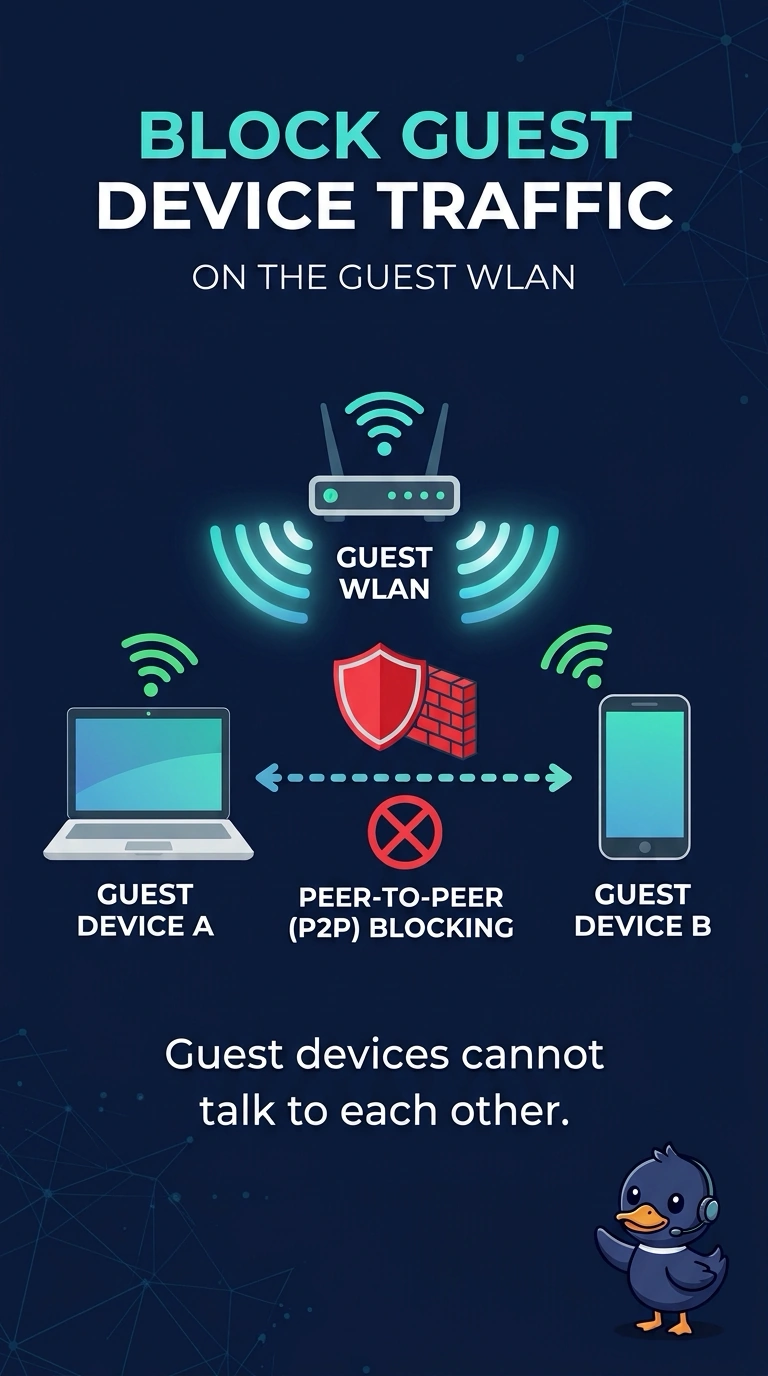
Your guests should reach the portal and the internet, not each other's laptops. Peer-to-peer blocking on that WLAN cuts the sideways traffic and leaves the SSID up. Deleting the network is a bigger hammer than the hotel asked for.
Full Explanation
Peer-to-peer blocking on a WLAN drops or redirects traffic that would otherwise go from one associated client to another. Guests can still use the SSID for the portal and the upstream path, and they cannot open sessions to other guests. That matches the hotel's request to stop client-to-client traffic without removing the SSID. Deleting the guest SSID would isolate guests by removing the service entirely. The hotel said the SSID stays, so deletion fails the requirement even though it would stop the traffic. Monitor mode takes the access point out of client service. It does not filter guest-to-guest frames while still serving the SSID, and the guests would lose the WLAN. The beacon interval changes advertisement timing. Faster beacons do not install a client isolation policy, and two associated guests can still talk if the WLAN forwards that traffic. Exam caveat: blocking peer traffic does not replace a firewall between the guest VLAN and the employee network. Lateral guest traffic and guest-to-employee traffic are two different paths. Operational check: from one test guest, try to reach another test guest's address and confirm it fails, while the first guest can still reach its gateway.