
A pharmacy's business-hours auto attendant and after-hours auto attendant both send every caller to the same closed destination, including during open hours. What should the schedule do?
Select an answer to reveal the explanation.
Short Explanation
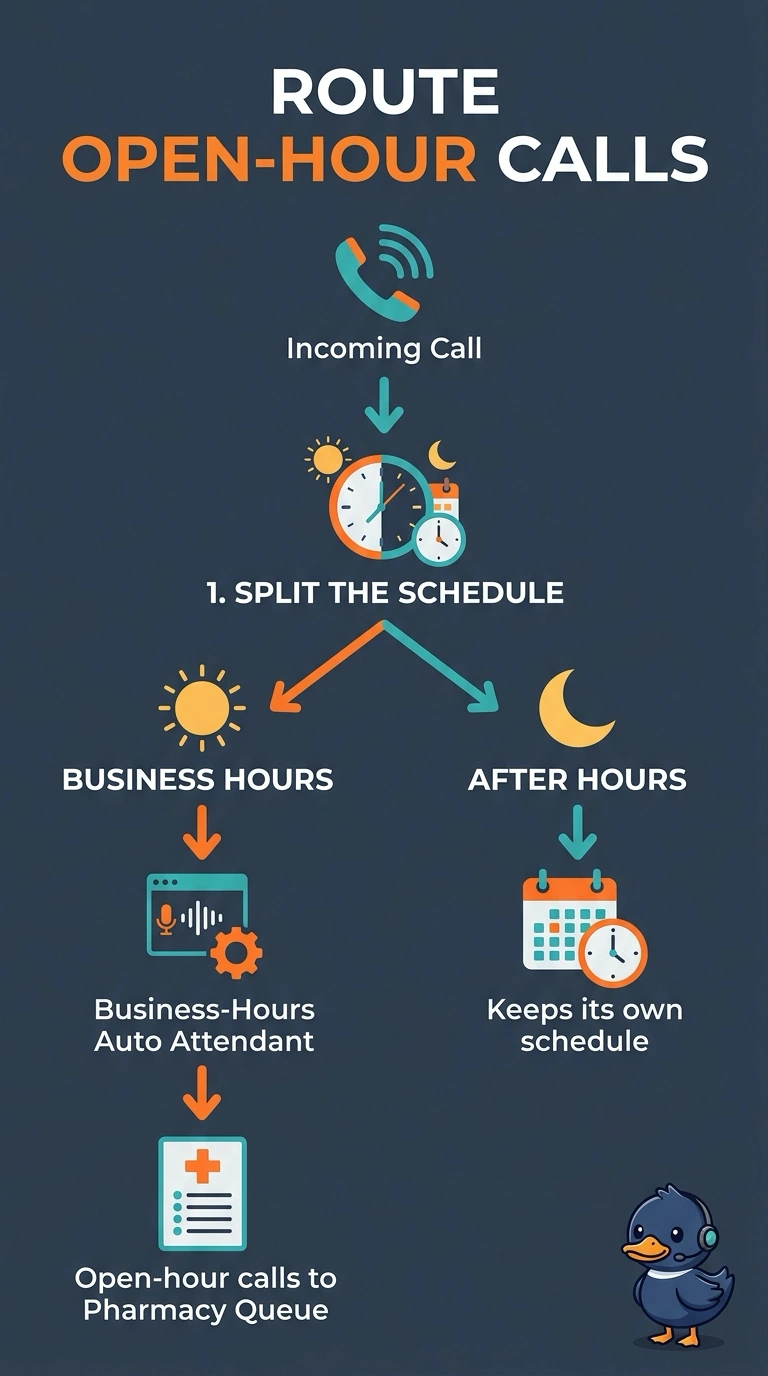
Both doors have a closed sign, including during the hours you are open for business. The business-hours auto attendant has to send open-hour callers to the pharmacy queue, and the after-hours menu can keep the closed destination. The trap is leaving both schedules on the same closed destination.
Full Explanation
A schedule chooses which auto attendant greeting or destination is active for open, closed, or holiday time, and it does not rewrite digits. Both menus currently send callers to the same closed destination while the pharmacy is open, so split the schedule and let the business-hours auto attendant send open-hour calls to the pharmacy queue. Pointing both the business-hours and the after-hours auto attendants at the same closed destination is the fault itself, and keeping a single destination leaves the queue unused during the day. A translation pattern that strips digits rewrites the called number and does not turn the closed destination into the pharmacy queue. Raising the after-hours international permission allows or blocks a call type, and that permission does not send open-hour callers to the pharmacy queue. On exam day, schedules select the active destination, while translation patterns and call permissions do other work. After the change, call during open hours and confirm the pharmacy queue rings, then call after hours and confirm the closed destination still answers.