
A hospital firewall allows only inbound SIP toward the Cisco CUBE and drops the gateway's own outbound registration attempts. What must change for this registration-based trunk?
Select an answer to reveal the explanation.
Short Explanation
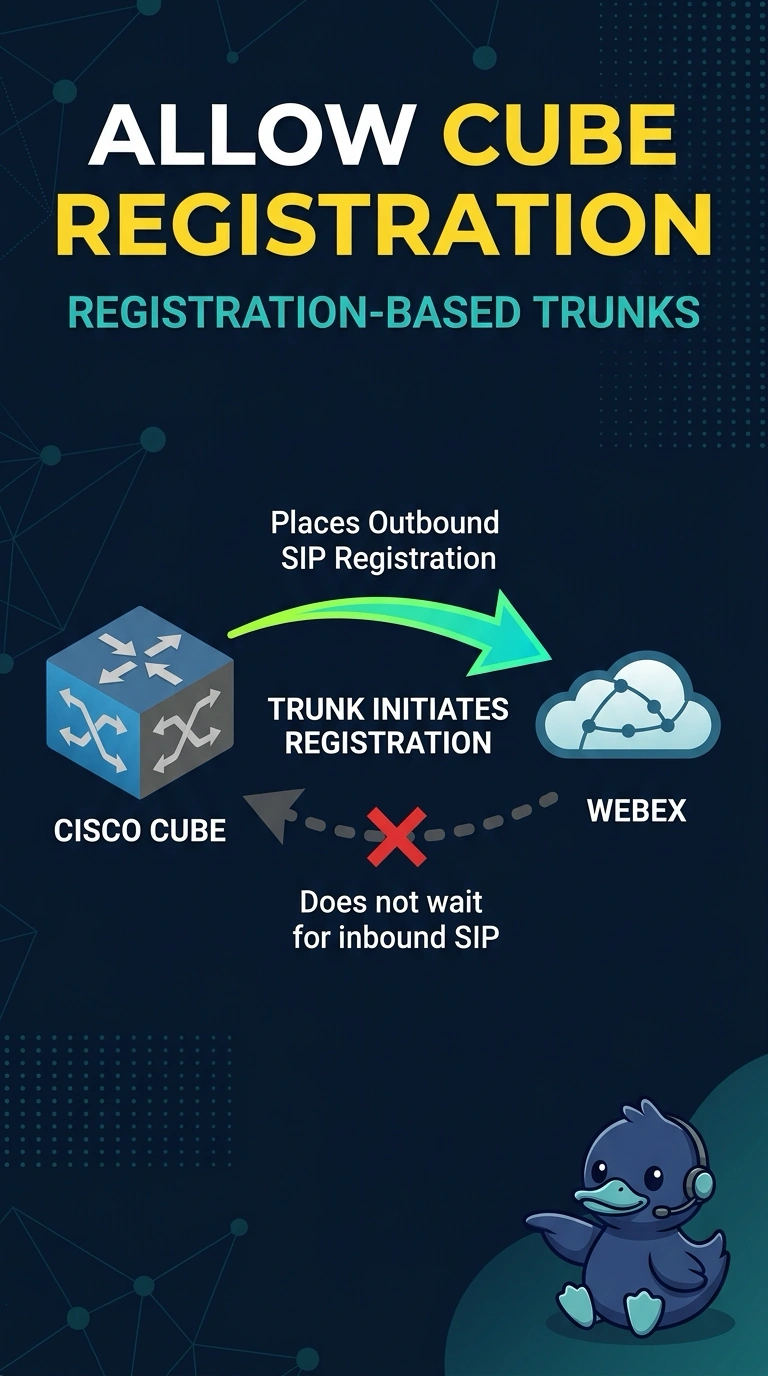
A registration-based trunk has to step outside and introduce itself, while this firewall only opens the door inward. You allow the CUBE's outbound registration toward Webex. The trap is permitting only inbound SIP, or chasing a DNS name this model does not need.
Full Explanation
A registration-based local gateway initiates its registration outbound, using a digest username and password, and dynamic NAT is acceptable. Allow outbound SIP registration and the required return traffic, and allow the documented media flows. Blocking that path leaves the trunk unregistered no matter how much inbound SIP is permitted. Allowing only inbound SIP from the cloud assumes the trunk waits for Webex to register inward to the gateway. That is the wrong direction for this model. Certificate-based trunking requires a public DNS A or SRV record and the documented domain setup. A registration-based trunk does not need that published name, and creating the record does not let the registration pass a firewall that drops the outbound attempt. A wildcard certificate is not supported on the certificate-based model, and this failure is not a certificate name mismatch. The trunk is registration-based, so the missing piece is the outbound registration, not a certificate. Exam caveat: once the gateway is enrolled, Control Hub can validate the registration-based configuration, which still will not pass if the firewall drops the outbound attempt. Operational check: watch the CUBE attempt registration and confirm the firewall permits that outbound session, then confirm the trunk shows registered.