
A hospital installs a wildcard certificate on a certificate-based local gateway, and mutual TLS to Webex fails. Which certificate practice does that trunk model require?
Select an answer to reveal the explanation.
Short Explanation
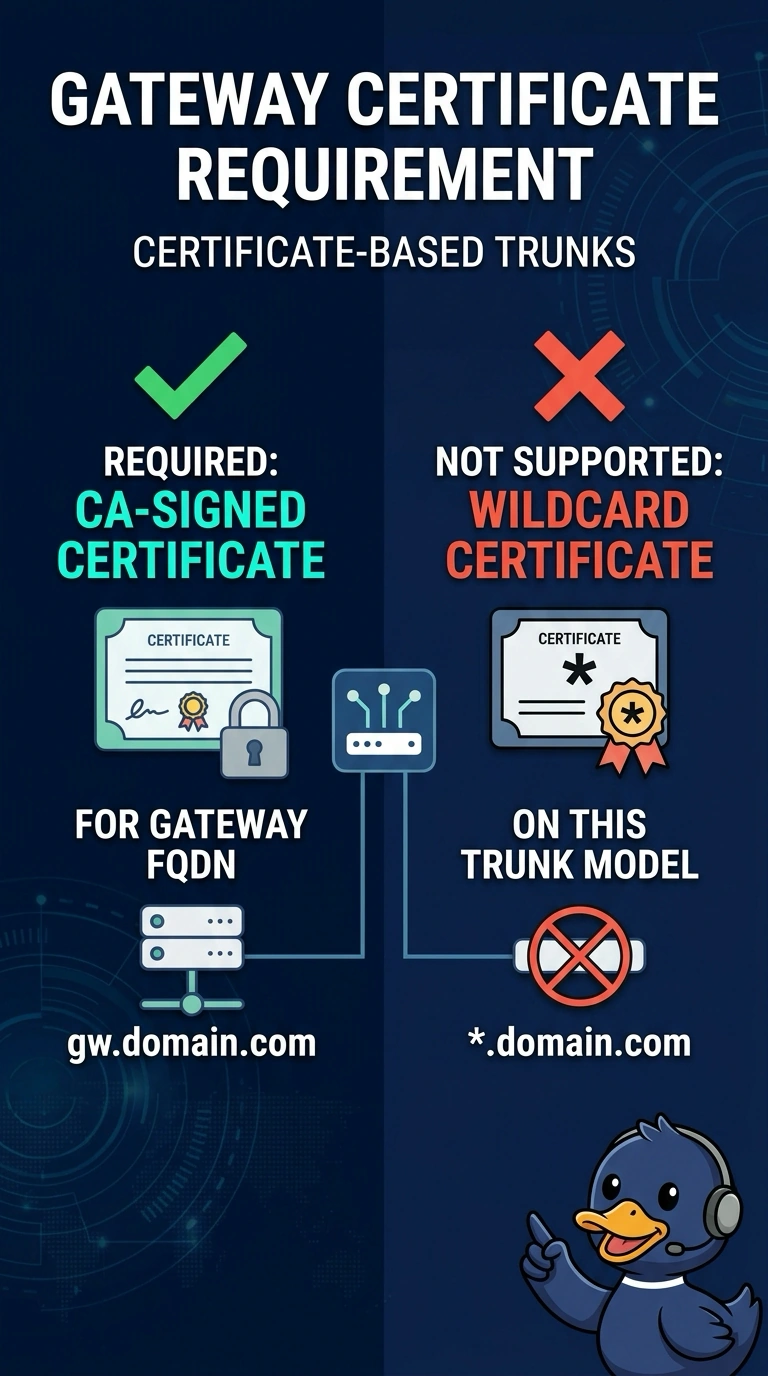
A key cut to open every door in the building is the one key this particular lock will refuse. You need a CA-signed certificate for the gateway FQDN, because wildcard certificates are not supported on this certificate-based trunk. Mutual TLS can come back up once you replace the wildcard certificate.
Full Explanation
A certificate-based trunk requires a CA-signed certificate, and wildcard certificates are not supported on this model. Your hospital gateway needs a CA-signed certificate for its FQDN so mutual TLS can use a name the trunk is allowed to present. Leaving the wildcard certificate in place does not work, even if its name appears to cover every subdomain under the hospital domain: the wildcard form itself is unsupported. Getting a wildcard certificate from a public certificate authority does not change that limitation; a public issuer cannot make a wildcard certificate acceptable on this trunk. A self-signed certificate also fails because it has no authority signature and does not meet the CA-signed certificate requirement. Exam caveat: this failure concerns the certificate type used on a certificate-based trunk, not digest registration, which belongs to a different trunk model. Practical check: replace the wildcard certificate with a CA-signed certificate naming the gateway FQDN, then retry mutual TLS and confirm that the trunk comes online.