
A bank must carry more than 250 concurrent PSTN calls on one local-gateway trunk. A further registration on that same trunk will not raise the registration-based limit. Which trunk model supports that single-trunk load?
Select an answer to reveal the explanation.
Short Explanation
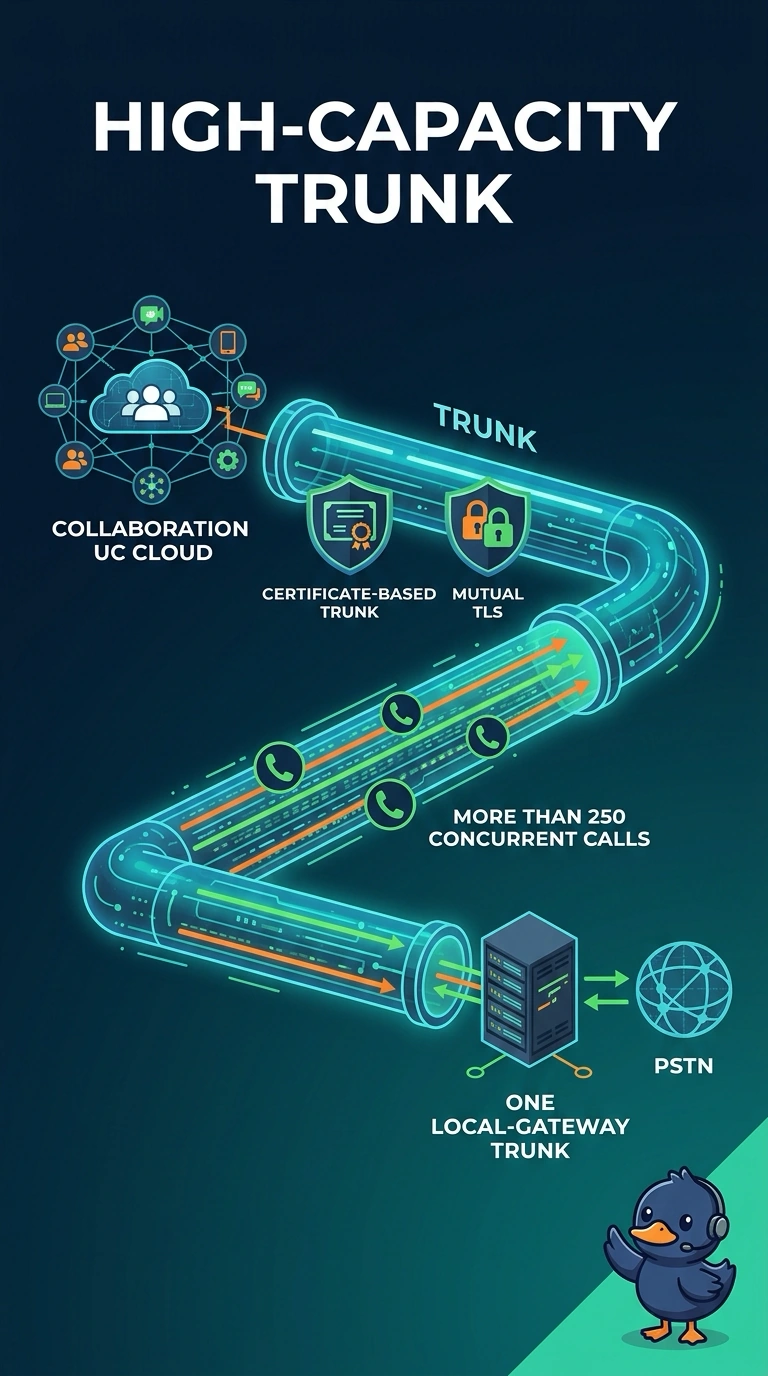
Printing a second ticket for the same ferry does not raise the passenger limit posted on that one boat. You need a certificate-based trunk when one trunk must carry more than 250 concurrent calls. A registration-based trunk stops at that limit, and another registration on it does not lift the cap.
Full Explanation
A registration-based local gateway trunk supports up to 250 concurrent calls, and calls past that capacity are rejected. More than 250 concurrent calls on one trunk requires a certificate-based trunk, which uses mutual TLS and is the model built for that larger single-trunk load. A second digest registration on the same registration-based trunk does not raise that one trunk past its concurrent-call limit. Extra route-group members that remain registration-based trunks are how you add capacity across several trunks, and each of those trunks is still capped, so they do not satisfy a single trunk above 250. A Survivability Gateway with no PSTN trunk supplies basic internal backup calling during a cloud outage and not this single-trunk capacity. Exam caveat: more total capacity on the registration-based model means more trunks in a route group, not a bigger registration on the same trunk. Operational check: confirm the bank trunk type is certificate-based before expecting one trunk to carry a load above the registration-based cap.