
A bank identity provider rejects Webex sign-in because the entity identifier configured for the organization no longer matches the provider. Which repair restores the trust?
Select an answer to reveal the explanation.
Short Explanation
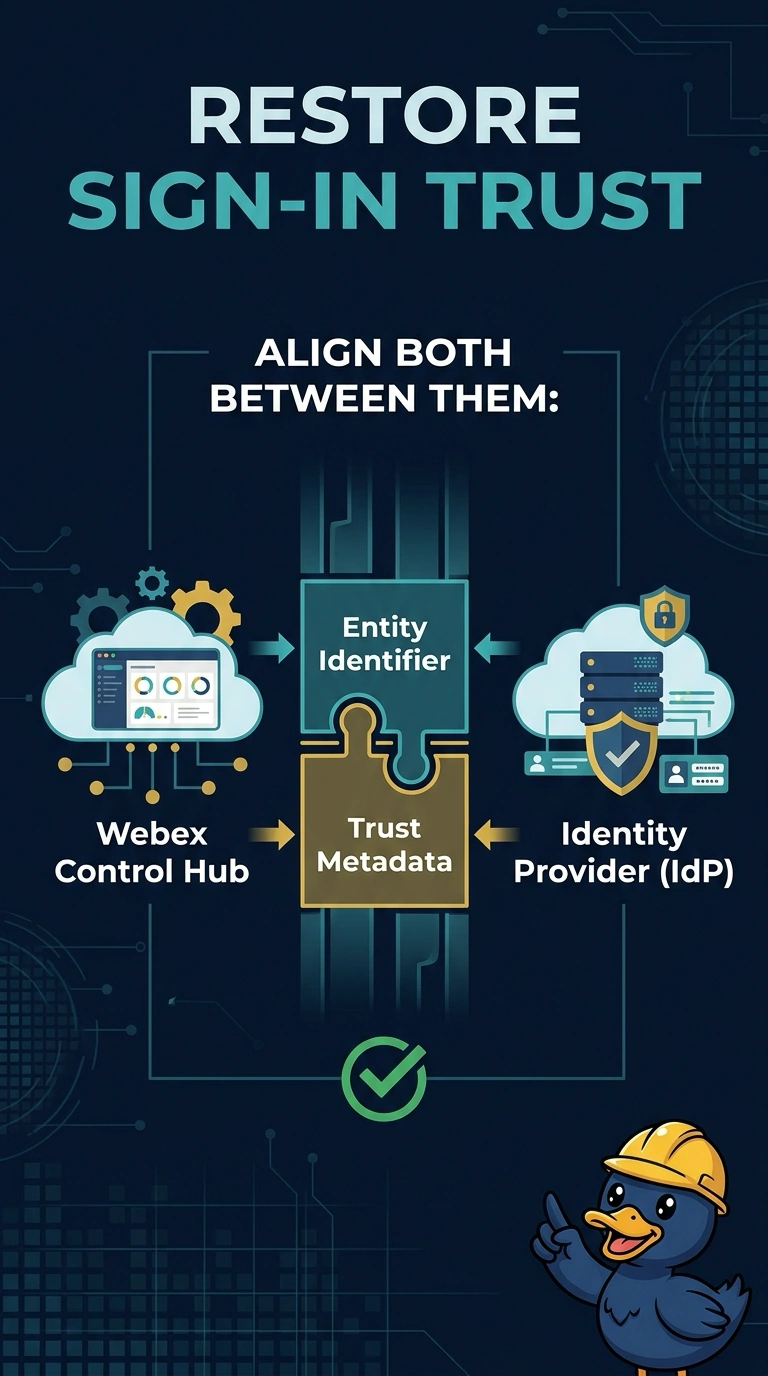
Think of two name tags that have to match before a door opens, after one tag was reprinted with a different number. You align the entity identifier and the rest of the trust metadata so the identity provider accepts the assertion again. The trap is rebuilding a dial plan, rebooting a gateway, or adding a meetings site, none of which repairs a rejected trust.
Full Explanation
Single sign-on trust depends on the identifiers the identity provider and Control Hub agree on. When the entity identifier no longer matches, the provider rejects the assertion, and the repair is to align the entity identifier and the rest of the trust metadata between Control Hub and the identity provider. Rebuilding the bank calling dial plan so outside numbers leave through a different route group and trunk on the next change selects a calling path, and a route group does not make a rejected assertion valid. Rebooting the local gateway so the trunk registration replaces the rejected sign-in assertion refreshes a calling trunk, and a trunk registration is not the sign-on trust. Adding a second meetings site and sending bank users there whenever the identity provider rejects them creates another meetings site, and a site does not rewrite the entity identifier the provider is checking. Exam caveat: an entity-identifier mismatch is a trust failure, and it is a different fault from a bad route or a trunk that needs a restart. Operational check: compare the entity identifier in Control Hub with the value on the identity provider, correct the mismatch, and complete one sign-in that the provider accepts.