
A factory wants cloud-directory users pushed into the on-premises Unified CM directory. A colleague suggests the Webex Directory Connector that feeds Control Hub. Which service performs that push?
Select an answer to reveal the explanation.
Short Explanation
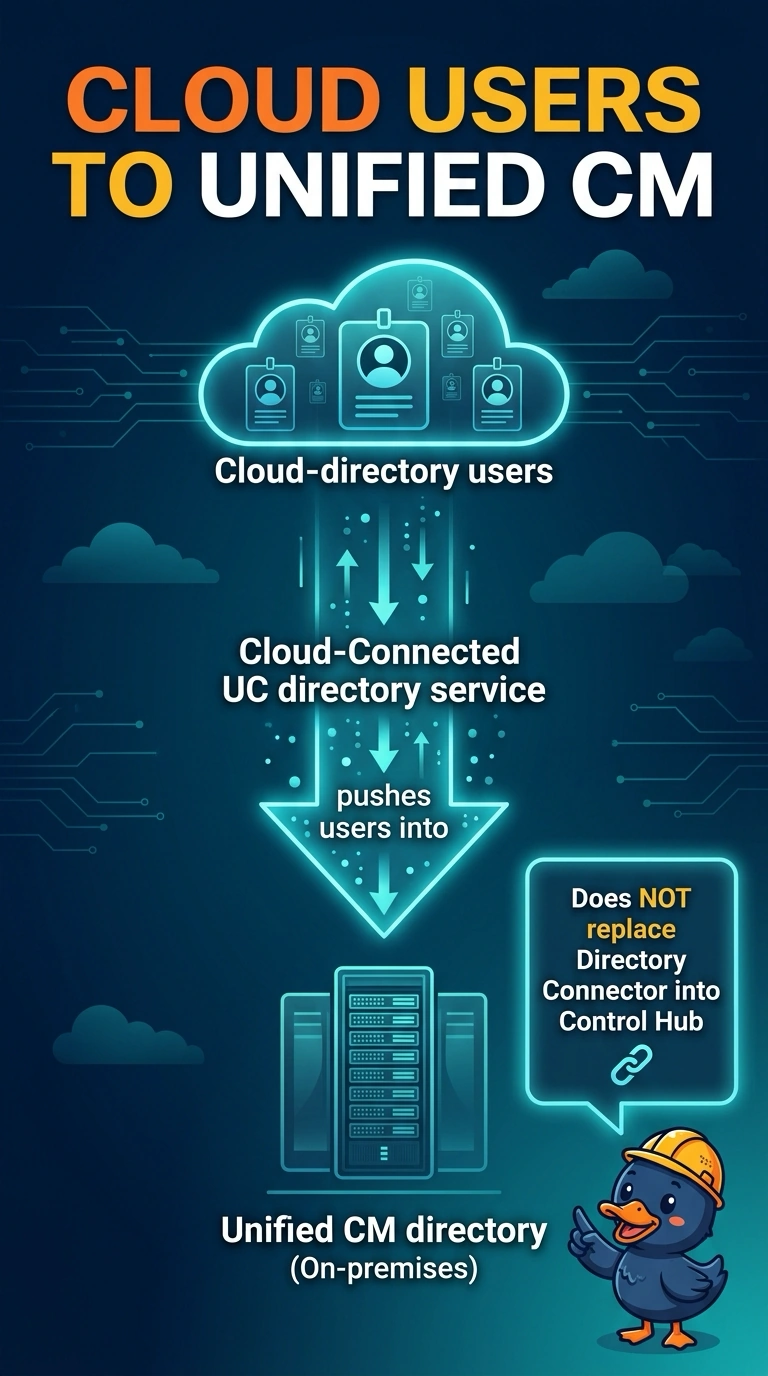
Two loading docks can face the same street and still serve different buildings. You use the Cloud-Connected UC directory service when cloud-directory users must be pushed into Unified CM. The trap is pointing at Directory Connector, which feeds Control Hub and does not do this Unified CM push.
Full Explanation
Cloud-Connected UC includes a directory service that can push cloud-directory users into Unified CM. That service is not a substitute for Webex Directory Connector, which syncs into Control Hub. You use the Cloud-Connected UC directory service, which pushes cloud-directory users into Unified CM and does not replace Directory Connector into Control Hub. Directory Connector on a Windows server, because that sync writes Active Directory users into Control Hub for the factory organization, is the wrong direction and the wrong target for this request. A local gateway registration, because a trunk that registers to Webex Calling also copies cloud users down into Unified CM, registers a calling trunk and does not write end users into Unified CM. A People API request from a bot, because creating a Webex user with that API also creates the matching Unified CM end user, administers a Webex user and does not provision the Unified CM directory. On the exam, cloud users into Unified CM is the Cloud-Connected UC directory service, and Directory Connector remains the path into Control Hub. In operations, confirm a cloud-directory user appears in Unified CM after that directory service runs, and that Control Hub is still fed by its own directory source.