
Clinicians on an allowed internal call hear the far end, but the far end hears only silence. International calling is not enabled for them, and a teammate wants to turn that permission on. What is the actual problem?
Select an answer to reveal the explanation.
Short Explanation
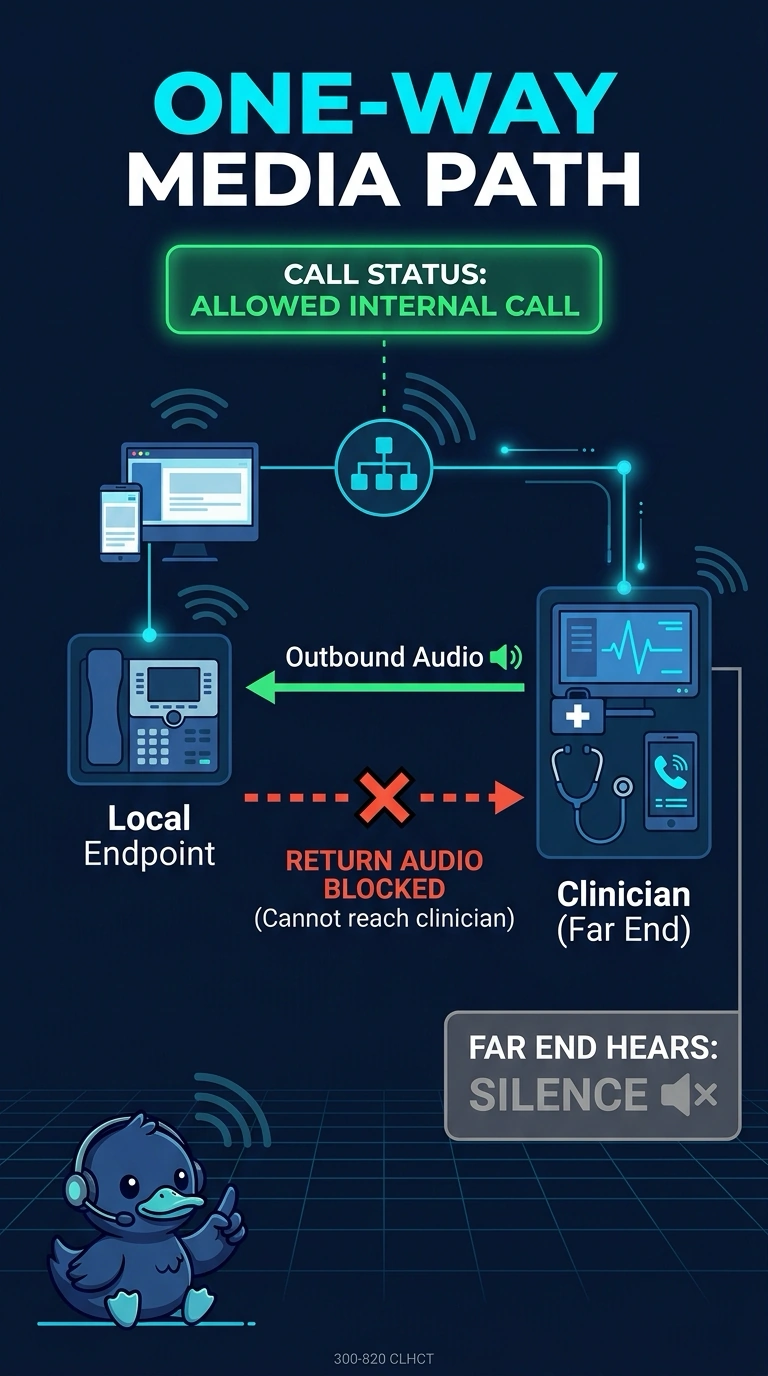
You’re looking at a media-path problem: the internal call is allowed, but return audio is not reaching the clinician. You won’t fix that by enabling international calling, rebuilding sign-on, or resyncing the directory; those changes don’t address the missing audio path.
Full Explanation
The call is an allowed internal call, and one direction of audio is missing. That points to a media-path problem: signaling got the call up, but return media is not arriving. A one-way media path on this allowed internal call, which stops return audio from reaching the clinician at the far end, is the fault to repair. Allowing international calling for these clinicians applies a call-type permission to a call that is already allowed; call permissions allow or block types such as international, but they do not insert or remove one direction of audio on an internal call. Rebuilding single sign-on does not fit a call that already connected between two known clinicians. Sign-on failure would stop the user from authenticating, not leave one-way audio on an established internal call. Resyncing the directory so the clinicians are no longer handled as members of two different organizations invents an organization split that the symptom does not show. Both parties are on an internal call inside the clinic, and a directory mismatch is not what drops return media. Exam caveat: a quality complaint with one-way audio is a bandwidth or path problem, not an identity or permission failure. Practical check: compare signaling, which is up, with the media path for this internal call.