
A cannery's temperature probes cannot run a user agent, and an external scan found them answering on the public internet. They only need to reply to the on-site plant controller. Which design fits these devices?
Select an answer to reveal the explanation.
Short Explanation
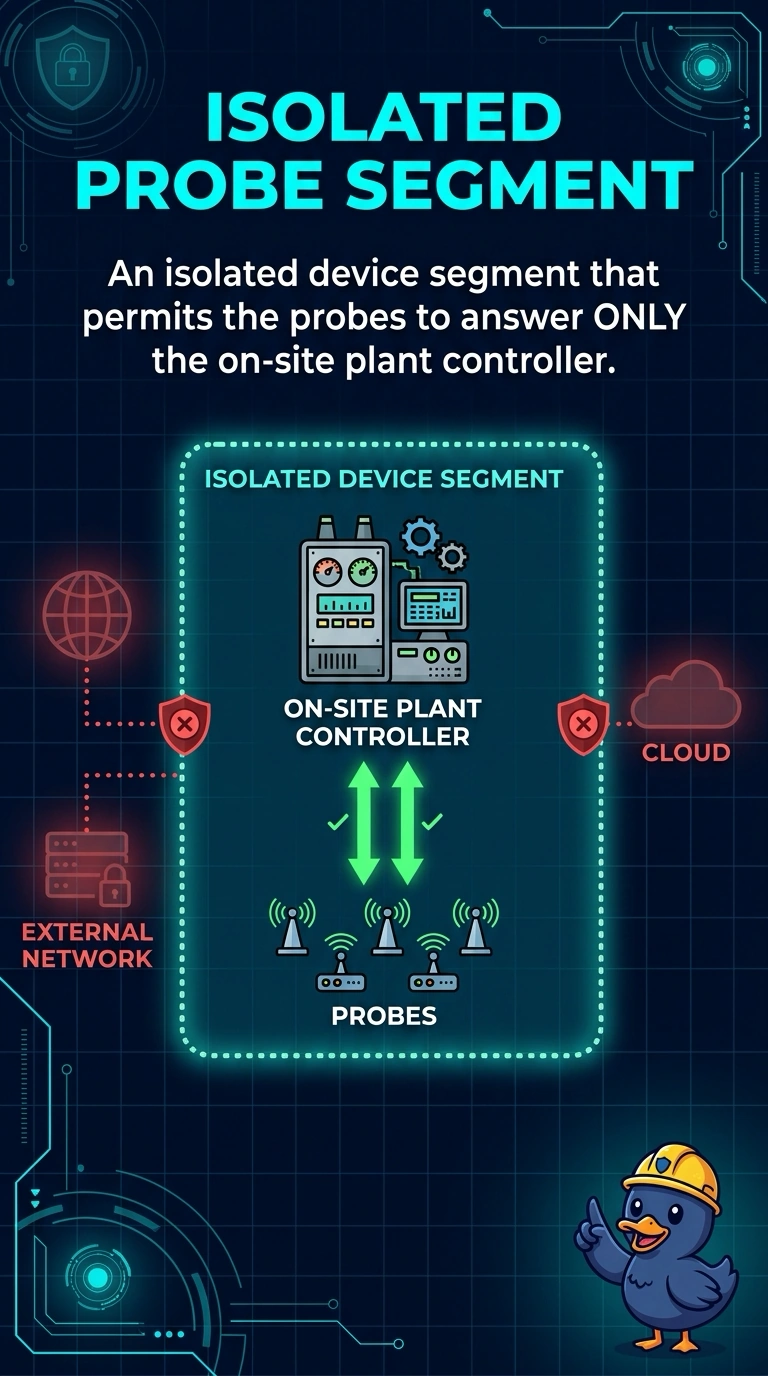
A thermometer does not need a seat in the office or a door onto the street. You let the probes answer only the plant controller. A public address, the staff network, or a laptop profile they cannot run leaves the scan result in place.
Full Explanation
These probes cannot host a user agent, and an outside scan could already reach them, even though the only peer they need is the plant controller on site. Put them on their own segment, allow only that controller conversation, and publish no address toward the internet. That matches devices that cannot run staff software and should not sit on the staff network. An isolated device segment that permits the probes to answer only the on-site plant controller is the design that meets this requirement. A published internet address on each probe so a vendor can poll it from anywhere is the wrong fit because a public address keeps the exposure the scan already found and is not required for a controller that sits on site. The staff laptop network, with probe status pages left open for anyone in the plant is the wrong fit because the staff network is the shared office placement these probes should leave, and laptops do not need to browse them. A laptop endpoint profile pushed to probes that have no place to run an agent is the wrong fit because a laptop endpoint profile has nowhere to install on a probe that cannot run a user agent at all. Exam caveat: Confirm with plant engineering before a filter drops a session a probe must keep, because stopping that cook-process conversation can halt the line. Operational check: From an outside address, confirm each probe no longer answers, and from the probe segment confirm only the controller conversation succeeds.